Who Is Satan According to Christianity?
In Christianity, Satan is recognized as a real, personal, spiritual being — not only a symbol of evil, nor a fictional villain. He is described in the Bible as the ultimate enemy of God and humanity, working behind the scenes of human history to oppose everything that is good, true, holy, and life-giving.
The name “Satan” itself comes from the Hebrew word śāṭān, which literally means “adversary” or “accuser.” This is not just a title; it reflects his nature. Satan is portrayed throughout Scripture as one who resists God’s purposes, slanders God’s people, and seeks to lead others into rebellion against the Creator. In the Greek New Testament, he is often called diabolos — the “devil” — meaning “slanderer.”
Christianity teaches that Satan is not an equal opposite of God. He is not a rival deity with equal power. Rather, he is a creature — one who was originally created by God, but who chose to rebel. His power is real, but it is limited and temporary. His influence is destructive, but it is not unstoppable. Satan exists, but he is not sovereign.
The Bible uses many names and images to describe Satan. He is:
- The deceiver (Revelation 12:9)
- The accuser of the brethren (Revelation 12:10)
- The tempter (Matthew 4:3)
- The father of lies (John 8:44)
- The god of this age who blinds the minds of unbelievers (2 Corinthians 4:4)
- The prince of the power of the air (Ephesians 2:2)
Each title gives us a glimpse into his mission: to deceive, to accuse, to seduce, to destroy. Satan’s goal is always to separate people from the love, truth, and presence of God.
In the biblical worldview, Satan is the invisible actor behind much of the evil we see in the world — but not all. Christianity is clear that human beings also bear responsibility for their own sin. However, Satan amplifies human rebellion, fuels temptation, promotes lies, and manipulates systems and cultures to work against God’s kingdom.
Perhaps most importantly, Satan’s ultimate hatred is not just against human beings — it is against God Himself. He cannot defeat God directly, so he attacks those whom God loves. This is why Satan targets people, especially those who are beginning to seek truth or draw near to Jesus Christ.
Christianity sees life not just in terms of physical circumstances but as a battleground between light and darkness, truth and deception, love and hatred. And Satan is at the center of that opposition, using every tool — fear, confusion, pride, pleasure, guilt — to keep people from knowing God.
But the message of the Gospel is not just that Satan exists — it is that Satan has already been defeated by Jesus Christ. Understanding who Satan is helps us understand what kind of battle we are in — and what kind of victory is offered to us through the cross.
The Origin of Satan: A Created Being Who Fell
To understand Satan fully in Christian theology, we must go back to his origin — not as a monster or embodiment of evil from the beginning, but as a created being. The Bible teaches that Satan was once part of God’s good creation. He was not born evil. He became evil through rebellion.
Though the Bible does not present a full narrative of Satan’s fall in a single location, various passages offer pieces of the story — especially in Isaiah 14, Ezekiel 28, Revelation 12, and Job 1. Christian theologians have long understood these passages to symbolically describe the origin and downfall of Satan, though they also have immediate contexts tied to earthly rulers.
A High Angel Before the Fall
Christian tradition often identifies Satan with a once-exalted angel, possibly an archangel, who lived in the presence of God. He was likely powerful, beautiful, and wise — created for worship and service. Many connect Satan to the “morning star” or “Lucifer” described in Isaiah 14:12:
“How you are fallen from heaven, O Lucifer, son of the morning! How you are cut down to the ground, you who weakened the nations!” (NKJV)
While the immediate context refers to the king of Babylon, early Christian interpreters saw in this poetic language a deeper portrait of Satan’s prideful rebellion and dramatic fall from heavenly glory.
A War in Heaven
Revelation 12 describes a dramatic scene: a “great red dragon” (clearly identified as Satan in verse 9) wages war in heaven. Michael and his angels fight back, and Satan is defeated and thrown down to earth.
“The great dragon was hurled down — that ancient serpent called the devil, or Satan, who leads the whole world astray.” (Revelation 12:9)
This passage also tells us that one-third of the stars of heaven (often interpreted as angels) fell with him. These fallen angels became what we now call demons — spiritual beings aligned with Satan, working to oppose God and deceive humanity.
Satan’s rebellion was not just personal — it was cosmic. It split the angelic realm and opened a war that continues in the lives and hearts of human beings.
From Heaven’s Glory to Earth’s Enemy
Once expelled from heaven, Satan turns his focus toward God’s most beloved creation — mankind. In Genesis 3, he enters the story of humanity as the serpent in Eden, deceiving Eve and leading Adam into disobedience.
From that moment on, Satan becomes the sworn enemy of God’s redemptive plan. He cannot return to his former place in heaven, and he cannot defeat God directly — so he aims to ruin what God loves most.
Jesus Himself affirmed this origin when He said:
“I saw Satan fall like lightning from heaven.” (Luke 10:18)
This is not just poetic language. It is a declaration of reality. Satan fell, and with that fall came the beginning of spiritual warfare between light and darkness, truth and lies, God and His adversary.
The Work of Satan in the World Today
Though many people today think of Satan as a mythical figure or a metaphor for evil, the Bible presents him as an active and intelligent spiritual being who continues to work in the world. According to Christian teaching, Satan has one driving goal: to oppose God by destroying truth, distorting love, and dividing humanity from their Creator.
Jesus referred to Satan as “the ruler of this world” (John 12:31), and Paul called him “the god of this age” who blinds the minds of unbelievers (2 Corinthians 4:4). Satan is not a passive force. He is a manipulator, a liar, and a predator — targeting souls with subtlety and cruelty.
Let’s look more closely at how Satan operates today:
He Deceives
Deception is Satan’s oldest and most effective strategy. In the Garden of Eden, Satan deceived Eve not with violence but with a question: “Did God really say…?” (Genesis 3:1). He sowed doubt, twisted truth, and made rebellion seem reasonable.
That same pattern continues today. Satan rarely tempts people with obvious evil. Instead, he mixes lies with partial truths, seducing people through false ideologies, false religions, worldly wisdom, and spiritual confusion. He works through media, education, and even within religious circles to undermine trust in God’s Word.
Jesus warned that Satan is “a liar and the father of lies” (John 8:44). His voice may sound reasonable — even compassionate — but it always leads away from the truth of Christ.
He Accuses
One of Satan’s primary names is “the accuser.” In Revelation 12:10, he is described as “the accuser of our brothers and sisters, who accuses them before our God day and night.”
Satan first tempts — then he accuses. He lures us into sin, then tells us we’re too dirty to be forgiven. He points to our past and says we’re unworthy, unlovable, and beyond hope.
But in Christ, every accusation is silenced. Romans 8:1 declares: “There is now no condemnation for those who are in Christ Jesus.”
He Blinds and Binds
Satan works hard to keep people blind to the truth of the Gospel. 2 Corinthians 4:4 says:
“The god of this age has blinded the minds of unbelievers, so that they cannot see the light of the gospel that displays the glory of Christ.”
He also keeps people spiritually bound — trapped in cycles of addiction, fear, anxiety, hopelessness, or false identity. He whispers, “This is who you are,” and tries to define people by their wounds, failures, or past.
But Jesus came to open blind eyes and set captives free. Isaiah 61, fulfilled in Christ, declares liberty for the bound and good news for the poor.
What the Bible Says About Satan
The Bible does not leave us in the dark about Satan. Across both the Old and New Testaments, Satan is presented as a real and active adversary of God and His people. The Scriptures reveal his identity, methods, and ultimate destiny — not to glorify him, but to warn, prepare, and ultimately point us to the victory found in Christ.
Let’s examine some of the key passages that shape the Christian understanding of Satan:
Job 1–2 — The Accuser Before God
In the book of Job, Satan is described as appearing before God to accuse Job of having false faith. He argues that Job only serves God because of blessings, and seeks permission to afflict him.
“Does Job fear God for nothing?” (Job 1:9)
This scene shows Satan in his role as accuser — testing the sincerity of believers and trying to separate them from God. Yet even in affliction, Job remains faithful, and God’s purposes ultimately prevail.
Isaiah 14:12–15 — The Fall from Heaven
This prophetic lament speaks of a figure called the “morning star” (Latin: Lucifer) who sought to exalt himself above God:
“I will ascend to the heavens… I will make myself like the Most High.” (Isaiah 14:13–14)
Though this passage is directed at the king of Babylon, many theologians see in it a portrait of Satan’s prideful rebellion and expulsion from heaven.
Ezekiel 28:12–17 — The Corruption of Perfection
This passage describes the “king of Tyre” in exalted language, which many scholars interpret as symbolic of Satan’s original position and fall:
“You were blameless in your ways from the day you were created till wickedness was found in you.” (Ezekiel 28:15)
He was “anointed as a guardian cherub” and “full of wisdom and perfect in beauty.” But his heart became proud, and he was cast down.
Jesus vs. Satan: The Final Victory Is Won
In every great story, there’s a climactic turning point — a moment when the hero confronts the villain, and the fate of the world hangs in the balance. In the biblical narrative, that moment is not just metaphorical or mythical. It is real, historical, and eternal.
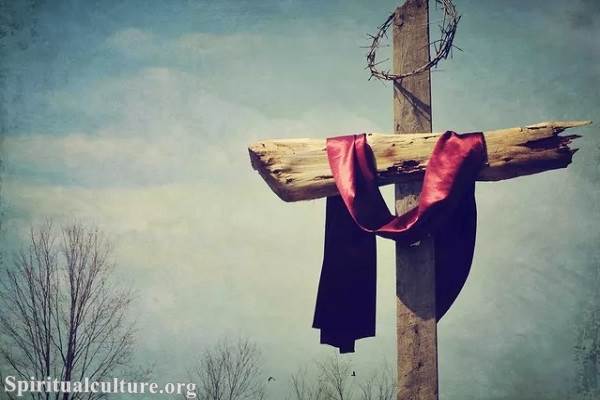
It happened on a hill called Golgotha, on a wooden cross, with the Son of God hanging between heaven and earth.
That is where Jesus defeated Satan — once and for all.
The Cross: The Place of Victory
Colossians 2:15 reveals the hidden power of the crucifixion:
“And having disarmed the powers and authorities, He made a public spectacle of them, triumphing over them by the cross.”
This wasn’t just a spiritual metaphor — it was a legal and eternal reality. Jesus, by willingly laying down His life, broke the back of Satan’s authority. He took the punishment for our sins, absorbed the wrath of God, and paid the full price of redemption.
Satan’s greatest weapon was guilt — the accusation of sin before a holy God. But the cross removed that weapon:
“There is now no condemnation for those who are in Christ Jesus.” (Romans 8:1)
Through His sacrifice, Jesus disarmed Satan’s right to accuse. And by rising from the dead, He broke the power of death itself — the very thing Satan used to keep humanity in fear (see Hebrews 2:14–15).
The Resurrection: Death Is Dead
Satan could not keep Jesus in the grave. On the third day, Christ rose in glory, fulfilling prophecy, conquering sin, and crushing the head of the serpent, as foretold in Genesis 3:15.
Jesus did not just survive death — He defeated it.
The resurrection is the ultimate proof that Satan has lost the war. Though he still roars and resists, he is a defeated enemy, like a criminal awaiting final sentencing.
As 1 John 3:8 proclaims:
“The reason the Son of God appeared was to destroy the devil’s work.”
And He did.
The Final Judgment
Revelation 20:10 tells us the end of Satan’s story:
“And the devil, who deceived them, was thrown into the lake of burning sulfur… and will be tormented day and night forever and ever.”
No more lies. No more darkness. No more pain.
One day, Jesus will return in glory, and Satan will be silenced forever.
Until then, we live in victory — not in fear, but in faith. Not in bondage, but in freedom. Not in defeat, but in the power of the One who crushed the enemy underfoot.
“The God of peace will soon crush Satan under your feet.” (Romans 16:20)