Protestantism is one of the major traditions within Christianity. It developed through a series of sixteenth-century reform movements that challenged aspects of the doctrine, authority, and institutional life of the Western Church. Although Martin Luther is often treated as the central figure in its beginnings, Protestantism did not arise from a single reformer, country, church, or theological system.
Over time, the Protestant tradition came to include Lutheran, Reformed, Presbyterian, Anglican, Anabaptist, Baptist, Methodist, evangelical, Pentecostal, and many independent churches. These communities share important Christian convictions, but they differ considerably in worship, biblical interpretation, sacraments, church government, ministry, ethics, and their relationship with historic Christian traditions.
For this reason, Protestantism should not be described as a single denomination. It is better understood as a broad and internally diverse family of Christian movements whose histories are connected, directly or indirectly, to the Reformation and its later developments.
What Is Protestantism?
Protestantism is a branch of Christianity that emerged from efforts to reform the Western Church during the sixteenth century. Early Protestant reformers questioned papal authority, criticized particular church practices, and argued that Christian teaching should be judged according to the witness of Scripture.
Most Protestant churches affirm the central doctrines historically shared by mainstream Christianity. These normally include belief in one God as Father, Son, and Holy Spirit; the divine and human identity of Jesus Christ; his crucifixion and resurrection; the work of the Holy Spirit; the church; forgiveness; resurrection; and eternal life.
Beyond these shared foundations, Protestant churches hold a wide range of theological positions. Some preserve liturgical worship, episcopal leadership, creeds, vestments, and a strong sacramental theology. Others emphasize informal worship, congregational independence, personal conversion, expository preaching, or charismatic experiences associated with the Holy Spirit.
The Protestant tradition is therefore united less by a single worldwide institution than by overlapping commitments to the Christian gospel, the authority of the Bible, the saving work of Jesus Christ, and the need for continuing reform in the life of the church.
Major Protestant Beliefs
There is no single statement of faith accepted by all Protestants. Nevertheless, several convictions have had wide influence across Protestant traditions.
The Authority of Scripture
Most Protestant churches regard the Bible as the supreme written authority for Christian faith and practice. This principle is commonly expressed by the Latin phrase sola Scriptura, meaning “Scripture alone.”
The phrase does not necessarily mean that Protestants reject all creeds, traditions, scholarship, councils, or church teaching. Historic Lutheran, Reformed, Anglican, and Methodist churches have produced confessions, catechisms, liturgies, and theological traditions.
Rather, sola Scriptura generally means that all church teachings are subject to the final authority of Scripture. Protestants disagree, however, about how Scripture should be interpreted, how tradition should guide interpretation, and whether the Bible is the only authority or the uniquely supreme authority.
Some churches emphasize the role of historic creeds and communal interpretation. Others stress the ability and responsibility of each believer to read Scripture. Evangelical statements commonly describe the Bible as the supreme authority in matters of belief and conduct.
The Centrality of Jesus Christ
Protestant theology places Jesus Christ at the center of salvation, Scripture, preaching, worship, and Christian discipleship. The phrase solus Christus, “Christ alone,” expresses the conviction that reconciliation with God is made possible through Christ.
Most Protestants affirm the doctrines about Christ expressed in the historic ecumenical creeds: that Jesus is truly divine and truly human, that he was crucified, that he rose bodily from the dead, and that he will come again.
The meaning of Christ’s atoning death has been explained through several theological models. Some Protestants emphasize substitution, others victory over sin and death, participation in Christ, moral transformation, covenant, reconciliation, or a combination of these themes.
The Priesthood of All Believers
The “priesthood of all believers” teaches that all Christians have direct access to God through Christ and share in the church’s calling to worship, prayer, witness, and service.
This teaching does not mean that all Protestant churches reject ordained ministry. Most maintain recognized roles for pastors, ministers, elders, bishops, teachers, or deacons. The meaning and authority of these ministries vary widely.
The doctrine challenges the idea that a special spiritual class alone possesses access to God. It has encouraged lay Bible reading, congregational participation, vernacular worship, education, and the involvement of ordinary Christians in mission and service.
Major Protestant Traditions
Anabaptist and Mennonite Traditions
Anabaptist churches emphasize voluntary discipleship, community, believers’ baptism, and the practical teachings of Jesus. Many have historically maintained strong commitments to peace, reconciliation, simplicity, mutual aid, and separation from coercive political power.
Contemporary Mennonite and related churches display considerable diversity. Some preserve distinct communal lifestyles, while others participate fully in urban, professional, and global society.
Baptist Churches
Baptist traditions generally emphasize believers’ baptism, the authority of Scripture, congregational life, freedom of conscience, religious liberty, and the responsibility of each local church.
Baptists do not have a single worldwide governing authority. Their theology ranges from Calvinist to Arminian, and their worship may be liturgical, revivalist, evangelical, or charismatic.
The Baptist World Alliance’s beliefs statement links Christian faith with religious liberty, justice, opposition to racism, and recognition of human equality in Christ.
Pentecostalism
Pentecostalism emerged prominently in the early twentieth century, although its advocates understand its spirituality as rooted in the New Testament and earlier Christian revival movements.
Pentecostals emphasize the present work of the Holy Spirit, spiritual gifts, prayer, healing ministry, evangelism, conversion, and empowered Christian witness. Speaking in tongues has an important place in many classical Pentecostal denominations, although beliefs about its role differ.
Pentecostal worship often includes spontaneous prayer, contemporary music, testimony, and expectations of divine activity. These practices should be described as religious beliefs and experiences rather than scientifically proven supernatural events.
Classical Pentecostal denominations generally affirm central Protestant and historic Christian teachings. The Pentecostal World Fellowship’s statement of faith affirms Jesus Christ, the unity of believers, and the practical application of Christian faith to spiritual and social life.
Protestant Worship and Spiritual Life
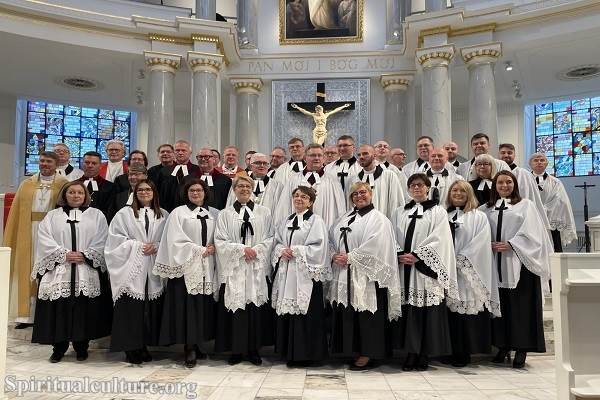
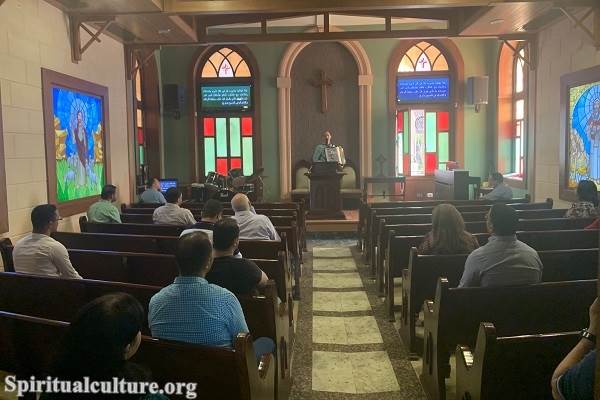
Protestant worship cannot be reduced to one style. A Lutheran cathedral, a rural Baptist chapel, an Anglican parish, a Mennonite meetinghouse, a Methodist congregation, and a Pentecostal church may look and sound very different.
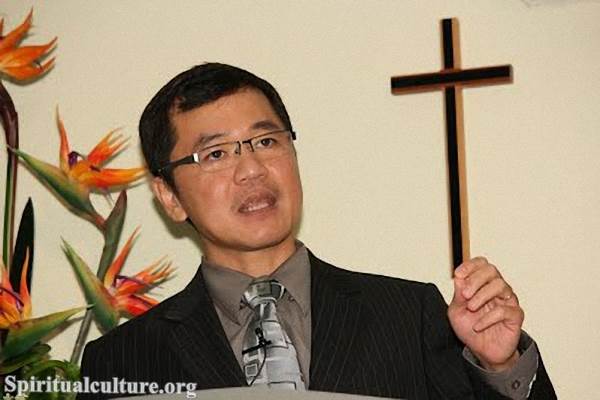
Many Protestant services include Scripture readings, congregational singing, prayer, a sermon, offerings, and baptism or the Lord’s Supper when scheduled. The sermon often has a prominent place because of the emphasis on teaching and proclaiming the biblical message.
Music has played a major role in Protestant spiritual culture. Lutheran chorales, Anglican choral music, Reformed psalm singing, Methodist hymns, African American spirituals, gospel music, revival songs, and contemporary worship have shaped communities far beyond their original settings.
Some traditions follow the Christian liturgical year closely, observing Advent, Christmas, Lent, Holy Week, Easter, Pentecost, and other occasions. Others avoid or minimize festivals that they believe lack sufficient biblical foundation.
Protestant prayer may be drawn from formal liturgical texts or expressed spontaneously. Spiritual disciplines may include daily Bible reading, family prayer, fasting, hymn singing, small groups, retreats, catechism, journaling, service, and participation in the Lord’s Supper.
Protestant Mission and Global Expansion
Protestant Christianity spread beyond Europe through migration, trade, revival movements, missionary societies, colonial networks, Bible translation, education, medical work, and the leadership of local converts.
European and North American missionaries were significant, but the global development of Protestantism cannot be explained by foreign missionaries alone. African, Asian, Pacific, Latin American, Caribbean, and Indigenous Christians interpreted, transmitted, and reshaped the faith within their own communities.
Local evangelists, teachers, translators, women’s networks, families, independent preachers, and new church movements often carried Christianity into places where foreign missionaries had limited access or influence.
Colonialism created both opportunities and serious moral contradictions. Some missionaries defended Indigenous peoples, opposed particular abuses, or documented local languages. Others cooperated with colonial systems, treated local cultures as inferior, or failed to challenge exploitation.
Modern Protestant communities increasingly recognize that mission history must be told through multiple perspectives. This includes the voices of colonized peoples, women, formerly enslaved communities, racial minorities, and Christians who formed independent churches outside foreign control.
Protestantism in Africa, Asia, and Latin America
Protestantism was once associated primarily with northern Europe and North America. It is now a global and culturally diverse tradition.
African Protestant churches include historic Anglican, Lutheran, Methodist, Presbyterian, Baptist, and Congregational bodies, as well as rapidly developing evangelical, Pentecostal, prophetic, and independent churches.
Asian Protestantism includes long-established communities in countries such as India, Indonesia, South Korea, the Philippines, China, and several Pacific nations. Churches often combine inherited denominational structures with local music, social concerns, community practices, and theological reflection.
Latin American Protestantism has expanded through historic immigrant churches, evangelical missions, Indigenous movements, Pentecostal revival, urban congregations, and independent ministries. Pentecostalism has been especially influential among working-class, migrant, and marginalized communities, although its membership extends across social classes.
Global Protestantism cannot be understood simply as a European religion exported unchanged. Communities throughout the Global South have developed their own leadership, worship, theology, institutions, mission networks, and public roles.
Pew Research Center’s widely cited 2010 classification estimated that broadly defined Protestants made up approximately 37 percent of the world’s Christians at that time. The figure is useful as a historical estimate, but it should not be treated as a current or universally accepted count because definitions of Protestant, evangelical, independent, and Pentecostal identity overlap.
Protestantism and Social Reform
Protestant Christians have participated in movements involving education, prison reform, abolition, labor rights, temperance, women’s organizing, civil rights, humanitarian service, democracy, and religious liberty.
Quakers, Methodists, Baptists, evangelicals, and other Protestants contributed to antislavery movements in Britain and North America. African American Protestant churches became vital institutions of communal survival, education, political organization, music, and civil rights activism.
Figures such as Martin Luther King Jr. and Desmond Tutu drew upon Protestant preaching, biblical interpretation, and church organization in struggles against racial injustice and apartheid.
However, Protestant history also includes support for slavery, segregation, colonial expansion, racial hierarchy, antisemitism, nationalism, and political violence. Churches sometimes divided over these issues or used biblical interpretations to defend oppressive systems.
It is therefore inaccurate to portray Protestantism as naturally progressive or naturally conservative. Protestant communities have supported opposing sides of major social conflicts. Their public actions have depended on theology, historical circumstances, political interests, cultural values, and the voices allowed to exercise authority.
Protestantism and Ecumenism
The divisions created or deepened during the Reformation were followed by centuries of controversy between Protestant, Catholic, and Orthodox Christians. Protestants also divided among themselves over doctrine, worship, sacraments, revival, politics, ethnicity, and church governance.
The modern ecumenical movement developed in the late nineteenth and early twentieth centuries as Christians sought greater cooperation across denominational boundaries. The World Council of Churches was formally established in Amsterdam in 1948 with 147 member churches.
The organization now includes many Orthodox, Anglican, Lutheran, Reformed, Methodist, Baptist, United, and Independent churches. It describes its purpose as calling churches toward visible unity and cooperation in witness, justice, and peace. The Roman Catholic Church is not a member, but it participates in several forms of ecumenical dialogue and collaboration.
Ecumenical dialogue has produced greater mutual understanding on subjects such as baptism, justification, ministry, Scripture, and the nature of the church. Important differences remain, particularly concerning papal authority, apostolic succession, ordination, the Eucharist, Marian teachings, and moral questions.