When you think of the Catholic Church, you might picture a small neighborhood church with a modest congregation gathering every Sunday morning. And while that is certainly a beautiful and true image of parish life, there is another side to the American Catholic experience: one of massive, vibrant parishes serving tens of thousands of faithful believers.
These are the largest Catholic parishes in the United States. Their campuses sprawl across acres, their pews fill with thousands at multiple weekend Masses, and their ministries touch nearly every area of life—from education and evangelization to charity and social justice. These parishes are not just big in size—they are powerful centers of living faith.
In this article, Spiritual Culture introduces you to the 10 largest Catholic parishes in the USA as of 2025. We’ll explore why they’ve grown so large, what makes them spiritually dynamic, and how they are shaping the future of Catholic life in America.
Most importantly, we’ll see that no matter how big a church is, its mission remains the same: to proclaim Jesus Christ, serve His people, and draw souls to the love of God.
What Makes a Parish “Large”? — Criteria and Context
When we talk about the largest Catholic parishes in USA, it’s important to recognize that size isn’t just a matter of square footage or seating capacity. In Catholic life, the “size” of a parish reflects a complex combination of spiritual vitality, community involvement, population density, and pastoral mission. Understanding what makes a parish “large” helps us better appreciate the unique role these expansive communities play in shaping Catholic identity across the United States.
Defining the Dimensions of Parish Size
The largest Catholic parishes in USA are not defined by a single metric. Rather, they are measured across several dimensions:
- Registered Households or Families: This refers to the number of families officially enrolled and actively contributing to parish life. Many of the largest parishes have over 5,000 to 11,000 registered families, representing tens of thousands of individuals.
- Weekly Mass Attendance: A parish may have a large number of registered members, but what truly reflects its spiritual vitality is how many people attend Sunday and daily Mass. The largest parishes often require multiple weekend liturgies—sometimes up to 10 or more—to accommodate everyone.
- Sacramental Volume: The number of baptisms, confirmations, weddings, and funerals performed each year is a key indicator of pastoral activity. Some large parishes perform hundreds of sacraments annually, reflecting an active and deeply rooted community.
- Facility Size and Campus Reach: Many of the largest Catholic parishes in USA occupy multi-building campuses that include large sanctuaries, parish halls, schools, chapels, retreat centers, and offices. Some campuses span dozens of acres, designed to support the various ministries and needs of their expansive flocks.
- Ministry and Program Breadth: These parishes often operate with over 100 ministries—including youth groups, RCIA, adult catechesis, pro-life outreach, Hispanic ministry, grief support, and charitable programs. Their size allows for specialized teams and sub-communities within the larger body.
- Staffing and Clergy: Large parishes typically require multiple priests, a team of deacons, and professional lay staff to coordinate pastoral care, administration, education, and liturgy. Many also include full-time music directors, youth ministers, business managers, and communications staff.
- Financial Stewardship: With size comes increased responsibility. The largest Catholic parishes often operate with multi-million dollar budgets, sustained by generous giving, fundraising, and stewardship campaigns. This financial strength enables them to support not just their own parishioners, but also wider diocesan efforts and social outreach.
The Unique Context of American Catholic Growth
To understand why the largest Catholic parishes in USA have reached their current size, we must consider broader demographic and cultural trends within the American Church:
- Suburban Expansion: In recent decades, population growth in suburban and exurban areas has driven the need for large-scale parishes. In places like Texas, Florida, North Carolina, and Colorado, entire communities have sprung up around new or expanding parishes.
- Hispanic and Immigrant Populations: The growth of Hispanic, Filipino, Vietnamese, and African Catholic communities in the United States has led to rapid expansion in certain dioceses. Many large parishes now offer bilingual Masses, multicultural ministries, and immigrant support programs.
- Parish Consolidation: In older, urban dioceses where vocations have declined and populations have shifted, parish mergers have created new, consolidated parishes serving thousands. These “megaparishes” are sometimes born not out of growth, but necessity—and yet they often thrive due to the richness of their combined communities.
- Vibrant Evangelization: The largest parishes are often those that actively invite and welcome new members. Through dynamic preaching, modern communications, strong sacramental preparation, and family ministries, they create a spiritual home where faith is nurtured and passed on.
- Digital Infrastructure and Technology: Many of the largest Catholic parishes in USA have embraced digital tools to expand their reach—offering livestream Masses, mobile apps, online giving, podcast homilies, and email newsletters that keep thousands of members connected and engaged.
More Than Numbers: A Living Mission
Ultimately, the size of a parish is not about prestige—it is about mission. These parishes are large because they have become places where people are finding Christ, encountering the Gospel, and living their Catholic faith in community.
In every large parish, the challenge is to avoid becoming impersonal or program-driven. And yet, when well-led and rooted in prayer, these parishes often become beacons of hope, centers of charity, and engines of evangelization. Their size becomes an asset—a sign that the Church is alive and growing.
So when we speak of the largest Catholic parishes in USA, we are not simply talking about crowds—we are talking about souls gathered in faith, sacraments celebrated with reverence, and communities shaped by the transforming love of Jesus Christ.
And that’s what makes these parishes truly “large”—not just in number, but in spiritual depth, pastoral reach, and Gospel impact.
Full List: 10 Largest Catholic Parishes in the USA
The following ten parishes represent some of the largest Catholic parishes in USA today, not only in terms of numbers but also in spiritual influence, pastoral ministry, and liturgical life. Each serves as a witness to the enduring vitality of Catholicism in America, drawing thousands of faithful and impacting communities well beyond church walls.
St. Matthew Catholic Church — Charlotte, North Carolina
Nestled in the rapidly growing suburbs of Charlotte, St. Matthew Catholic Church is often recognized as the single largest Catholic parish in the USA. As of 2025, it serves over 11,000 registered families, totaling approximately 33,000 individuals.
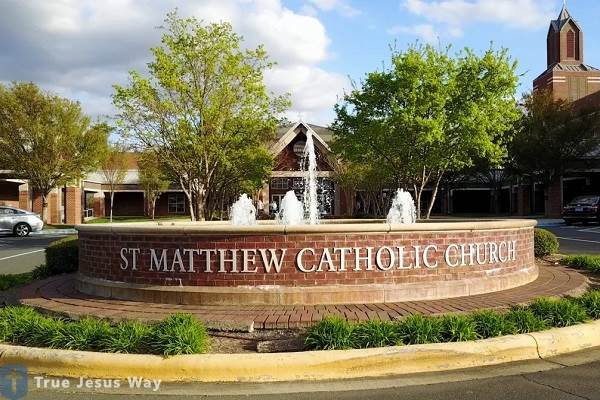
Founded in 1986, St. Matthew grew alongside Charlotte’s population boom. Its stunning modern sanctuary seats more than 2,200 people, and weekend liturgies are offered in both English and Spanish to accommodate its diverse population.
What makes St. Matthew stand out is not just its size, but its pastoral depth:
- Over 100 active ministries serve every demographic—from young professionals and families to seniors and those grieving.
- The Life Teen program draws hundreds of high schoolers every week.
- Its Eucharistic Adoration Chapel is open 24/7, fostering a culture of prayer.
Parishioners often speak of St. Matthew as a spiritual home that, despite its size, makes room for individual encounter and personal growth in Christ.
St. Elizabeth Ann Seton Catholic Church — Keller, Texas
Located in the heart of North Texas, St. Elizabeth Ann Seton has grown to serve more than 9,500 families, making it one of the largest Catholic parishes in the USA by membership.
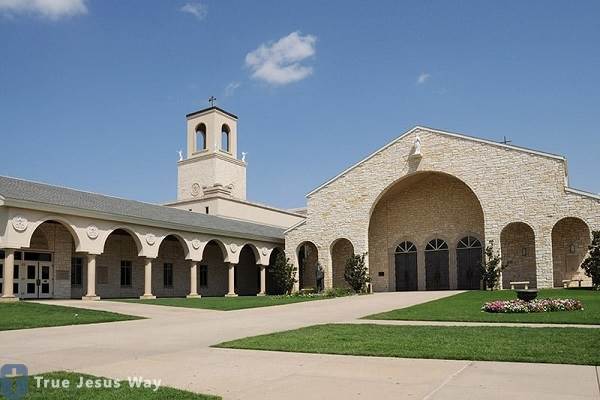
Established in 1981, the parish reflects the vibrant growth of the Fort Worth Diocese, especially among young Catholic families and Hispanic communities.
Key features include:
- A stunning church building completed in 2010 that combines Gothic and Southwestern design.
- A parish school serving Pre-K through 8th grade.
- Powerful ministries focused on evangelization, including “ACTS retreats”, RCIA, and spiritual mentorship groups.
It’s not uncommon for over 6,000 people to attend weekend Masses. The parish’s motto—“To Know Christ and to Make Him Known”—has become a lived mission as they continue expanding outreach and catechesis.
Prince of Peace Catholic Community — Houston, Texas
In the bustling northwest corner of Houston sits Prince of Peace, one of the most culturally diverse and dynamic communities among the largest Catholic parishes in USA. Serving over 8,500 families, this parish mirrors the city’s international and intergenerational character.
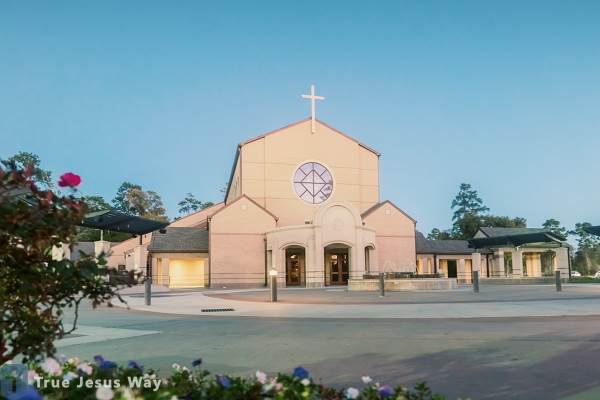
Prince of Peace was established in 1978 and has grown alongside the expanding suburbs. The campus is a hive of pastoral activity:
- Masses in English and Spanish, with an average weekend attendance exceeding 10,000 people.
- A dedicated Youth and Family Life Center that supports everything from retreats to basketball leagues.
- Vibrant Hispanic ministry and charismatic prayer groups that regularly draw hundreds.
The parish is also deeply committed to social justice and mercy: their Gabriel Project, St. Vincent de Paul Society, and immigrant outreach programs are among the largest in the Archdiocese of Galveston-Houston.
St. Peter Chanel Catholic Church — Roswell, Georgia
Founded in 1998, St. Peter Chanel has rapidly become one of the most influential and well-organized parishes in the Archdiocese of Atlanta, now serving more than 7,500 households.
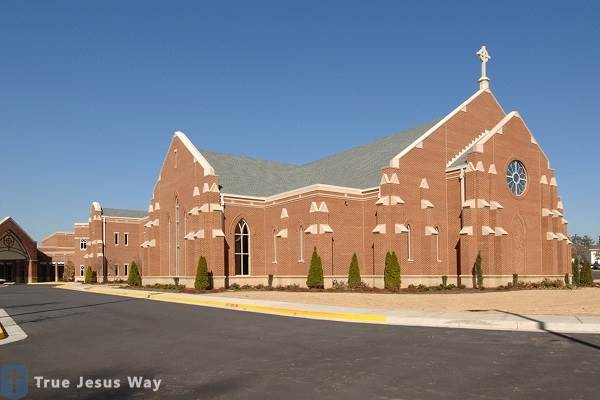
The parish was established to serve the growing northern suburbs of Atlanta and has developed a strong reputation for:
- Traditional yet accessible liturgies, with careful attention to sacred music and reverent worship.
- A robust RCIA program, marriage enrichment ministry, and Bible study network that draws hundreds weekly.
- Being a host parish for the Christ Renews His Parish (CRHP) spiritual renewal experience.
The parish’s motto, “To live as faithful disciples of Jesus Christ”, has inspired generations of lay leaders, catechists, and volunteers. It’s a shining example of how one of the largest Catholic parishes in the USA can still foster spiritual intimacy and deep faith.
St. Anne Catholic Church — Houston, Texas
St. Anne’s is one of Houston’s oldest parishes, yet it remains remarkably vibrant, serving over 7,000 families. Located near the Montrose and River Oaks neighborhoods, it combines historic Catholic identity with contemporary pastoral vision.
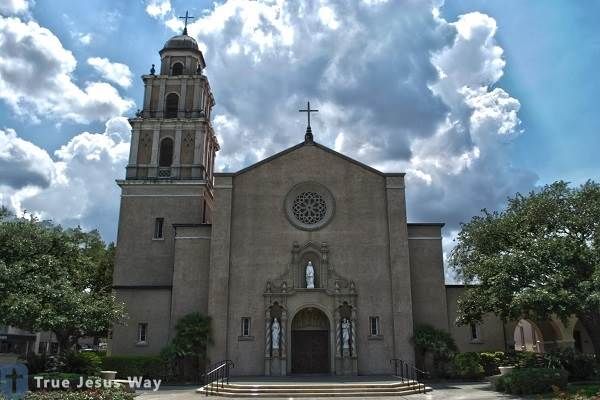
Founded in 1924, the parish is known for:
- Its beautiful Romanesque church, built in 1948 and listed on the National Register of Historic Places.
- An excellent parish school that educates over 700 students.
- Strong liturgical life and sacred music, including a Schola Cantorum.
While many parishes have grown through suburban development, St. Anne stands out for thriving in an urban environment, ministering to a cross-section of ages, ethnicities, and professions. The parish also partners closely with Catholic Charities of Houston and hosts regular interfaith dialogues and community events.
St. Thomas More Catholic Church — Centennial, Colorado
As the largest parish in the Archdiocese of Denver, St. Thomas More serves around 7,000 families in Centennial, a growing suburb south of Denver.
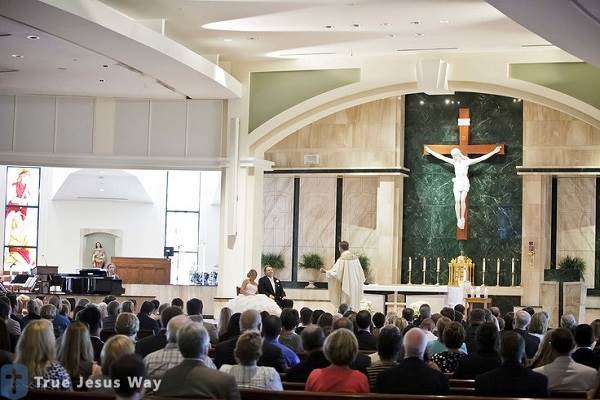
The parish is widely respected for its leadership in:
- Pro-life advocacy, hosting annual Respect Life conferences and supporting local pregnancy resource centers.
- Youth ministry, with hundreds of teens involved in confirmation prep, Edge, and Life Teen.
- Offering more than 80 ministries, including mental health support, grief counseling, and financial peace university.
The church’s architecture combines contemporary design with traditional sacred art, creating a space that draws worshippers into deep reverence and beauty. With its dedication to both truth and compassion, it’s easy to see why it’s among the largest Catholic parishes in USA.
Holy Name Cathedral Parish — Chicago, Illinois
As the mother church of the Archdiocese of Chicago, Holy Name Cathedral plays a dual role: both as a parish home and as a symbolic spiritual center. While its registered membership of about 5,000 families may seem smaller compared to others, its annual liturgical attendance exceeds 20,000, especially during Holy Week, Christmas, and public events.
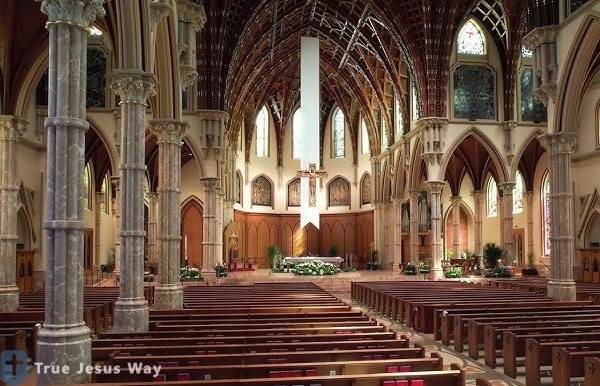
The Cathedral has a rich history:
- Rebuilt after the Great Chicago Fire, it became a beacon for the city’s Catholic resurgence.
- Hosts major archdiocesan liturgies, including ordinations and state funerals.
- Offers daily confession, noonday Mass, and outreach to the city’s homeless population.
Its downtown location makes it a spiritual stop for commuters, tourists, and locals alike—proving that size is not only about registered members, but about Catholic witness in the heart of culture.
Christ the King Catholic Church — Tampa, Florida
Christ the King is a thriving suburban parish in Tampa, serving over 6,000 families. The church is deeply involved in spiritual formation, liturgy, and community service.
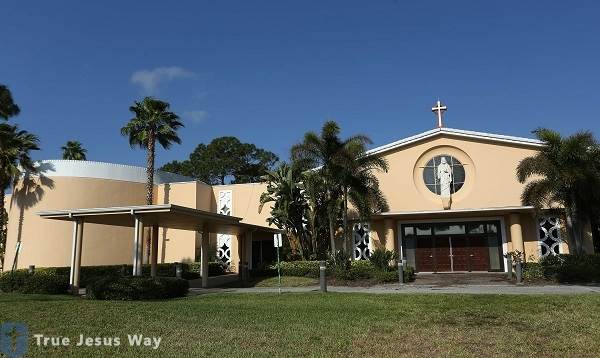
Founded in 1945, Christ the King today includes:
- A school for grades PK–8, focused on academic excellence and Catholic identity.
- Regular Eucharistic processions, Marian festivals, and outreach to veterans and first responders.
- Perpetual adoration, held in a dedicated chapel open day and night.
The parish’s growth mirrors Tampa’s own population boom, and its welcoming culture has made it a spiritual home for newcomers and life-long Catholics alike.
St. Mary’s Catholic Church — Greenville, South Carolina
One of the most dynamic parishes in the Southeast, St. Mary’s serves over 5,000 families and stands as a beacon of orthodox Catholicism and classical worship.
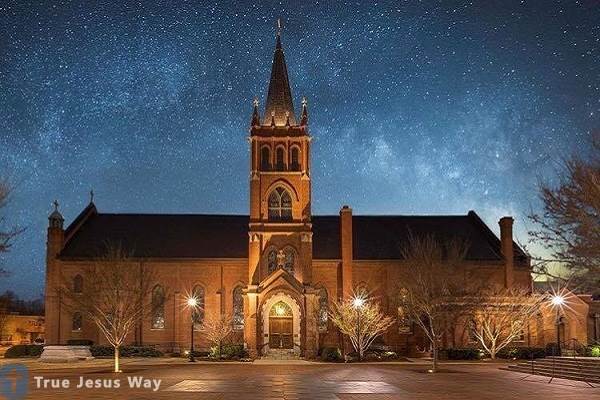
Noteworthy features:
- A traditional Latin Mass, offered weekly alongside the Novus Ordo.
- A classical K–12 Catholic school, praised for academic rigor and spiritual depth.
- Faithful Dominican friars who provide intellectually rich preaching and confession availability.
Its gothic church building, prayerful liturgies, and doctrinal clarity attract not only locals but also visitors from nearby states seeking reverent worship and strong catechesis.
Our Lady of the Angels Catholic Church — Lakewood Ranch, Florida
Rounding out our list is Our Lady of the Angels, one of the fastest-growing parishes in the U.S. Though established just two decades ago, it now serves over 5,000 households and continues expanding to meet demand.
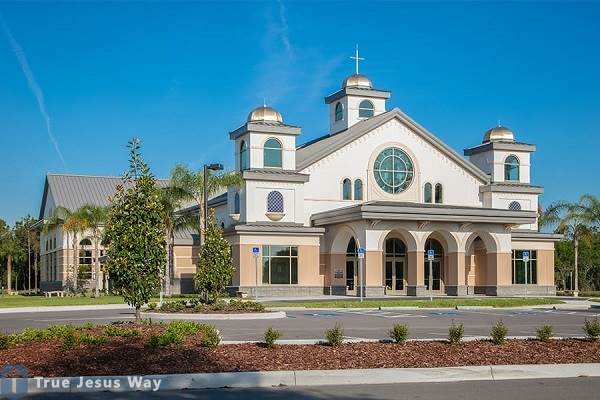
Strategically located between Sarasota and Bradenton, the parish thrives with:
- A new church building, dedicated in 2020, with seating for 1,500.
- Dozens of active ministries, including GriefShare, Knights of Columbus, and Catholic moms groups.
- A strong focus on healing ministries and divine mercy devotions.
Many parishioners are retirees, snowbirds, and relocated families who find in this parish a deeply welcoming, prayerful, and Eucharist-centered community.
Geographic and Demographic Trends
The growth of the largest Catholic parishes in USA is not random—it follows clear demographic and geographic patterns tied to population shifts, immigration, and urban development. Understanding where and why these parishes are growing sheds light on how Catholicism is evolving across the American landscape.
Where Are These Parishes Located?
A close look at the list reveals a striking reality: most of the largest Catholic parishes in the USA are located in the South and Southwest, particularly in states like:
- Texas (Houston, Keller)
- Florida (Tampa, Lakewood Ranch)
- North Carolina (Charlotte)
- Georgia (Roswell)
- Colorado (Centennial)
By contrast, only a few major parishes remain in historically Catholic regions like the Northeast (e.g., Chicago’s Holy Name Cathedral). This geographical realignment reflects larger societal trends:
- Population Growth: Southern and southwestern states are experiencing the fastest growth in the U.S., drawing families with job opportunities, warmer climates, and lower costs of living.
- Suburban Expansion: Many of these parishes are located in suburbs or exurbs—areas that have exploded in development and housing over the past 20 years.
- Real Estate Availability: In contrast to landlocked urban centers, southern states often allow parishes to build large, campus-style facilities to serve thousands of people.
In effect, Catholic population centers have shifted from older, urban dioceses to younger, suburban dioceses, requiring different pastoral models and infrastructure.
The Role of Immigration and Ethnic Diversity
Another major driver behind the growth of the largest Catholic parishes in USA is immigration. Catholic immigrants—especially from Latin America, the Philippines, Vietnam, and parts of Africa—have revitalized the Church in many areas.
Many of the top parishes feature:
- Bilingual or trilingual liturgies, often in English and Spanish, sometimes also Vietnamese or Tagalog.
- Ethnic choirs, Marian processions, and feast days reflecting various cultural devotions.
- Ministries that serve immigrant needs, such as ESL (English as a Second Language), immigration assistance, and cultural integration programs.
This diversity has not only increased numbers but has enriched the spiritual and cultural life of these parishes. Catholicism in America is no longer culturally uniform; it is a mosaic of expressions, united by the same Eucharistic faith.
Why Southern States Are Leading Catholic Growth
A closer look at states like Texas, Florida, Georgia, and North Carolina shows why they are home to many of the largest Catholic parishes in the USA:
- Young and Mobile Populations
These regions are attracting younger families looking for affordable housing and career growth. Young Catholics often seek vibrant parishes that offer strong youth programs, marriage preparation, and family-friendly ministries. - Latino Catholic Growth
The Hispanic population has grown rapidly in these states, and with it, the presence of culturally alive Catholic communities. In Texas alone, over 40% of Catholics are Hispanic, making bilingual parish life essential. - Warm Weather Retirement Migration
Florida in particular has seen a wave of Catholic retirees. These older but active parishioners often bring time, resources, and volunteer energy to support growing ministries. - Strong Diocesan Leadership and Planning
Many dioceses in the South and West have been proactive in building new parishes or expanding existing ones to meet the demand. Rather than wait for overcrowding, they anticipate growth and respond with large-scale parish planning.
Urban vs. Suburban: A Tale of Two Church Models
While traditional Catholic strongholds in urban areas—like Boston, Philadelphia, and Detroit—have seen parish closures or consolidations due to aging populations and clergy shortages, the suburban model has flourished. The largest Catholic parishes in USA today are overwhelmingly suburban, and that comes with both advantages and challenges:
- Advantages:
- Easier land access for building large facilities
- Parking and accessibility for families
- More room for schools, retreat centers, and parish halls
- A hub-like model that serves multiple neighborhoods
- Challenges:
- Risk of anonymity in large congregations
- Pastoral care stretched thin over massive memberships
- Need for robust staff, trained lay leaders, and digital engagement
In both cases, what remains central is the mission: to bring people to Christ, form them in the faith, and send them forth as witnesses in the world.
Ministry, Education, and Community Services
The largest Catholic parishes in USA are not just measured by attendance or square footage—they are vibrant spiritual ecosystems, pulsing with ministry, education, and outreach. These parishes operate on a scale more often seen in small cities: with multiple staff members, dozens of ministries, and facilities that stay active seven days a week.
At the heart of this scale is a simple mission: to help people know, love, and follow Jesus Christ—together as a living community of faith.
Parish Schools and Lifelong Catechesis
One of the most significant features of these parishes is their commitment to Catholic education. Most of the largest parishes maintain full Pre-K through 8th grade schools, often with 300 to 900 students enrolled. But beyond elementary education, they offer lifelong faith formation:
- Children’s Religious Education (CCD) for those not enrolled in Catholic schools.
- First Communion and Confirmation classes drawing hundreds each year.
- RCIA (Rite of Christian Initiation of Adults) for converts and returning Catholics.
- Adult Bible studies, theology programs, and speaker series open to all parishioners.
These educational efforts ensure that faith is passed on from generation to generation, not only through tradition but through intentional, Scripture-rooted catechesis.
For example, St. Peter Chanel in Georgia hosts over 200 participants in its adult formation programs annually. St. Elizabeth Ann Seton in Texas runs a faith formation department with dozens of trained volunteers coordinating sacramental prep for every age.
The largest Catholic parishes in USA have realized that Catholic education doesn’t stop after Confirmation. In fact, in a culture of confusion and secularism, adult faith formation is more necessary than ever.
Evangelization and Outreach Ministries
What separates a large Catholic parish from just being a “big church” is its mission outward. These communities have made it their priority to evangelize—not just maintain. Their outreach is not only spiritual but deeply practical.
Most of the top ten parishes offer ministries such as:
- St. Vincent de Paul Societies: Providing food, rent assistance, clothing, and utility help to local families in crisis.
- Pro-life and Respect Life ministries: Including prayer vigils at abortion centers, pregnancy support, and foster care outreach.
- Immigration and refugee assistance: Especially in Houston, Tampa, and Charlotte, where many immigrant families seek help navigating legal and social systems.
- Marriage and family support: From Pre-Cana classes to grief recovery groups, marriage enrichment weekends, and parenting classes, these parishes recognize that strong families form the backbone of a strong Church.
Take Prince of Peace in Houston—this parish doesn’t just host weekly Mass. It also runs:
- A food pantry serving over 1,000 families a month
- Job readiness and ESL classes
- Healing Masses, divorce recovery ministries, and spiritual direction appointments
Evangelization, then, is more than preaching. It’s living the Gospel with hands and feet.
Liturgical Life and Sacraments
For any Catholic parish, the Eucharist is the “source and summit” of its life. The largest Catholic parishes in USA celebrate this with reverence, beauty, and frequency.
Most offer:
- 6 to 10 weekend Masses, including vigil, early morning, midday, and evening liturgies.
- Daily Mass, often in multiple languages, with morning and evening options.
- Regular confession schedules, sometimes daily or several times weekly.
- Eucharistic adoration, with some parishes hosting perpetual adoration chapels open 24/7.
Sacramental numbers are staggering. For example, in one year a single large parish may celebrate:
- 400+ baptisms
- 300+ First Communions
- 250+ Confirmations
- 80+ weddings
- 500+ anointings of the sick
These aren’t just ceremonies—they are moments of encounter with Christ, changing lives and drawing people deeper into the heart of the Church.
Liturgically, these parishes invest in:
- Music ministries with multiple choirs, cantors, and musicians.
- Liturgy training for altar servers, lectors, extraordinary ministers, and ushers.
- Beautiful liturgical calendars, incorporating Corpus Christi processions, Marian devotions, Holy Week dramatizations, and Christmas pageants.
Through liturgy, the largest Catholic parishes in the USA lead thousands into worship that is not only massive—but deeply meaningful.
Specialized Ministries and Small Communities
While these parishes are large, they succeed when they feel small on the inside. That is, they intentionally form small faith communities to keep people connected and spiritually nourished.
These include:
- Men’s and women’s ministries (like That Man Is You, Walking with Purpose)
- Young adult groups and college ministries
- Senior groups, often centered around prayer, service, and fellowship
- Divine Mercy cenacles, Legion of Mary, and charismatic prayer circles
Many parishes also offer mental health support, caregiver ministries, and grief counseling—recognizing that modern life is full of invisible wounds that need attention and healing.
Through these ministries, even parishes with thousands of families ensure that no one walks alone.
Architecture, Beauty, and Worship Spaces
The largest Catholic parishes in USA are more than administrative centers or gathering halls. They are sacred spaces—designed to lift the heart, focus the soul, and remind every visitor that they are standing in the presence of God.
Beauty matters in Catholic worship. It is not a luxury—it is a reflection of divine glory. In these vast parishes, architecture and sacred art play a vital role in forming faith, shaping reverence, and communicating timeless truths to an ever-changing world.
Church Buildings as Centers of Worship
Many of the largest parishes have built sanctuaries that seat over 1,500 people, with overflow areas for feast days and Holy Week. These church buildings are often the physical and spiritual centers of entire communities.
While some parishes have opted for contemporary designs, others retain traditional European-inspired architecture, complete with high vaulted ceilings, stained glass, and marble altars. Regardless of style, the goal is the same: to create a space set apart for the worship of God.
Let’s look at a few examples:
- St. Matthew in Charlotte features a contemporary sanctuary with soaring wood beams, natural light, and a massive crucifix that draws the eyes upward in prayer. The space is large but warm—designed to welcome thousands while still inviting silence and awe.
- St. Anne in Houston, by contrast, offers a more historic experience, with its Romanesque design, stone facade, and traditional nave. Worshippers say entering St. Anne feels like walking into a sacred place preserved in time.
- Our Lady of the Angels in Lakewood Ranch was recently constructed with modern liturgical standards—large sanctuary, wide transepts, space for choirs, and top-tier sound systems. It reflects the trend of building for both beauty and functionality.
Large doesn’t mean impersonal. These buildings are often designed with devotional chapels, quiet corners for private prayer, and spaces for fellowship and coffee after Mass—blending solemnity with community.
Notable Chapels, Shrines, and Devotional Areas
Another defining feature of the largest Catholic parishes in USA is their use of shrines and side chapels to foster personal devotion. These spaces allow thousands of parishioners to find intimacy with Christ even within a vast community.
Common features include:
- Adoration Chapels: Often with perpetual Eucharistic Adoration, these chapels are small sanctuaries within the church where parishioners can sit in silent prayer before the Blessed Sacrament, day or night.
- Shrines to Saints and the Virgin Mary: Many parishes build shrines to Our Lady of Guadalupe, St. Joseph, St. Jude, or their parish patron saint. These become pilgrimage sites within the parish, especially during feast days.
- Outdoor Rosary Walks and Stations of the Cross: Several parishes, such as Christ the King in Tampa, have outdoor areas landscaped for prayer, offering a peaceful space for reflection and spiritual walking.
- Memorial Chapels: Dedicated to fallen veterans, unborn children, or deceased parishioners, reminding the faithful that the Church transcends time.
In these devotional spaces, the Church’s beauty becomes tangible and accessible—inviting the faithful not only to witness glory but to enter into it through prayer and contemplation.
Liturgical Art and Sacred Music
Art and music are central to Catholic worship—and large parishes have the means and vision to support them in extraordinary ways.
- Stained Glass Windows: Depicting Biblical scenes, the lives of saints, and the mysteries of the Rosary, these windows are catechism in color—teaching and inspiring all who gaze upon them.
- Sacred Sculpture: From marble statues to wooden crucifixes, from baptismal fonts to holy water fonts, every detail is crafted to glorify God.
- Liturgical Vestments and Banners: These parishes invest in seasonal colors, Marian symbols, Eucharistic themes—visually expressing the richness of the liturgical calendar.
- Music Ministries: Most of the largest parishes in the USA support multiple choirs—children’s choirs, teen ensembles, adult scholas, and bilingual choirs. Some even host orchestras or collaborate with diocesan music festivals.
For example:
- Holy Name Cathedral in Chicago is known for its world-class organ, weekly choral concerts, and collaboration with music schools.
- St. Thomas More in Colorado regularly trains parishioners in sacred chant, contemporary worship music, and even offers musical retreats for those called to this ministry.
Sacred music here is not performance—it is prayer lifted to God in song, helping thousands to worship with both heart and voice.
Challenges and Opportunities for Large Parishes
While the largest Catholic parishes in USA shine with vitality, beauty, and ministry reach, they also face unique challenges. Size brings opportunity—but also complexity. These parishes must work intentionally to avoid becoming faceless institutions and instead remain spiritually nourishing communities where individuals are known, cared for, and formed in the faith.
Understanding both the difficulties and the blessings that come with such scale helps us appreciate the spiritual labor behind the scenes—and the leadership required to keep the mission of Jesus Christ front and center.
Pastoral Challenges of Scale
One of the most pressing challenges for large parishes is maintaining personal connection. In communities with over 5,000 families, it’s easy for parishioners to feel anonymous or disconnected. The danger is that people come to Mass but never form deeper bonds of discipleship, accountability, or service.
Common pastoral struggles include:
- Clergy Shortage: Many large parishes operate with just 2 or 3 priests, who must serve tens of thousands. This can lead to priest burnout and less availability for personal counseling, confessions, and spiritual direction.
- Volunteer Gaps: While big parishes often have many ministries, they still struggle with recruiting and sustaining volunteers—especially in areas like youth catechesis, liturgy coordination, and charitable outreach.
- Communication Difficulties: It’s a constant challenge to keep thousands of parishioners informed and engaged. Staff must navigate digital newsletters, websites, social media, bulletin announcements, and pulpit messages—all while managing limited attention spans.
- Generational Disconnects: In multigenerational parishes, younger Catholics often feel underserved or uninspired, while older members may feel alienated by modern changes. Balancing both ends of the age spectrum is a pastoral art.
- Logistical Complexity: Coordinating parking, Mass schedules, weddings, funerals, maintenance, and ministry room usage requires professional-level administration. Without clear systems, even small missteps can become large disruptions.
Yet despite these challenges, many of the largest Catholic parishes in the USA are models of pastoral excellence—thanks to careful planning, staff training, and spiritual focus.
Opportunities for Evangelization and Innovation
What’s remarkable about large parishes is how they often rise to the challenge. Their size, while daunting, becomes a platform for creative ministry, expansive outreach, and transformative faith encounters.
Some of the unique advantages include:
- Staffing for Mission: Large budgets allow these parishes to hire professional directors for youth ministry, adult formation, communications, finance, liturgy, and outreach. This leads to more sustainable, specialized, and effective ministry.
- Lay Leadership Development: With fewer priests available, large parishes are becoming centers for lay formation—training hundreds of Eucharistic ministers, catechists, spiritual directors, and small group leaders.
- Digital Evangelization: Parishes like St. Matthew in Charlotte and Prince of Peace in Houston livestream their Masses, offer online sacrament prep, and run YouTube and podcast channels that reach not just their own members—but Catholics around the world.
- Faith-Sharing Small Groups: Many parishes intentionally break down their large congregations into smaller discipleship communities, such as Alpha groups, neighborhood Bible studies, or men’s and women’s circles. These provide intimacy within immensity.
- Community Influence: With size comes voice. These parishes can impact local legislation, collaborate with citywide charities, and organize public prayer events (e.g., Eucharistic processions, Rosary rallies) with hundreds or thousands participating.
The bottom line? The largest Catholic parishes in USA have an unparalleled potential to shape culture—not just within the Church, but in the broader community.
Financial Stewardship and Responsibility
Big parishes typically operate on multi-million-dollar annual budgets. This can sound intimidating—but also empowering.
With such financial resources, these parishes can:
- Maintain excellent facilities and fund long-term building projects
- Support diocesan appeals and international missions
- Invest in professional staff, training, and technology
- Sustain charitable programs like food pantries, housing aid, and tuition assistance
However, financial stewardship must be carefully handled:
- Transparency in budget reports and annual appeals is essential to parishioner trust.
- Teaching stewardship as a spiritual discipline, not just a financial necessity, is key.
- Promoting planned giving and legacy donations ensures sustainability for future generations.
Parishes like Christ the King in Tampa and St. Thomas More in Colorado have launched successful campaigns to renovate sanctuaries, expand schools, and build new family centers—all while inviting parishioners into generous discipleship.
The scale is impressive, but the goal remains humble: to honor God with every gift, serve His people, and carry forward the mission of the Church in bold, visible ways.
Why Parish Community Still Matters Today
In a world of digital disconnection, social fragmentation, and moral confusion, the local parish remains a sacred anchor—a place where the eternal love of Christ meets people in the reality of daily life. While the largest Catholic parishes in USA may seem overwhelming in size, their deepest impact lies not in their numbers, but in the sense of belonging, mission, and spiritual family they foster.
The Catholic parish has always been more than just a building. It is the living cell of the Body of Christ—a community where people come to be healed, transformed, challenged, and sent out again.
More Than Numbers: A Spiritual Home
Whether a parish has 100 families or 10,000, its mission is the same: to help souls know Jesus, grow in holiness, and go into the world as His disciples.
What the largest Catholic parishes in USA show us is that even at scale, the Church can remain personal, pastoral, and powerful.
These parishes remind us:
- You are not alone in your faith journey.
- There is a place where you can worship, receive the sacraments, and pray deeply.
- You can find others who share your convictions, struggles, and desire for holiness.
- You can serve—whether as a lector, catechist, choir member, or behind-the-scenes helper.
In many cases, people walk into these vast churches burdened by sin, fear, or emptiness—and find there a lifeline of grace. A moment in adoration. A homily that speaks to their hidden pain. A priest who listens. A community that welcomes them back.
Large parishes become lifelines because they become homes.
Personal Testimonies from Parish Life
Behind every bulletin and ministry board, there are real stories—individuals whose lives have been changed through the living presence of Christ in their local parish:
- A young father who returned to the Church after his daughter asked, “Why don’t we pray?”
- A grieving widow who found peace in the early morning adoration chapel.
- A teen who met Jesus during a retreat and began discerning a call to religious life.
- A migrant family who was embraced by the Spanish-speaking community and helped find housing and food.
These are not abstract examples—they are daily miracles in the pews of the largest Catholic parishes in USA.
Even with thousands of members, these parishes often create small-group intimacy, foster spiritual friendships, and become lifelong homes of faith.
As one parishioner from St. Elizabeth Ann Seton in Texas put it:
“I used to feel like a stranger in church. But this parish taught me how to belong—to God, to others, and to something bigger than myself.”
And another from Christ the King in Florida:
“This is where my marriage was saved. Where my son was baptized. Where I learned to forgive. It’s not just a church—it’s where I met Christ.”
The Parish as the Heart of the Church
Pope Francis has often emphasized the role of the parish as a “community of communities”—not merely an administrative structure, but a missionary center, a field hospital, a school of prayer, and a house of mercy.
In that vision, the largest Catholic parishes in USA are not outliers—they are living proof that the Church is still growing, still active, still a refuge for the weary and a fire for the hungry.
They are places where the sacraments are not distant rites but daily nourishment. Where the Word of God is proclaimed boldly. Where mission is not optional but essential.
And in a time when secularism, isolation, and relativism threaten the soul, the parish is where truth is still preached, love is still practiced, and Jesus Christ is still encountered.
Final Reflection: The Future of American Catholic Parishes
The growth of the largest Catholic parishes in USA is more than a demographic phenomenon—it is a sign of hope. It tells us that the Church is still alive, still attracting souls, still adapting, and still proclaiming Christ in a fast-changing world.
Yet the future of American Catholic parishes will not be defined by numbers alone. It will be defined by spiritual renewal, missionary courage, and faithful witness. The question is not merely: How big can we grow? But rather: How deeply can we root ourselves in Christ?
Will Parishes Keep Getting Bigger?
The answer is: very likely, yes.
As populations continue to migrate toward suburban and southern regions, we can expect to see more megaparishes emerge—especially in dioceses that are planning ahead, training lay leaders, and building infrastructure for growth.
Mergers in older dioceses will also lead to larger, consolidated parishes that need to reimagine how they serve diverse and widespread congregations. Digital tools, multi-lingual services, and flexible ministry models will become increasingly essential.
However, bigger is not always better. Without intentional pastoral care, spiritual formation, and evangelistic vision, large parishes risk becoming crowded but shallow, efficient but not fruitful.
The healthiest large parishes of the future will be those that:
- Break large communities into smaller faith groups for prayer, study, and service.
- Train and empower lay leaders to serve alongside clergy.
- Invest in young people, families, and the poor with love and creativity.
- Stay rooted in sacramental life, adoration, and solid preaching.
- Offer clear and joyful witness to the Gospel in word and deed.
The future belongs to parishes on fire—with the Holy Spirit, with Scripture, and with sacrificial love.
The Need for Spiritual Depth in Size
It’s easy to measure size. It’s harder to measure depth—but that’s where the real future lies.
The largest Catholic parishes in USA must not lose sight of the basics:
- Prayer: Building everything on a foundation of Eucharistic adoration, intercession, and daily encounter with God.
- Formation: Teaching the faith clearly, boldly, and beautifully, especially to the next generation.
- Discipleship: Not just making believers, but forming saints—people who live the Gospel and change the world around them.
- Mission: Moving beyond maintenance into real outreach—inviting the lost, feeding the hungry, and proclaiming Christ to all.
This isn’t optional. It’s urgent.
In a culture where truth is questioned, family is broken, and despair is rising, the Church must be light in the darkness. And the parish—whether large or small—must be that light in every town and neighborhood.
A Call to Every Catholic
If you’re reading this, the future of the parish isn’t just a theory. It’s your mission too.
- Are you active in your parish—or simply attending?
- Are you using your gifts—or waiting to be served?
- Are you deepening your faith—or just surviving spiritually?
You don’t need to be a theologian or professional minister to make a difference. Every parish needs prayers, witnesses, volunteers, and disciples.
Whether you belong to one of the largest Catholic parishes in USA or a tiny mission chapel, your presence matters. Your faith matters. Your service matters.
Because the future of the Church isn’t in Rome or Washington—it’s in the pews and prayer groups and homes of ordinary Catholics who say yes to Jesus and yes to His Church.
The mission is huge. The harvest is ready. And the parish—your parish—is the field where God is already working.