Craving in the Buddha’s First Teaching
The Second Noble Truth – Samudaya
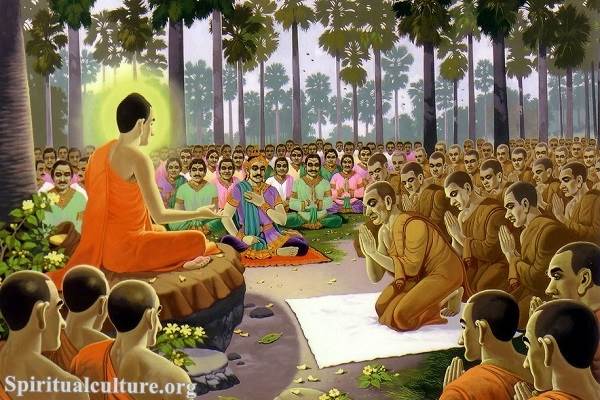
When the Buddha gave his very first teaching after enlightenment — the Dhammacakkappavattana Sutta, or “Turning the Wheel of Dhamma” — he introduced the Four Noble Truths, which lay the foundation for all of Buddhism.
The First Noble Truth reveals a deep and honest insight: dukkha exists. Life, even in its most beautiful moments, is marked by a subtle unsatisfactoriness. But the Buddha didn’t stop at this observation. He went further — asking why dukkha arises in the first place.
This leads to the Second Noble Truth: samudaya, the origin of dukkha. And what did the Buddha identify as its root cause? One word: taṇhā — craving.
The Pāli word taṇhā literally means “thirst.” It conveys a visceral image: a parched dryness, a restless reaching for something to relieve discomfort. This thirst lies not only in physical desire but deep within the heart and mind. It’s a force that drives much of our behavior — often unconsciously.
In the sutta, the Buddha says:
“It is this craving which leads to renewed existence, accompanied by delight and lust, seeking delight here and there — that is, craving for sensual pleasures (kāma-taṇhā), craving for becoming (bhava-taṇhā), and craving for non-becoming (vibhava-taṇhā).” (SN 56.11)
Let’s unpack these three forms of craving:
- Kāma-taṇhā is craving for sensual pleasure — the constant desire for pleasant sights, sounds, smells, tastes, physical sensations, and experiences. It fuels consumerism, addiction, and the endless chase for stimulation.
- Bhava-taṇhā is craving for becoming — the desire to be someone, to attain status, identity, or even spiritual achievements. It’s the ego’s ambition to solidify itself.
- Vibhava-taṇhā is craving for non-existence — the desire to escape, to numb, to annihilate unpleasant feelings or situations. It shows up as aversion, self-destructive tendencies, or even denial of life itself.
What Does Craving Feel Like in Real Life?
How Taṇhā Shows Up in Our Daily Experience
You don’t have to sit in a meditation hall or read ancient texts to encounter craving. It’s with you when you wake up, scroll your phone, eat, speak, work, shop, or lie awake at night. Craving is not something far away — it is woven into the very fabric of our day-to-day lives.
Imagine these moments:
- You’re halfway through lunch, but already thinking about dessert.
- You check your messages, not because there’s something urgent, but because you hope something exciting or affirming will appear.
- You find yourself replaying an argument in your mind, wanting to be understood, craving to be right.
- You feel restless on a quiet evening and reach for a drink, a snack, a screen — anything to fill the silence.
These are ordinary situations. But beneath them, if we pause and look, we may notice something deeper: a quiet urge to grasp, to fix, to avoid — to make this moment different than it is.
That urge is taṇhā.
It often wears different masks — hunger, boredom, longing, ambition, lust, irritation — but the pattern is the same: a sense that something is missing, and a belief that we’ll feel whole if we just get or get rid of something.
And it’s not always about material things. We crave:
- Attention: “Notice me.”
- Control: “Things must go my way.”
- Certainty: “I need to know what will happen.”
- Love: “I can’t be happy unless this person accepts me.”
- Peace: “I want to escape this uncomfortable feeling — now.”
“What am I reaching for right now? Why? What do I believe it will give me?”
The Psychology of Craving
Why We Keep Wanting More
At the surface, craving looks like a simple want — “I want that cookie,” “I want a better job,” “I want peace and quiet.” But underneath the surface, craving is not just about the object we desire. It’s about the feeling that we believe the object will bring.
This is what makes craving so psychologically powerful: it’s not the thing we’re after — it’s the imagined relief, joy, or identity we attach to it.
We don’t just crave coffee. We crave the comfort, the energy, the feeling of being okay.
We don’t just crave a relationship. We crave the sense of being seen, loved, valued.
We don’t just crave success. We crave security, self-worth, or a sense of meaning.
But here’s the catch: when we finally get what we craved, the pleasure is almost always temporary. It fades. The satisfaction is not permanent. And because the root feeling — that sense of lack — was never truly healed, the cycle begins again.
Craving works like a psychological feedback loop:
Craving → Getting → Brief satisfaction → Emptiness → Craving again
This loop is similar to addiction, and in fact, modern neuroscience supports what the Buddha taught over 2,600 years ago. Our brains are wired to chase dopamine — the pleasure chemical. But dopamine isn’t released when we have something — it spikes when we’re anticipating it. That anticipation creates the “pull.”
Once we get the thing, the thrill drops. So we look for the next hit. The next thing. The next escape.
And while this loop plays out externally, it also shapes our identity. We don’t just crave experiences — we crave to be someone. This is where craving and ego become entangled.
We cling to ideas like:
- “I am successful because I achieved this.”
- “I am lovable because they love me.”
- “I am important because I am right.”
- “I am safe because I have control.”
Craving, in this sense, is not just desire. It is self-construction. It’s how the mind builds and defends a story of “me.” A fragile self that must be constantly affirmed, improved, protected — and is never quite enough.
And that’s why craving is so exhausting. It keeps us running on a treadmill of becoming — always trying to arrive, but never truly resting. It creates tension between what is and what should be. It narrows our awareness and makes the present moment feel insufficient.
The Buddha saw this with radical clarity. He taught that until we understand the psychological mechanics of craving — how it seduces us, how it hides in our motivations, how it sustains the illusion of self — we will remain caught.
But the good news is this: once we see it, we can loosen its grip.
We can pause before acting. We can breathe before grabbing. We can gently question the inner story: “What am I really seeking? Is it already here?”
Freedom begins not by cutting off desire completely, but by transforming our relationship to it. And that begins with awareness.
The Consequences of Craving
How Taṇhā Feeds the Cycle of Suffering (Saṃsāra)
At first glance, craving might not seem so dangerous. After all, everyone wants things — isn’t that normal? But in the Buddha’s teaching, craving isn’t just an inconvenience. It’s not a flaw to be managed or a habit to reduce. It is the engine of suffering.
To understand this, we have to look at the bigger picture: saṃsāra, the cycle of birth and death. According to the Buddha, our repeated experience of dissatisfaction — birth, aging, sickness, loss, fear, and death — is not random. It’s conditioned. It has causes. And craving is one of the key forces that keeps the wheel turning.
The Buddha explained this through the principle of dependent origination (paṭicca samuppāda), a chain of twelve interconnected links that describe how suffering arises. Craving (taṇhā) sits near the center of this chain. It leads to clinging (upādāna), which leads to becoming (bhava), and eventually to birth (jāti). With birth, the entire package of suffering arises again: aging, illness, separation, and death.
In simpler terms:
We crave → we cling → we act → we create conditions for future rebirth → we suffer again.
It’s like a wheel that spins every time we grasp. And each time we act from taṇhā — whether through greed, aversion, or confusion — we lay down the seeds for future pain.
But even without talking about rebirth, we can see the consequences of craving right now, in this very life.
Craving gives rise to:
- Anxiety: the fear of not getting what we want
- Frustration: when things don’t go the way we imagined
- Jealousy: when someone else has what we crave
- Restlessness: an inability to be still or satisfied
- Addiction: needing more and more to feel okay
- Conflict: both internal and external, because our desires clash with reality
The Dhammapada expresses it poignantly:
“From craving arises sorrow. From craving arises fear. One who is free from craving has no sorrow — and no fear.” (Dhp 216)
Liberation from Craving: The Path of Release
The Third Noble Truth – Nirodha
Once the Buddha had explained the problem of suffering and its cause, he did something extraordinary. He pointed to a possibility most people never imagined: the end of suffering.
This is the Third Noble Truth: nirodha — the cessation of dukkha. It is not a theoretical idea. It is a lived, direct experience of peace that arises when craving (taṇhā) is understood, seen clearly, and let go of.
The Buddha’s message was simple but radical: If craving causes suffering, then the absence of craving is the absence of suffering.
But this is not about suppressing desire or forcing ourselves to be detached. True liberation doesn’t come from willpower — it comes from wisdom.
The key is not to fight craving but to see it deeply. When we observe craving in the moment — how it arises, how it tightens the mind, how it promises satisfaction but never delivers lasting peace — we start to loosen our grip on it. And as we loosen, it loosens its grip on us.
Imagine craving as a fire. When we feed it — with more grasping, more distraction, more becoming — it flares up. But if we stop feeding it, even just for a moment, the fire begins to fade. It quiets. It cools.
This cooling is precisely what the word Nibbāna (or Nirvana) means. It literally refers to the extinguishing of a flame — the ending of burning. Not a dry emptiness, but a significant release.
The Buddha said:
“Just as a fire burns as long as it has fuel, but dies out when the fuel is gone — so it is with craving.”
(Sutta reference, paraphrased)
What arises in its place is not numbness. It’s not apathy. It is clarity. Spaciousness. A stillness that holds everything gently without needing to control or possess.
This is why freedom from craving is not cold — it is compassionate. Because when we are no longer ruled by our own hunger, we become available to others. We become more open, more generous, more loving — not because we’re trying to be good, but because there’s no more need to protect the self we used to build through craving.
In a very real way, freedom from craving is freedom from fear.
And while full liberation may seem distant, the Buddha was clear: this path is gradual, but possible. Every time we recognize craving and don’t feed it, we take a step toward release. Every moment of mindful letting go is a taste of Nibbāna.
So liberation from craving isn’t only a far-off spiritual goal. It begins now — in the moment you become aware of wanting, and choose instead to rest in awareness.
As we do, we begin to understand what the Buddha meant when he said:
“Nibbāna is the highest happiness.”