MN 86 presents Aṅgulimāla as a feared killer whose encounter with the Buddha becomes a narrative of radical moral change. The discourse does not erase the harm he has caused. Instead, it holds transformation and consequence together: Aṅgulimāla becomes a monk and attains liberation, yet he still experiences hostility from people who remember his violence.
Textual source and historical setting
The Aṅgulimāla Sutta is found in the Majjhima Nikāya as MN 86. The early discourse gives the core encounter: the Buddha deliberately travels into the area where Aṅgulimāla operates, the bandit tries to catch him, and a paradoxical exchange stops the pursuit. Later commentaries add much fuller biographical material, including motives, teachers, and the famous necklace of fingers. Those later details should not be silently read back into every line of MN 86.
The narrative in context
Aṅgulimāla is introduced as violent and dangerous, while local people warn the Buddha not to enter his territory. The Buddha continues. Although Aṅgulimāla runs after him, he cannot catch up. When he calls for the Buddha to stop, the reply turns the word ‘stop’ into a moral challenge: the Buddha has stopped violence toward living beings, while Aṅgulimāla has not.
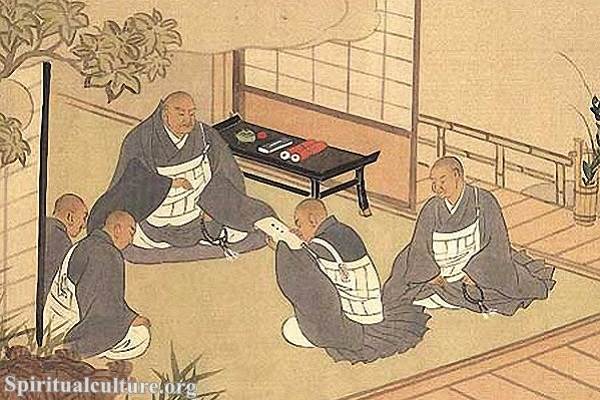
The confrontation leads to renunciation rather than retaliation. Aṅgulimāla enters the monastic community. Later, after people attack him with stones and other objects, the discourse frames his suffering in relation to the grave actions of his earlier life. The story therefore does not present conversion as a way to make past harm disappear.
Themes and interpretation
The narrative is often read as one of Buddhism’s strongest accounts of moral transformation. It insists that a person is not permanently identical with past wrongdoing, while also refusing the idea that change cancels consequences.
The discourse also places nonviolence at the center of the transformation. The decisive turning point is not defeat by force but a confrontation with a radically different way of living. This has made the story important in Buddhist discussions of rehabilitation, responsibility, and the possibility of change.
Place in religious and cultural tradition
Aṅgulimāla became an enduring figure in Buddhist preaching, art, prison chaplaincy, and modern ethical reflection. The story’s popularity also encouraged later narrative expansion. These later traditions can be meaningful, but an editorial account should distinguish the early sutta from commentarial biography.
How to read the story carefully
Readers should avoid romanticizing Aṅgulimāla’s violence or using the story to minimize the suffering of victims. MN 86 is powerful precisely because it keeps transformation and consequence together. It is also useful to note that many familiar details belong to later tradition rather than the earliest discourse.
Sources and further reading
- Majjhima Nikāya 86, Aṅgulimāla Sutta.
- SuttaCentral, translations and textual parallels for MN 86.