There is no single “traditional Buddhist meal.” Buddhism is practiced in many cultures with different cuisines, and dietary customs vary by school and monastic discipline. A meal in a Thai Theravāda monastery can be very different from Chinese Buddhist vegetarian cuisine or food served in a Tibetan community.
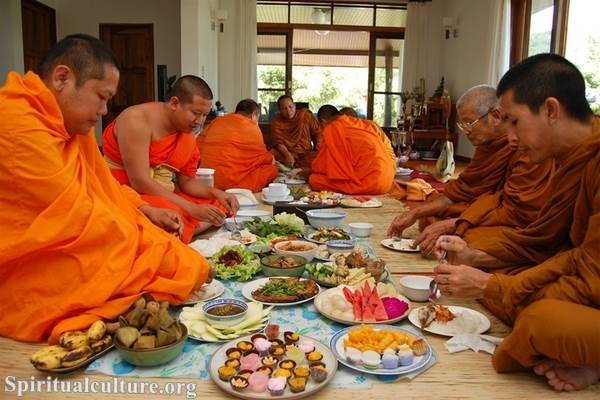
Theravāda alms food
In many Theravāda cultures, monks traditionally receive food from lay supporters. The meal may include rice, vegetables, curries, fruit, sweets, and sometimes meat or fish depending on local custom.
The religious emphasis is not on a sacred recipe but on generosity, gratitude, moderation, and the monastic practice of accepting appropriate food without demanding luxury.
East Asian vegetarian temple cuisine
Chinese, Vietnamese, Korean, and Japanese Buddhist traditions developed rich forms of temple cuisine. Many monastic communities emphasize vegetarian food, often built around rice or noodles, vegetables, tofu, beans, mushrooms, seaweed, pickles, and seasonal ingredients.
Some traditions avoid strong-smelling plants such as garlic and onions in monastic settings. The reasons are linked to particular scriptures, discipline, and ideas about meditation, not a universal Buddhist food law.
Japanese shōjin ryōri
Japanese Zen temples are especially associated with shōjin ryōri, a style of vegetarian Buddhist cuisine emphasizing seasonal ingredients, careful preparation, balance, and minimizing waste.
It is one regional Buddhist culinary tradition rather than the definition of Buddhist food everywhere.
Tibetan and Himalayan foods
Tibetan Buddhist communities historically depended on foods suited to high-altitude environments, including barley, dairy products, tea, noodles, and in many communities meat. Geography limited agriculture, so vegetarianism developed differently than in some East Asian monasteries.
Modern Tibetan Buddhist communities include both meat-eaters and vegetarians.
Mindful eating
Buddhist practice often encourages moderation and awareness around food. Monastic communities may recite reflections before eating, remembering that food sustains the body for practice rather than existing only for indulgence.
Lay Buddhists may apply similar ideas by eating with gratitude, avoiding waste, reducing harm, and noticing craving.
Is all Buddhist food vegetarian?
No. Vegetarianism is important in many Buddhist traditions but is not universal. Some Buddhists avoid meat entirely, some eat vegetarian meals on observance days, and others eat meat as part of normal local cuisine.
The phrase “Buddhist meal” therefore refers more accurately to the values and traditions surrounding food than to one required menu.
See the Five Precepts for the ethical background.