Most Buddhists live in Asia. Recent Pew Research Center estimates for 2020 place more than 90% of the world’s Buddhists in ten Asian countries, with especially large populations in Thailand, China, Myanmar, Japan, Vietnam, Sri Lanka, Cambodia, South Korea, India, and Malaysia.
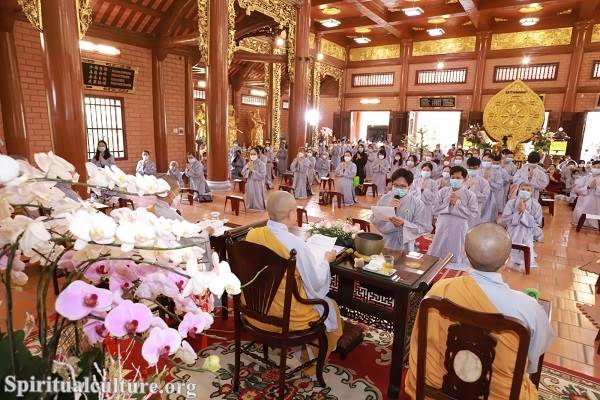
Asia is the center of the global Buddhist population
Buddhism began in South Asia and spread through trade, pilgrimage, translation, royal patronage, monastic networks, and migration. It became rooted in Southeast Asia, East Asia, the Himalayan region, and parts of Central Asia.
Today, Buddhist identity remains overwhelmingly concentrated in the Asia-Pacific region even though Buddhist temples and communities exist worldwide.
Countries with very large Buddhist populations
Pew’s 2020 global estimates identify Thailand as having the largest number of people counted as Buddhist, followed by China. The exact ranking differs from older estimates because measuring religion in East Asia is difficult: many people participate in Buddhist practices without choosing “Buddhist” as their sole religious identity in a survey.
Myanmar, Japan, Vietnam, Sri Lanka, Cambodia, South Korea, India, and Malaysia also have large Buddhist populations.
Countries where Buddhists are a majority
Buddhists form a majority of the population in several countries, including Thailand, Cambodia, Myanmar, Bhutan, Sri Lanka, Laos, and Mongolia according to Pew’s 2020 estimates.
Majority status does not mean everyone practices Buddhism in the same way. Levels of temple attendance, meditation, monastic support, folk religious practice, and personal identification vary widely.
Why China is difficult to measure
China has a large Buddhist cultural and institutional presence, but surveys may produce very different totals depending on the question asked. People can visit temples, venerate Buddhist figures, perform ancestral rites, or combine Buddhist practices with Chinese folk traditions without selecting a formal Buddhist identity.
For that reason, demographic figures for Chinese Buddhism should be treated as estimates rather than exact membership counts.
Buddhism outside Asia
Migration and conversion have established Buddhist communities in North America, Europe, Australia, New Zealand, Latin America, and Africa. These communities include Asian diaspora traditions as well as convert-based Zen, Tibetan, Theravāda, and other groups.
Globally, however, the overwhelming majority of Buddhists still live in Asia.
Demographic change
Pew’s recent work indicates that the number of people identifying as Buddhist declined between 2010 and 2020, influenced by aging populations, low fertility in several Buddhist-majority or historically Buddhist societies, and religious disaffiliation in parts of East Asia.
These figures describe religious identification, not the total number of people influenced by Buddhist culture or practice.