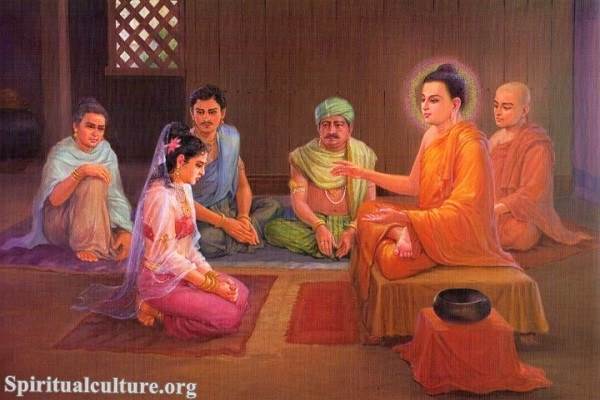
Buddhists may wear white to express simplicity, purity of intention, mourning, lay religious commitment, or respect during a ceremony. The meaning depends on the culture and occasion. White is especially common among lay Buddhists in parts of South and Southeast Asia, but it is not a universal Buddhist dress code.
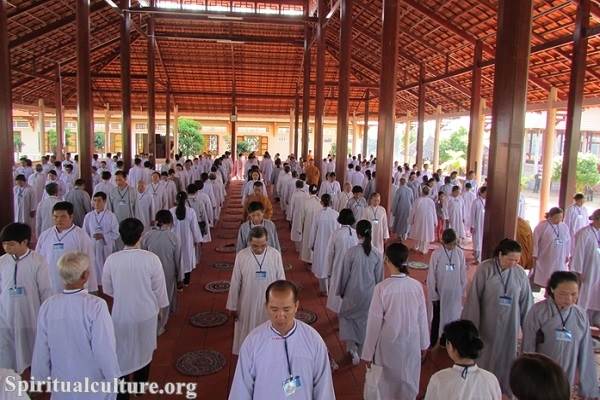
White on observance days
In several Theravāda cultures, laypeople may wear white when visiting a monastery, keeping special precepts, attending meditation retreats, or observing Uposatha days. White clothing can symbolize simplicity and a temporary stepping away from ordinary fashion and status.
Participants may undertake additional precepts, spend more time in meditation and chanting, listen to teachings, or stay at a monastery for part of the observance.
White at Buddhist funerals
In many Asian cultures, white is associated with mourning rather than celebration. Buddhist funeral clothing may therefore be white, plain, or subdued, depending on local custom.
This differs from many Western societies, where black is the conventional mourning color. Neither custom is a universal Buddhist doctrine.
White and lay identity
Monks and nuns normally wear monastic robes whose colors and styles are governed by their traditions. Lay practitioners who dress in white remain laypeople; white clothing does not by itself indicate ordination.
In some communities, dedicated lay practitioners or retreat participants become visually distinct through white clothing while ordained monastics wear saffron, maroon, brown, gray, or other robe colors.
Purity as a symbol
White often symbolizes cleanliness, simplicity, peace, or wholesome intention in religious cultures. In Buddhism, however, ethical purity is not achieved merely by wearing a color. The meaning of an observance lies in conduct, mental training, generosity, and wisdom.
A person can wear white without practicing Buddhism, and a Buddhist can practice sincerely without wearing white.
Do all Buddhists wear white at temples?
No. Visitors may wear ordinary modest clothing, traditional dress, temple uniforms, or colors appropriate to local custom. Some temples request white for retreats or ceremonies; others do not.
If visiting a Buddhist community, follow posted guidance or the example of local practitioners.
White and orange robes are not opposites
People sometimes assume white is for laypeople and orange is for monks everywhere. That pattern exists in some Theravāda settings but cannot be applied globally. Tibetan, East Asian, and modern Buddhist communities use other colors and forms of dress.
The safest conclusion is that white has important devotional and cultural meanings in many Buddhist societies, but its exact meaning is local rather than universal.