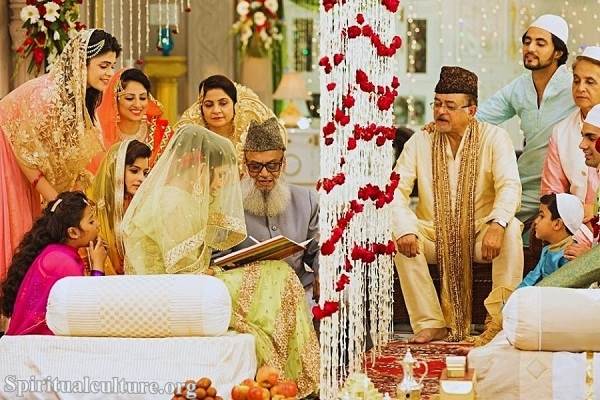
Some Muslim women wear hijab because they understand covering the hair and dressing modestly as part of Islamic religious practice. Others emphasize identity, privacy, devotion, family tradition, or cultural belonging. Not all Muslim women wear a headscarf, and Muslim scholars and communities differ over the details of what modest dress requires.
What does hijab mean?
In contemporary English, hijab often means a scarf covering the hair and neck while leaving the face visible. In Islamic religious vocabulary, however, the term can have broader meanings connected with covering, separation, and modest conduct. Muslim dress traditions also include garments such as the khimar, jilbab, chador, niqab, and many regional styles.
Qur’anic passages about modesty
Two verses are central to discussions of women’s dress. Qur’an 24:31 instructs believing women to guard modesty and draw their coverings over the chest. Qur’an 33:59 speaks of women drawing outer garments around themselves. Muslim jurists and interpreters have debated how these instructions apply to hair, face, clothing shape, and social circumstances.
Qur’an 24 also addresses male modesty, so Islamic discussions of modest conduct are not limited to women.
Why do individual women choose hijab?
Motivations differ. A woman may consider hijab a religious obligation, a voluntary devotional discipline, a sign of Muslim identity, a way to define personal boundaries, or part of family and cultural tradition. Some women begin wearing it later in life; others stop; some never wear it.
Law, culture, and personal agency
The meaning of hijab changes when governments or institutions regulate clothing. In different societies, women have faced pressure both to cover and to uncover. For that reason, discussions of hijab should distinguish Islamic theology from state law, family expectations, discrimination, fashion, and individual choice.
Is there one universal Muslim dress?
No. Muslim communities span Africa, Asia, Europe, the Middle East, and the Americas. Local textiles, colors, garments, and standards of modesty vary widely. Even women who agree that modest dress is religiously important may express it differently.