Islam does not describe Allah as having a human physical appearance that can be pictured or reconstructed. The Qur’an speaks extensively about God’s attributes, actions, mercy, knowledge, and power, while also stressing divine incomparability. For that reason, asking what Allah “looks like” does not fit easily within mainstream Islamic theology.
“There is nothing like Him”
Qur’an 42:11 states that there is nothing comparable to God. Surah al-Ikhlas (Qur’an 112) emphasizes divine oneness and uniqueness. Muslim theologians have developed different schools for interpreting scriptural language about God, but they share a strong rejection of treating God as an ordinary created body.
What about Qur’anic language such as face or hand?
The Qur’an contains expressions that refer to God with terms such as “face” or “hand.” Muslim theological schools have approached such passages differently. Some affirm the wording without asking how it applies to God; others interpret the language figuratively or in ways that protect divine transcendence. These debates belong to Islamic theology and should not be simplified into the claim that Muslims imagine God with human anatomy.
Can Muslims make images of God?
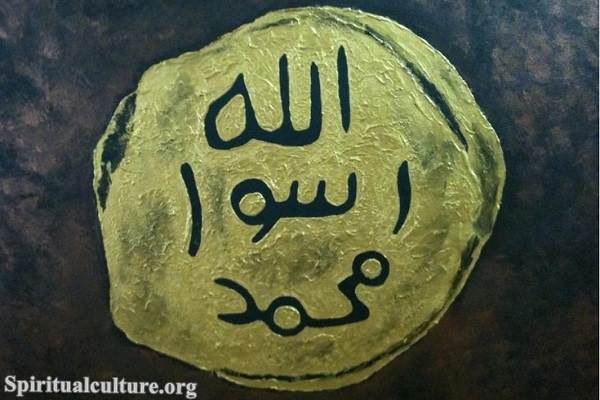
Mainstream Islamic religious art does not depict Allah in visual form. Mosques and manuscripts instead developed rich traditions of calligraphy, geometry, vegetal ornament, architecture, and Qur’anic inscription. Islamic attitudes toward figurative images vary historically and regionally, but portraying God as a human-like figure falls outside standard Muslim worship.
Will believers see God?
Sunni and Shia theological traditions include discussions about whether and in what sense God may be “seen” in the afterlife. The details differ among schools. These debates concern eschatology and divine reality, not an earthly physical portrait that people could draw now.
How Islam speaks about God
Rather than describing appearance, Muslims commonly speak about God through Qur’anic names and attributes such as Merciful, Compassionate, Knowing, Just, Creator, and Forgiving. This language shapes prayer and theology while maintaining the distinction between God and creation.
Why artistic questions require caution
Islamic history includes many kinds of visual art, including figurative painting in some courtly and manuscript traditions, so it is inaccurate to say that Islam simply “forbids all images.” The stronger and more consistent concern is with idolatry and with representing God in worship. This distinction explains why Islamic civilizations could produce rich visual cultures while avoiding a portrait-like image of Allah.