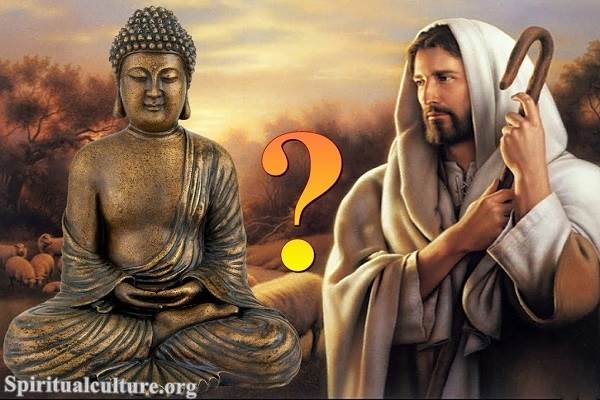
A Buddha and a bodhisattva are related terms, but they are not interchangeable. Their meanings also shift between early Buddhist sources and later Mahayana traditions. Spiritual Culture therefore distinguishes historical terminology from later devotional and philosophical development.
What does Buddha mean?
Buddha means an awakened one. In early Buddhist terminology, the title refers especially to one who rediscovers the liberating path when it has been lost and teaches it to others. Siddhattha Gotama is the Buddha of the present historical age in the early texts.
What does bodhisattva mean in early Buddhism?
The Pali form bodhisatta is used mainly for Siddhattha before his awakening and, in later Theravada literature, for his previous lives while developing qualities that lead toward Buddhahood.
What does bodhisattva mean in Mahayana?
Mahayana traditions broaden the term. A bodhisattva is one who generates the aspiration for awakening for the benefit of beings and trains in generosity, ethics, patience, effort, meditation, wisdom, and other bodhisattva practices.
Does a bodhisattva simply refuse nirvana?
The common internet summary that a bodhisattva “could enter nirvana but refuses” is too simple. Mahayana sources describe the bodhisattva path through vows, compassion, wisdom, stages of training, and ultimately Buddhahood. Different schools explain the relation between nirvana and Buddhahood differently.
Can ordinary practitioners be bodhisattvas?
In Mahayana Buddhism, bodhisattva is not limited to famous celestial figures such as Avalokiteshvara or Manjushri. Practitioners who cultivate bodhicitta—the aspiration to awaken for beings—can understand themselves as entering the bodhisattva path.
Are famous bodhisattvas gods?
Devotional bodhisattvas may appear in art with crowns, multiple arms, cosmic qualities, and extraordinary powers. Calling them “gods” can mislead because Buddhist cosmology, awakening, and devotional practice do not map neatly onto creator-God theology.
Buddhahood is the goal of the bodhisattva path
In Mahayana thought, the mature bodhisattva path culminates in full Buddhahood rather than representing a permanently lesser spiritual category.
Why the distinction matters
Confusing Buddha and bodhisattva can obscure major differences among Theravada, Mahayana, and Vajrayana language. A careful article should always state which textual or living tradition is being described.
Editorial context
A short definition is useful, but Buddhist technical terms gain meaning from their tradition and textual context. “Buddha” names awakened status; “bodhisattva” most commonly names a being on the path to Buddhahood, with the exact use varying historically.