What Does Bodhisattva Mean?
- “Bodhi” means awakening, enlightenment, or the deep wisdom that sees reality clearly.
- “Sattva” can mean a being, a presence, or even a courageous mind or heroic heart.
Together, a bodhisattva is often described as “a being of awakening” — someone whose essence is oriented toward enlightenment. But the true meaning runs deeper.
A bodhisattva is someone who seeks awakening not just for personal liberation, but for the freedom and happiness of all sentient beings. Instead of using spiritual practice to escape the world, the bodhisattva turns toward it — embracing its suffering, injustice, and beauty with an open heart.
This is the essence of the bodhisattva path:
- Not detachment, but deep engagement.
- Not isolation, but loving presence.
- Not self-centered salvation, but a vow to stay until all are free.
Unlike those who pursue Nirvana only for themselves, the bodhisattva pauses at the doorway of liberation and says, “I will wait. Someone behind me may still be in pain.”
This isn’t a romantic idea — it’s a way of living. It’s a path of inner strength, steady compassion, and wise action.
In Mahāyāna Buddhism, this path is not limited to monks or saints. It’s open to everyone. Anyone who sincerely wishes to reduce suffering in the world — anyone who says from the heart, “May all beings be free” — has already stepped onto the bodhisattva path.
That wish is called bodhicitta — the “mind of awakening.” And it is the seed of the entire journey. Without bodhicitta, there is no bodhisattva. With it, even the smallest action — a kind word, a helping hand, a moment of patience — becomes part of something vast and holy.
Imagine someone sees a stranger crying on the street and chooses to offer help — not out of obligation, but from a place of care. In that moment, they are practicing the spirit of a bodhisattva.
The bodhisattva path doesn’t demand perfection. It begins simply — with a decision to care. And it continues with each small step: forgiving someone, listening deeply, acting with wisdom.
This path is both tender and fierce:
- Tender in its deep compassion.
- Fierce in its unshakable commitment to love in the face of suffering.
“To be a bodhisattva is to make your life into a bridge — so that others may cross.”
“May I awaken — not for myself alone, but for the good of all.”
Historical Development of the Bodhisattva Ideal
To understand the bodhisattva, it helps to see how this significant ideal evolved across Buddhist history.
The concept of the bodhisattva began early in Buddhism — even before the rise of Mahāyāna. In fact, it can be traced back to the Buddha’s own story.
The Bodhisattva in Early Buddhism
In the Jātaka tales — ancient stories told in the Theravāda tradition — we find hundreds of accounts of the Buddha’s previous lives. In these lives, he is not yet a Buddha, but a bodhisattva: a being cultivating virtues through immense effort, patience, and sacrifice.
In one story, he gives his body to feed starving animals. In another, he risks his life to speak the truth. These tales reveal how, life after life, the bodhisattva nurtures compassion, wisdom, generosity, and resolve — slowly ripening the qualities needed for full awakening.
This early understanding of the bodhisattva was mostly linked to the long path toward becoming a Buddha — a rare path pursued by a single being across countless rebirths.
But over time, a new vision began to take shape — one that would transform the entire Buddhist path.
Bodhisattvas in the Mahāyāna Scriptures
Many Mahāyāna sutras describe cosmic realms filled with countless bodhisattvas, each radiating wisdom and compassion. These texts include:
- The Lotus Sutra, which celebrates the universal potential of Buddhahood
- The Vimalakīrti Sutra, in which a lay bodhisattva outshines even senior monks with significant insight
- The Avataṃsaka Sutra, a vast, visionary scripture portraying the interwoven universe of awakened activity
In these sutras, bodhisattvas are not distant ideals — they are living presences, tirelessly working to alleviate suffering throughout infinite worlds.
And this is key: Mahāyāna didn’t just describe extraordinary beings — it invited ordinary people to follow in their footsteps.
Everyone, no matter their background, was encouraged to cultivate bodhicitta — the compassionate wish to free all beings — and walk the bodhisattva path.
Spread Across Asia and Daily Life
As Mahāyāna spread throughout East Asia and Tibet, the bodhisattva ideal became deeply woven into Buddhist cultures:
- In China, bodhisattvas were painted on temple walls and invoked in prayers.
- In Japan, names like Kannon and Jizō became beloved household figures.
- In Tibet, bodhisattvas were seen not just as inspirations, but as real beings who guide and protect practitioners.
Even today, millions chant their names, meditate on their forms, and aspire to follow their example. The bodhisattva is not just a concept in a book — it is a living presence in art, ritual, and the hearts of practitioners.
The Bodhisattva Vow – A Commitment to All Beings
At the heart of the bodhisattva path lies a sacred promise — not made out of obligation, but out of love.
This is known as the bodhisattva vow. It is not a ritual reserved for monks or advanced practitioners. It is a personal, powerful declaration of purpose — an inner commitment that shapes one’s entire way of being.
A Vow Beyond the Self
To take the bodhisattva vow is to say:
“I will not awaken alone. I will not turn away from the suffering of others. I will stay — and I will serve.”
This vow is not about achieving something quickly. In fact, it’s often framed in terms that are vast, even impossible.
One of the most well-known versions of the vow, chanted by Mahāyāna Buddhists across the world, goes like this:
“Beings are numberless; I vow to free them.
Delusions are inexhaustible; I vow to transform them.
Dharma gates are boundless; I vow to enter them.
The Buddha way is unsurpassable; I vow to embody it.”
The Two Pillars: Compassion and Wisdom
Underneath the bodhisattva vow are two core qualities that support every step of the path:
- Compassion (karuṇā): the deep, sincere wish that all beings be free from suffering.
- Wisdom (prajñā): the clear seeing that no being exists separately — that self and other are not two.
These two are inseparable.
Without compassion, wisdom can become cold.
Without wisdom, compassion can become confused or overwhelmed.
Together, they form the foundation of the vow — the heart and the eyes of the bodhisattva.
The Bodhisattva’s Orientation
Once the vow is made, everything changes — not externally, but internally.
- You meet others with more compassion.
- You see suffering not as an obstacle, but as a call to action.
- You treat your spiritual training not as self-improvement, but as a way to become more useful to others.
This is the essence of the bodhisattva vow:
To stay, to care, and to never give up on love.
Six Pāramitās – The Perfections of a Bodhisattva
The bodhisattva path is not just about having good intentions — it’s about turning compassion into action, wisdom into daily life.
To guide this journey, the Mahāyāna teachings describe Six Pāramitās, or “Perfections.” These are six qualities that a bodhisattva actively cultivates, not to appear virtuous, but to become more capable of helping others.
Each perfection is like a torch — lighting the way not only for oneself, but for all beings.
1. Dāna – Generosity
The path begins with giving.
But this doesn’t only mean giving money or material things. True generosity is about letting go of clinging — and sharing what we have, whether it’s time, attention, kindness, or wisdom.
- A smile can be dāna.
- A listening ear can be dāna.
- Teaching the Dharma, forgiving a mistake, offering encouragement — all are forms of generosity.
What matters is the heart behind the act. The bodhisattva gives without expecting anything in return — simply out of love.
2. Śīla – Ethical Conduct
Ethics is not about rules for the sake of rules. It’s about living in a way that brings harmony, safety, and trust.
The bodhisattva trains in ethical conduct by practicing non-harm and honesty in all actions. This often includes:
- Not killing or hurting living beings
- Not stealing
- Not misusing sexuality
- Not lying or speaking harshly
- Not clouding the mind with intoxicants
But beyond the precepts, śīla means being someone others feel safe around. Someone whose presence brings peace.
3. Kṣānti – Patience
Life is full of frustrations, delays, insults, and difficulties. The bodhisattva meets these not with anger, but with patience — a deep, steady courage.
There are three kinds of kṣānti a bodhisattva cultivates:
- Patience with others — not retaliating when misunderstood or mistreated
- Patience with circumstances — accepting that things don’t always go as planned
- Patience with oneself — not giving up when progress is slow or mistakes happen
This patience is not weakness. It is strength — the ability to face discomfort without closing the heart.
Bodhisattva in Everyday Life – A Living Ideal
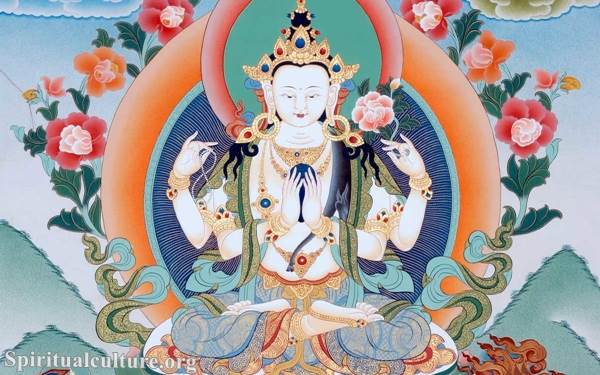
When we hear the word bodhisattva, we might imagine a radiant figure sitting on a lotus or floating through the clouds of myth and scripture. But the truth is simpler — and more beautiful.
A bodhisattva is not a distant being. A bodhisattva is anyone who chooses to live with compassion and wisdom, right where they are.
You don’t need to wear robes, enter a monastery, or recite long chants in a foreign language. The bodhisattva path begins wherever you are — with a simple shift in intention.
What Makes Someone a Bodhisattva?
It’s not status or knowledge that defines a bodhisattva. It’s this:
The heartfelt wish to awaken for the benefit of others.
This wish is called bodhicitta — the “mind of enlightenment.” Once it arises in you, no matter how quietly, the path opens.
From that point on, every part of life becomes practice.
- A parent caring for a child with patience
- A teacher encouraging a struggling student
- A nurse sitting beside the bed of someone dying
- A stranger offering a kind word to someone in despair
Bodhisattva Doesn’t Mean Perfect
You will still make mistakes. You will still feel angry, tired, or lost at times. But the difference is this:
You don’t let those moments close your heart.
Instead, you begin again. You return to your vow. You keep walking, even if the steps are small.
One of the most powerful lines from the bodhisattva tradition says:
“Fall down seven times, get up eight.”
Let Your Life Be the Practice
Being a bodhisattva doesn’t mean changing who you are.
It means deepening how you live.
You can be a bodhisattva as a parent, an artist, a farmer, a student, a neighbor, or a businessperson. The path adapts to your circumstances — and transforms them from the inside out.
Let your work become service, your speech become encouragement, your presence become refuge for others.
You never know who is silently suffering near you. Your gentleness may be the medicine they need.
A soft glance.
A quiet helping hand.
A moment of mindfulness before reacting.
These are bodhisattva moments. And they matter.