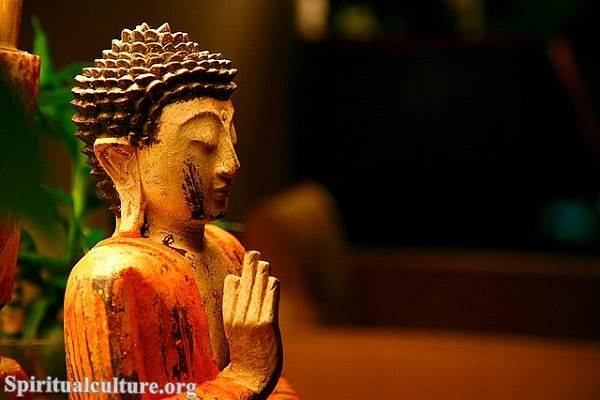
Anger appears in Buddhist teaching as a harmful mental state, but Buddhism does not pretend that practitioners never feel it. The practical question is how anger is recognized, understood, and relinquished before it becomes abusive speech or harmful action. Spiritual Culture distinguishes the arising of emotion from deliberately feeding hatred.
Anger and hatred are states to be abandoned
Early Buddhist texts repeatedly place anger, hostility, and hatred among mental qualities that obstruct liberation and should be relinquished.
Feeling anger is not the same as committing harm
An emotion may arise before a person chooses what to say or do. Buddhist training emphasizes awareness of that interval rather than moral panic about the first appearance of a feeling.
Harsh speech escalates conflict
Dhammapada 133 warns that harsh speech can provoke retaliation. Speech practice therefore matters as much as private emotion.
Hatred is not overcome by more hatred
A famous Dhammapada teaching states that hostility is not ended by hostility. The point is not passivity but breaking cycles of retaliation.
Mindfulness creates space
Mindfulness can help identify bodily tension, thoughts, stories of blame, and urges to act. Recognition does not require pretending the anger is pleasant or justified.
Loving-kindness is an antidote, not forced sentiment
Mettā practice trains goodwill. It does not mean approving harmful behavior or immediately feeling affection toward someone who has caused injury.
Patience is strength, not submission
Buddhist praise of patience concerns non-retaliation and clarity. It should not be used to excuse abuse, injustice, or the refusal to set boundaries.
Wisdom examines conditions
Anger may depend on fear, wounded pride, attachment, exhaustion, trauma, or perceived injustice. Dependent arising encourages looking at causes rather than treating anger as a fixed identity.
Ethics concerns what anger becomes
Threats, violence, cruelty, humiliation, and revenge create moral consequences. A practitioner is encouraged to interrupt those patterns.
Traditions use different methods
Theravada, Zen, Tibetan, Pure Land, and other traditions may emphasize different meditations, vows, confessions, visualizations, or devotional practices when working with anger.
Context and interpretation
Buddhism does not require a person to deny anger. It asks practitioners to understand its causes, avoid harmful expression, cultivate patience and goodwill, and gradually weaken the habits that sustain hostility.