Fully ordained Buddhist monks who live under the traditional Vinaya are celibate and do not marry while maintaining that ordination. However, not every person called a “Buddhist monk” or “priest” in English belongs to the same kind of monastic institution.
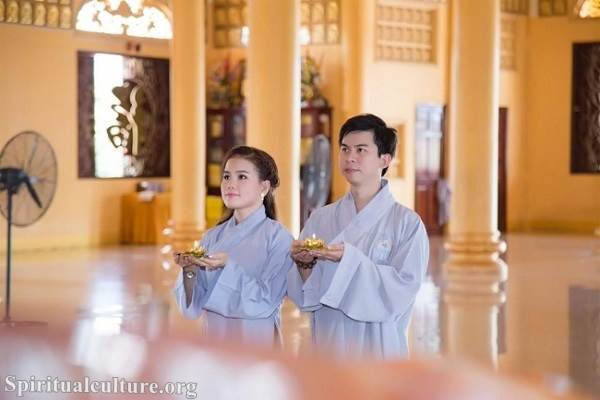
Vinaya monasticism
Theravāda bhikkhus and fully ordained monastics in Vinaya traditions undertake celibacy. Sexual intercourse is a defeat offense that ends a monk’s status as a fully ordained bhikkhu under the traditional rule.
The same basic principle applies to fully ordained nuns.
Why Japanese Buddhism looks different
Many Japanese Buddhist clergy marry and have families. Modern Japanese temple institutions developed a hereditary and married clergy system that differs from classical Vinaya monasticism.
English speakers often call these clergy monks, but their legal and institutional status is not identical to Theravāda bhikkhus or celibate monastics in other traditions.
Tibetan Buddhism
Many Tibetan Buddhist monks are celibate Vinaya monastics. At the same time, Tibetan Buddhism also has important non-monastic teachers and lineages in which religious specialists may marry.
A lama is therefore not automatically a monk.
Leaving monastic life
A monk who formally disrobes can later marry as a layperson. This differs from secretly maintaining a sexual relationship while claiming to keep full celibate vows.
Procedures for disrobing and possible reordination vary by Vinaya and community.
Ordination rules differ from lay marriage
The question “Can Buddhist monks marry?” is really a question about ordination status. In traditions that preserve full monastic Vinaya, sexual intercourse is incompatible with remaining a fully ordained monk or nun. Marriage therefore normally requires leaving that monastic status rather than receiving a special permission to combine ordinary married life with full celibate ordination.
Lay Buddhists follow a different ethical framework. Marriage is not generally treated as a sacrament administered by the sangha, and Buddhist communities have developed many cultural forms of wedding blessing without turning lay marriage into monastic practice.
Why Japanese clergy are an important exception
Japan illustrates why the English word “monk” can be misleading. Many Japanese Buddhist priests marry and have families, particularly in traditions whose modern clerical institutions do not operate under the same celibate Vinaya model as Theravada monasticism. Historical government policy and changes within Japanese Buddhism helped normalize married clergy.
This does not mean that “Buddhism allows monks to marry” everywhere, nor that Japanese priests are simply violating the rules followed in Thailand, Sri Lanka, Tibet, or other Buddhist societies. Different institutions use different forms of ordination, clerical identity, and discipline, so the tradition and country must be specified.
Short answer
Traditional fully ordained Buddhist monks do not marry. Married Buddhist clergy exist in some institutions, so the English title “monk” needs context.