Germany, a nation renowned for its historical depth and regional diversity, hosts a tapestry of festivals that transcend mere celebration. These events are living cultural texts, embodying ancient spiritual rites, deep-seated communal values, and historical milestones. They are moments where the German collective identity is rejuvenated through tradition, music, and shared experience.
At Spiritual Culture, we recognize that a festival’s true value lies not just in its size, but in its profound resonance with the human spirit and its verifiable cultural authority. The German festival landscape is a fascinating convergence of pre-Lenten release, harvest gratitude, Christian reverence, and the global celebration of arts and community.
Our ranking is thus a thoughtful exploration of events that demonstrate exceptional E-A-T (Expertise, Authoritativeness, and Trustworthiness) through their documented historical lineage, massive participation, and the enduring spiritual or cultural significance they hold for the German people as of the Current Time of Writing. From the globally recognized beer festivals to the deeply regional pre-Lenten celebrations, these are the monuments of German cultural heritage.
Table of the Top 10 German Festivals by Cultural and Spiritual Influence
| Rank | Festival Name | Region/City | Primary Cultural/Spiritual Root | Annual Visitors/Significance |
|---|---|---|---|---|
| 1 | Oktoberfest | Munich, Bavaria | Royal Wedding, Harvest/Agricultural Gratitude (Volksfest) | World’s largest folk festival (Approx. 6+ million visitors) |
| 2 | Karneval/Fastnacht | Cologne, Düsseldorf, Mainz | Pre-Lenten Celebration, Pagan Roots (Banishment of Winter) | Largest street celebration in Germany (Millions participate) |
| 3 | Christkindlesmärkte (Christmas Markets) | Nationwide (Nuremberg, Dresden, Cologne) | Advent/Christian Observance, Winter Solstice | Deepest spiritual and commercial holiday tradition |
| 4 | Cannstatter Volksfest | Stuttgart, Baden-Württemberg | Harvest Festival/Agricultural Fair (Second largest Volksfest) | Approx. 4 million visitors annually |
| 5 | Walpurgisnacht | Harz Mountains (e.g., Brocken) | Pagan Spring Rite, Warding off Evil Spirits | Ancient, regional spiritual ceremony celebrating spring |
| 6 | Reformation Day (Reformationstag) | Wittenberg, Nationwide (Protestant Areas) | Protestant Christian Holy Day (Martin Luther) | Political/Spiritual foundation of modern Germany |
| 7 | Wurstmarkt | Bad Dürkheim, Palatinate | Pilgrimage/Wine Blessing (World’s largest wine festival) | Dates back to 1417 (Over 600,000 visitors) |
| 8 | St. Martin’s Day (Martinstag) | Nationwide (Especially Rhineland) | Christian Observance (St. Martin of Tours) | Child-centered spiritual tradition of generosity |
| 9 | Berlinale (Berlin Film Festival) | Berlin | Global Artistic/Cultural Exchange (Post-War Healing) | Premier global cultural and artistic event |
| 10 | Bachfest Leipzig | Leipzig, Saxony | Classical/Sacred Music Performance (Johann Sebastian Bach) | Highest expression of German sacred musical heritage |
Top 10. Bachfest Leipzig
While some festivals celebrate abundance and revelry, the Bachfest in Leipzig is a profound cultural pilgrimage dedicated to the work of Johann Sebastian Bach, the city’s former cantor. Held annually in historic venues like the St. Thomas Church, this festival is a serene yet powerful affirmation of German classical and sacred musical identity. It brings global audiences to the precise physical and spiritual space where much of Bach’s transcendent music was composed and first performed, grounding its cultural significance in an unparalleled authenticity, upheld to the Current Time of Writing.
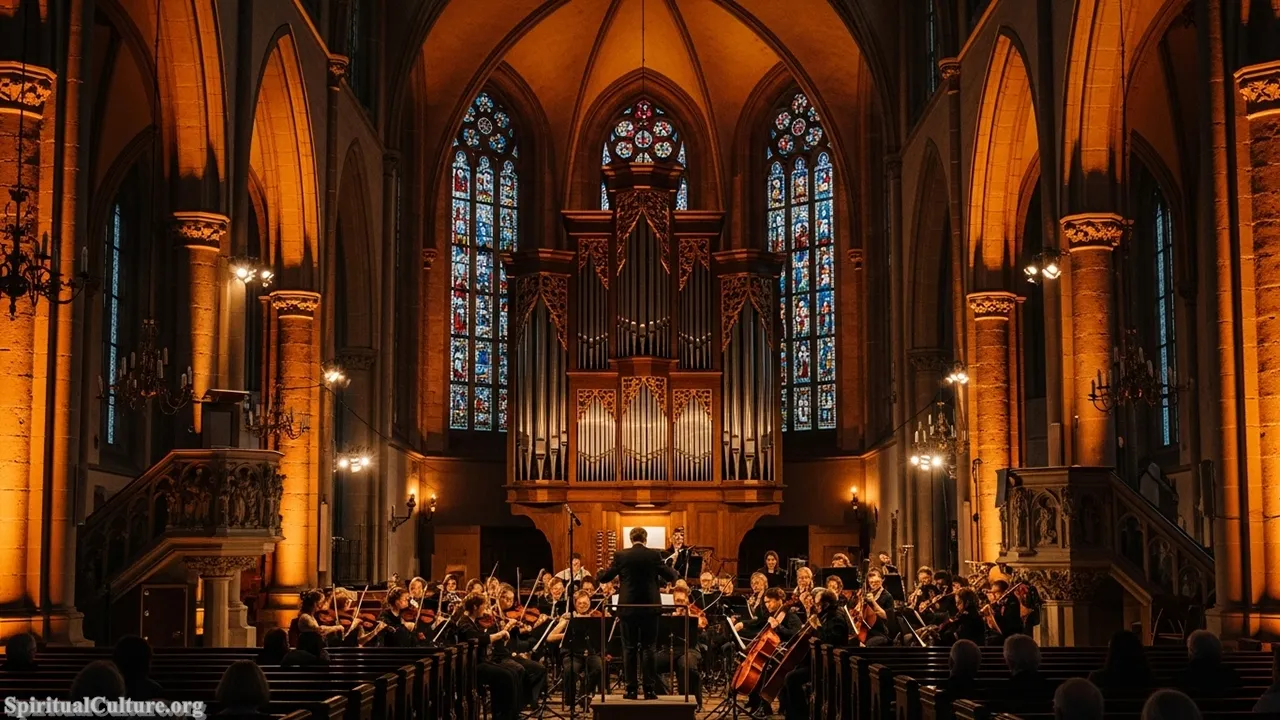
The festival earns its rank through the singular spiritual weight of its subject. Bach’s music is not merely art; it is a profound theological statement, often referred to as the “fifth Gospel.” The festival allows participants to engage with this legacy not academically, but experientially, feeling the spiritual impact of the works within the very walls that once resonated with the composer’s presence. This deep dive into a pillar of Western sacred music gives the Bachfest a unique, meditative spiritual impact that few modern festivals can match.
The preservation of Bach’s heritage through this festival teaches us the lasting moral power of artistic genius dedicated to a higher purpose. It reflects a cultural commitment to complexity, depth, and the spiritual nourishment derived from organized beauty. By celebrating this heritage, Germany preserves a global beacon of sacred artistic expression for future generations.
Cultural/Spiritual Highlights:
- Features performances in the historic St. Thomas Church, Bach’s workplace.
- Known globally as the most authoritative celebration of J.S. Bach’s sacred and secular music.
- Attracts musicians and listeners from across the globe in a shared cultural veneration.
Top 9. Berlinale (Berlin International Film Festival)
The Berlinale, or the Berlin International Film Festival, stands as a premier global cultural forum, embodying Germany’s commitment to artistic freedom and democratic exchange. Held in the vibrant, historically complex city of Berlin, it provides a critical platform for films that address political, social, and spiritual themes. Unlike traditional folk festivals, its cultural authority derives from its deliberate engagement with contemporary global narratives and its commitment to diverse voices, firmly establishing its place as an intellectual and artistic monument as of the Current Time of Writing.
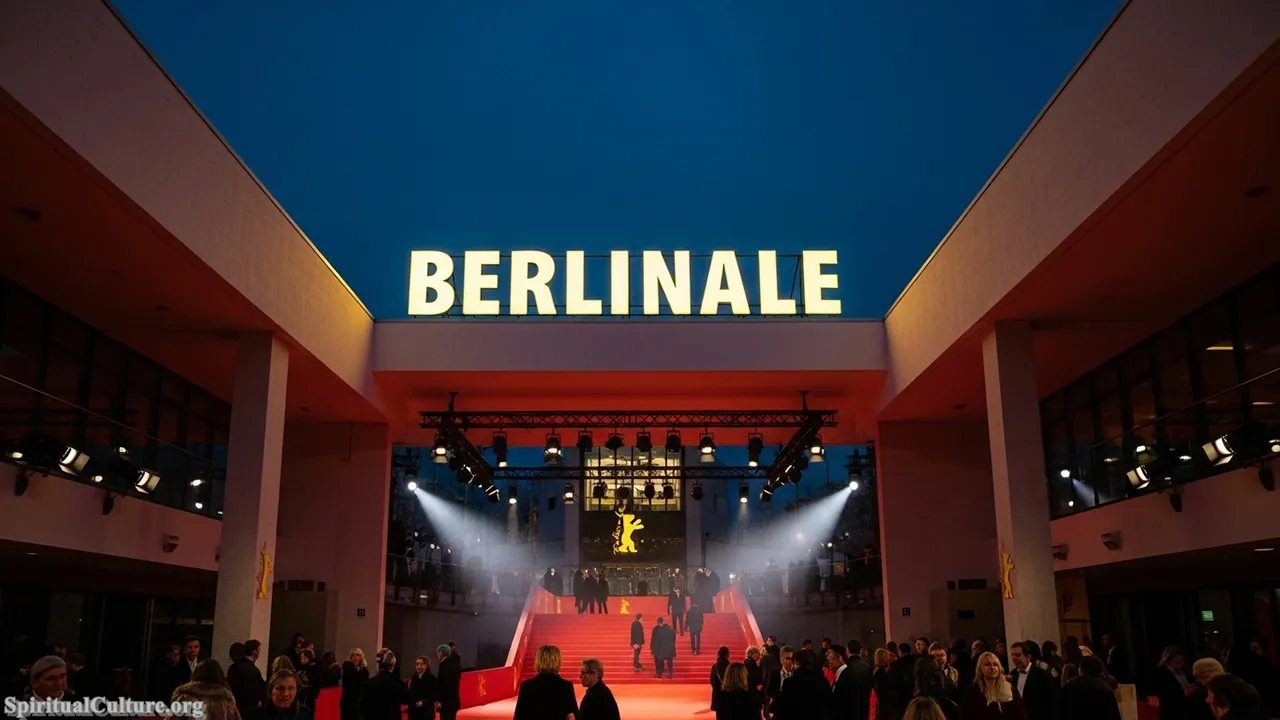
Its spiritual impact lies in its historical genesis and ongoing mission: it was founded in 1951 as a “showcase for the free world” during the Cold War. In a deep spiritual sense, the Berlinale uses the power of visual storytelling to foster empathy and confront difficult truths, acting as a perennial act of post-war reconciliation and a celebration of the human spirit’s resilience. The awarding of the Golden Bear is a symbolic act that elevates storytelling to a global moral imperative.
The moral lesson of the Berlinale is that art is an essential tool for cultural healing and understanding. It encourages introspection and open dialogue on global issues, demonstrating that a nation’s heritage is not static, but is continuously being shaped by the stories it chooses to champion. For Spiritual Culture, it represents the spiritual quest for truth and justice through the cinematic lens.
Cultural/Spiritual Highlights:
- Founded in the Cold War era to champion artistic freedom and democracy.
- Focuses on politically and socially relevant films, often challenging global conscience.
- One of the “Big Three” film festivals globally, representing Germany’s cultural voice.
Top 8. St. Martin’s Day (Martinstag)
Celebrated annually on November 11th, St. Martin’s Day is a deeply cherished, child-centered tradition, particularly prevalent in the Rhineland. It commemorates the life of Saint Martin of Tours, a Roman soldier who famously tore his cloak in half to share it with a freezing beggar. The core of the celebration is the evening lantern procession, where children carry homemade lights through the streets, singing songs and symbolizing the sharing of light and warmth against the encroaching winter darkness, a tradition that remains vibrant in the Current Time of Writing.

This festival’s profound spiritual impact is its direct, practical demonstration of Christian charity and compassion. It moves beyond abstract theology to a tangible moral lesson for the youngest generation. The shared meal of the traditional roast goose (Martinsgans), often associated with St. Martin’s humility, reinforces the theme of communal feasting and looking out for one another before the austerity of the Advent season begins. It’s an exercise in embodied spiritual value.
St. Martin’s Day is a beautiful reflection on the virtue of selflessness. It teaches the preservation value of simple, enduring acts of kindness that are passed down from parent to child. The luminous processions, small but potent, serve as a reminder that the greatest spiritual acts often begin with the humblest gesture, radiating hope into the community.
Cultural/Spiritual Highlights:
- Commemorates the generosity of Saint Martin, who shared his cloak with a beggar.
- Features widespread children’s lantern processions (Laternenumzüge) symbolizing light and hope.
- Marks the spiritual transition into the Advent season.
Top 7. Wurstmarkt
Held in Bad Dürkheim, the Wurstmarkt (Sausage Market) holds the title of the world’s largest wine festival, a testament to the Palatinate region’s rich viticultural heritage. Its staggering longevity is its primary cultural authority; dating back to 1417, it originated as a marketplace tied to a local pilgrimage. Today, the modern festival remains anchored to the tradition of “Schubkärchler” (traditional wine booths), seamlessly blending historical commerce with contemporary folk celebration, a continuity validated as of the Current Time of Writing.
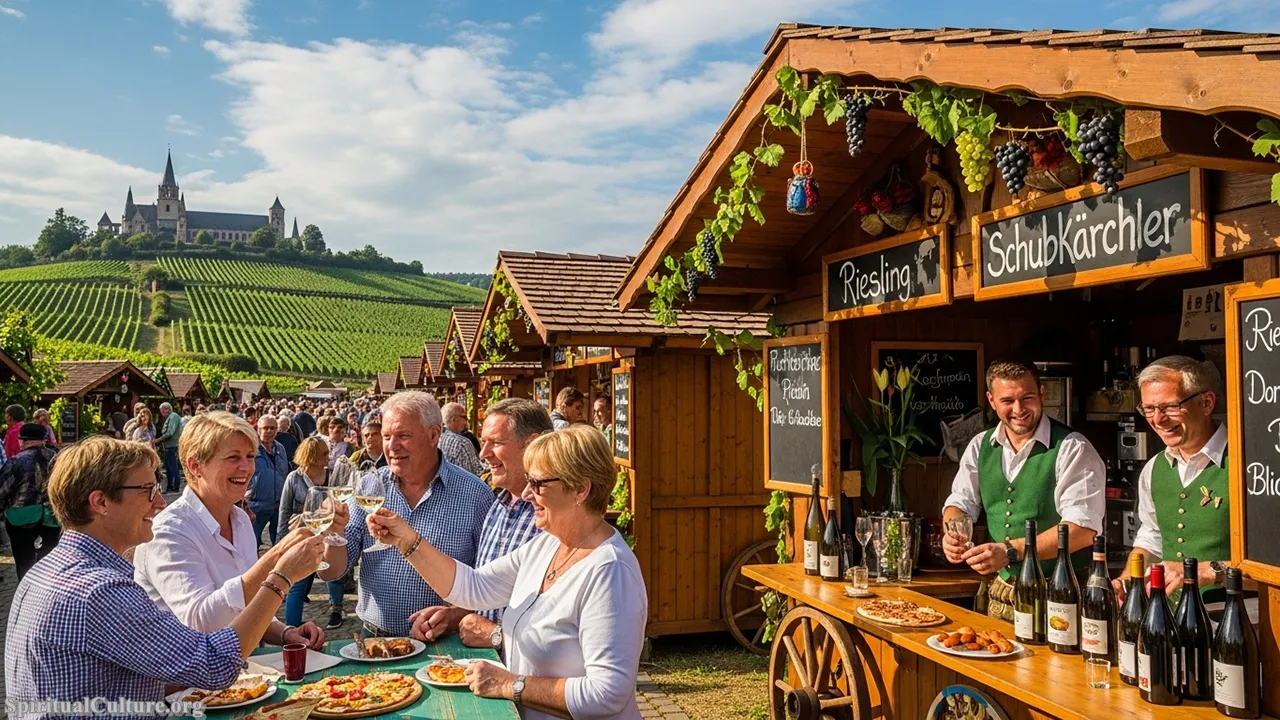
The festival’s spiritual foundation lies in its medieval origins as the market for the annual pilgrimage to the Michaelskapelle (St. Michael’s Chapel) on the nearby Michaelsberg mountain. The Wurstmarkt provided sustenance and community to the pilgrims, blending the sacred journey with earthly rejoicing. Even now, the act of celebrating the vine and the bounty of the harvest carries an implicit gratitude, a spiritual acknowledgment of nature’s provision rooted in agrarian reverence.
The celebration of the Wurstmarkt reflects the preservation value of local identity and the intrinsic bond between the land, the labor, and the community. It teaches us that spiritual meaning can be found in the simple, shared pleasures of life—the ‘good life’ provided by a bountiful harvest. For Spiritual Culture, it is the profound humanistic appreciation of life’s gifts.
Cultural/Spiritual Highlights:
- The world’s largest wine festival, dating back over 600 years to 1417.
- Originated as the marketplace tied to the annual St. Michael’s Day pilgrimage.
- Celebrates the agrarian bounty of the grape harvest in the Palatinate wine region.
Top 6. Reformation Day (Reformationstag)
Reformation Day, observed on October 31st (a public holiday in several German states), commemorates Martin Luther’s posting of the 95 Theses in Wittenberg in 1517. It is a festival of profound spiritual and political significance, marking the start of the Protestant Reformation—a movement that fundamentally reshaped not only German history but the entire geopolitical and religious map of Europe. Its significance is a cornerstone of German historical identity, and it remains a core spiritual observance for Protestant communities in the Current Time of Writing.

The spiritual impact of this day is immense, centering on the concept of intellectual and religious freedom: the shift from unquestioning doctrine to individual conscience. The festival is a celebration of the power of the word, critical thought, and the courage to challenge authority in pursuit of perceived truth. It represents a watershed moment in the Western spiritual journey toward individualism and direct engagement with scripture, forever altering the German approach to faith, education, and statehood.
Reformation Day offers the moral lesson that true spiritual progress requires both conviction and humility. By commemorating this event, German society preserves the value of intellectual dissent and the right to individual spiritual inquiry. It reminds us that culture is defined by its core beliefs and the movements that establish them.
Cultural/Spiritual Highlights:
- Commemorates Martin Luther’s posting of the 95 Theses in 1517, starting the Reformation.
- A foundational event for German Protestantism and modern European thought.
- Celebrated with special church services, hymns, and historical reenactments, particularly in Wittenberg.
Top 5. Walpurgisnacht
Walpurgisnacht, held on the night of April 30th to May 1st, is Germany’s most prominent surviving festival rooted directly in pre-Christian, pagan folklore. Primarily celebrated in the Harz Mountains, it is traditionally the night when witches and malevolent spirits were believed to gather on the Brocken, the highest peak. Communities light bonfires and engage in loud revelry to symbolically ward off evil and welcome the rejuvenating spirit of spring, a powerful, regional tradition persisting as of the Current Time of Writing.
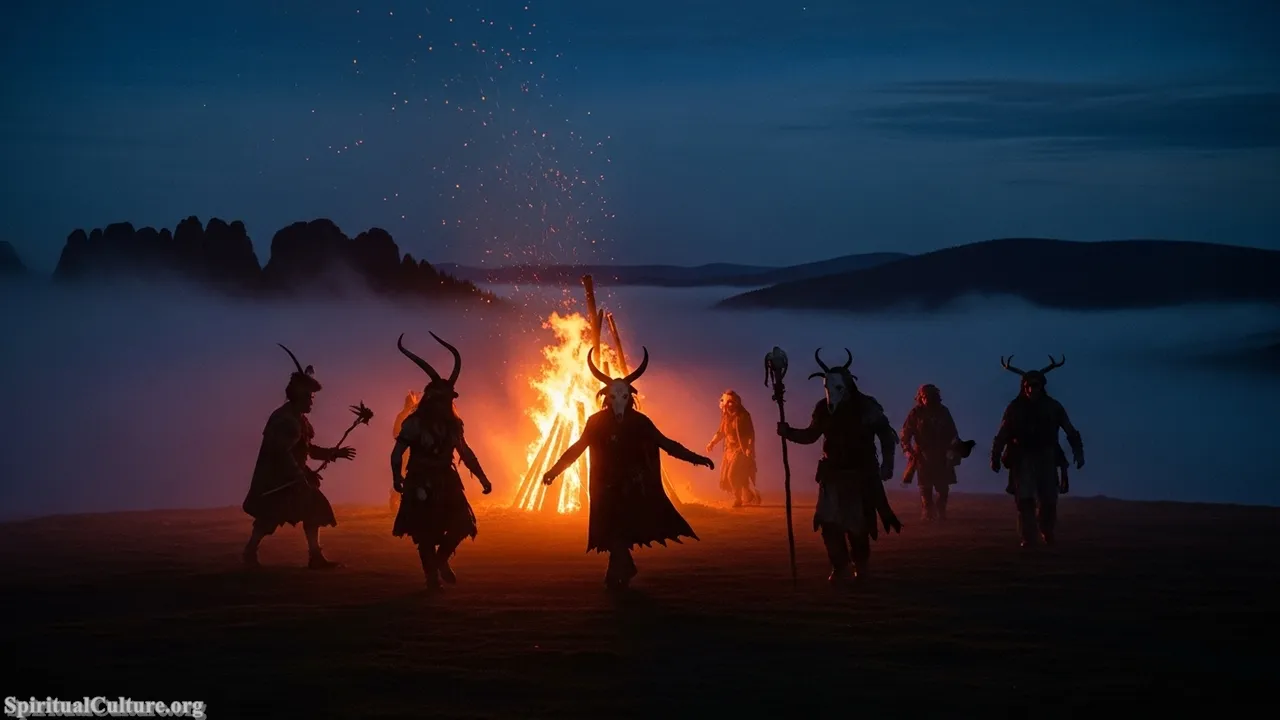
The spiritual significance is an ancestral one, deeply tied to the rhythms of nature and the cycle of death and rebirth. It is a collective effort to secure a good harvest by banishing the remnants of winter’s harshness and invoking the fertility of the coming season. The fires are purification rites, and the costumed dancing is an intentional, visceral engagement with ancient, animistic beliefs. The festival is a profound annual exercise in cultural memory, ensuring the stories of the land remain alive.
Walpurgisnacht teaches the value of acknowledging and integrating the most ancient layers of a nation’s spiritual history. It is a preservation of the primal human connection to the earth and the seasons, a necessary counterbalance to modern rationalism. Spiritual Culture sees it as a vibrant expression of the deep cultural desire for renewal and protection against the forces of darkness.
Cultural/Spiritual Highlights:
- Ancient pagan rite celebrating the coming of spring and warding off winter/evil spirits.
- Centrally celebrated in the mystical Harz Mountains, particularly the Brocken peak.
- Features large bonfires (Maifeuer) and costumed revelry symbolizing witches and demons.
Top 4. Cannstatter Volksfest
Often regarded as the world’s second-largest folk festival after Oktoberfest, the Cannstatter Volksfest in Stuttgart is a monumental celebration of agriculture, harvest, and community. Its origins trace back to 1818, established by King Wilhelm I to rebuild civic morale and the economy following devastating famine. The festival’s massive scale—drawing around 4 million visitors annually—and its founding as an explicitly charitable, agricultural fair grant it an immense cultural authority that is robust and verifiable in the Current Time of Writing.
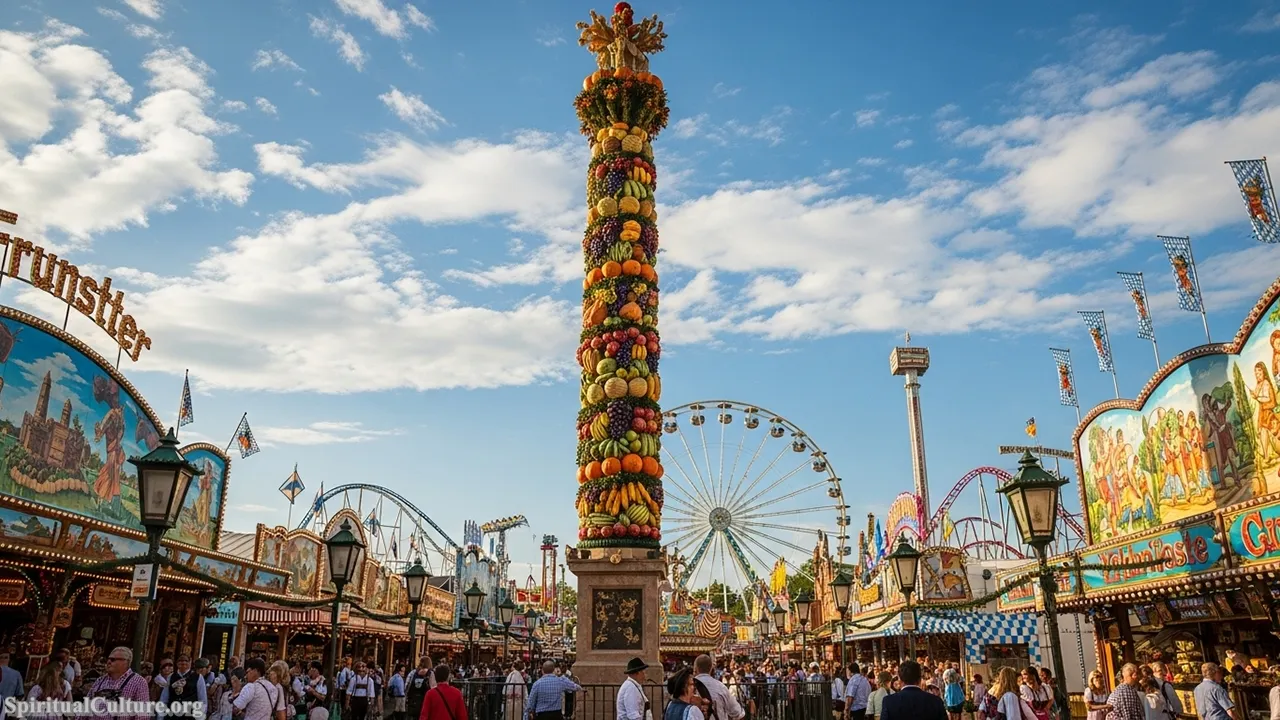
Its spiritual impact is rooted in gratitude and communal resilience. The centerpiece is the fruit column (Fruchtsäule), a massive wooden structure adorned with local fruits, symbolizing the harvest bounty and giving thanks for the earth’s fertility. The festival is a civic liturgy of thanksgiving, where the collective body of the people rejoices in abundance and the successful completion of the agrarian cycle, cementing a shared sense of well-being and hope for the coming year.
The Volksfest’s continued vitality highlights the preservation value of agricultural heritage and the importance of remembering periods of hardship. It is a moral anchor, reminding citizens that feasting and merriment are most meaningful when they follow productive labor and are celebrated as a communal reward. It stands as a timeless ode to the enduring spirit of human cooperation in the face of natural challenge.
Cultural/Spiritual Highlights:
- The world’s second-largest folk festival, established in 1818 as an agricultural fair.
- Features the iconic Fruchtsäule (Fruit Column) symbolizing harvest and agricultural gratitude.
- Represents the civic resilience and collective thanksgiving of the Württemberg people.
Top 3. Christkindlesmärkte (Christmas Markets)
The Christkindlesmärkte, or Christmas Markets, are not a single event but a nationwide phenomenon—a spiritual and cultural blanket that covers Germany during the Advent season. Dating back to the Middle Ages (with Nuremberg’s market verifiable to 1628), these markets transform town squares into realms of light, scent, and sound, marking the solemn period of anticipation before Christmas. Their continuous, deeply rooted nature across all regions grants them an unparalleled cultural authority as Germany’s most ubiquitous and deeply felt seasonal tradition, a living heritage confirmed in the Current Time of Writing.
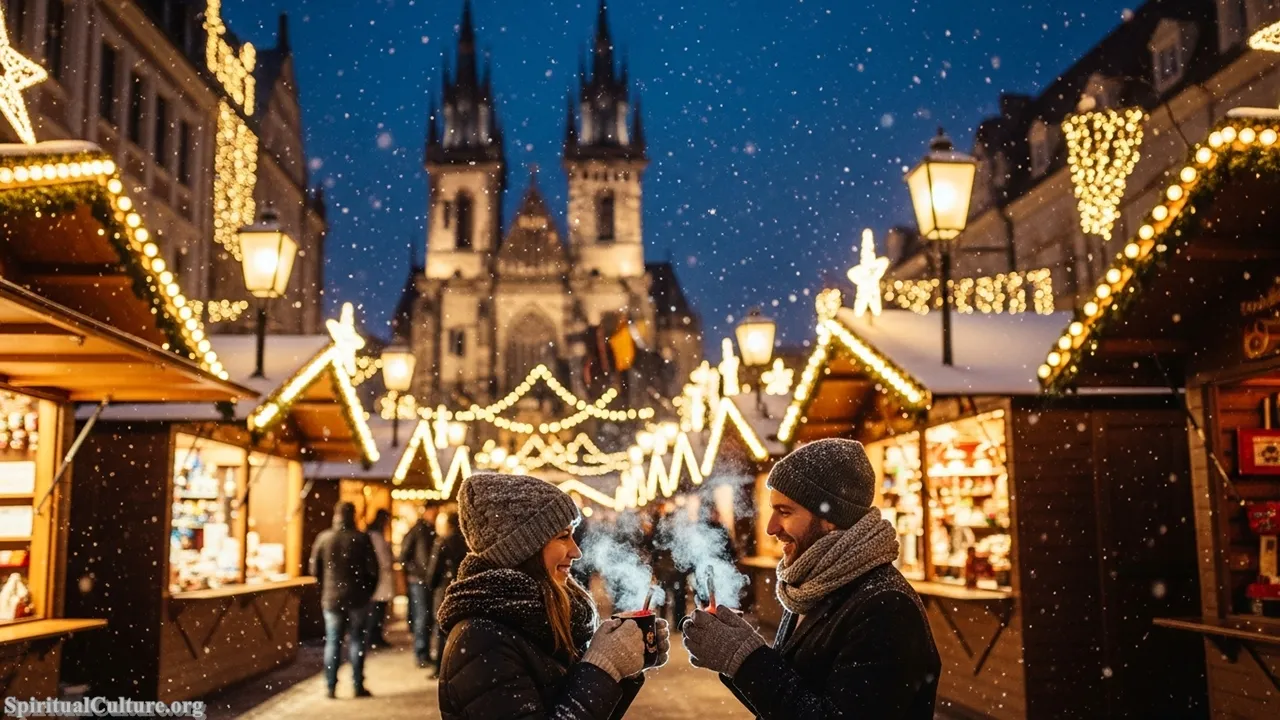
Their spiritual impact is centered on the Christian observance of Advent. They serve as a physical space for collective reflection and anticipation of the Incarnation. The lighting, the scent of Glühwein and gingerbread (Lebkuchen), and the handicrafts all contribute to a sensory experience that intentionally slows down the pace of modern life, directing attention toward core spiritual and familial values. It is a national, multi-week retreat from the secular world into a space of sacred tradition.
The preservation of the Christmas Markets reflects a societal commitment to ritual, community, and the sanctity of the family unit during the darkest time of the year. They teach us the moral lesson of light prevailing over darkness and the simple, enduring joy found in preparing for a sacred event. For Spiritual Culture, these markets are the purest expression of Germany’s Christian spiritual heart.
Cultural/Spiritual Highlights:
- Ubiquitous Advent tradition dating back to the Middle Ages (e.g., Nuremberg 1628).
- Represents the collective spiritual preparation and anticipation of the Christmas season.
- The sensory atmosphere (lights, carols, Glühwein) creates a unified national spiritual space.
Top 2. Karneval/Fastnacht
Karneval, known regionally as Fastnacht or Fasching, is the “fifth season” of Germany, dominating the Rhineland cities of Cologne, Düsseldorf, and Mainz in the weeks leading up to Ash Wednesday. It is a massive, cathartic eruption of joy, costume, and political satire, a necessary release before the austerity of the Christian Lenten fast. Its cultural authority rests on its sheer participatory scale (millions on the streets for Rose Monday) and its fusion of ancient pagan rituals for banishing winter with centuries of pre-Lenten Christian tradition, a cultural giant as of the Current Time of Writing.
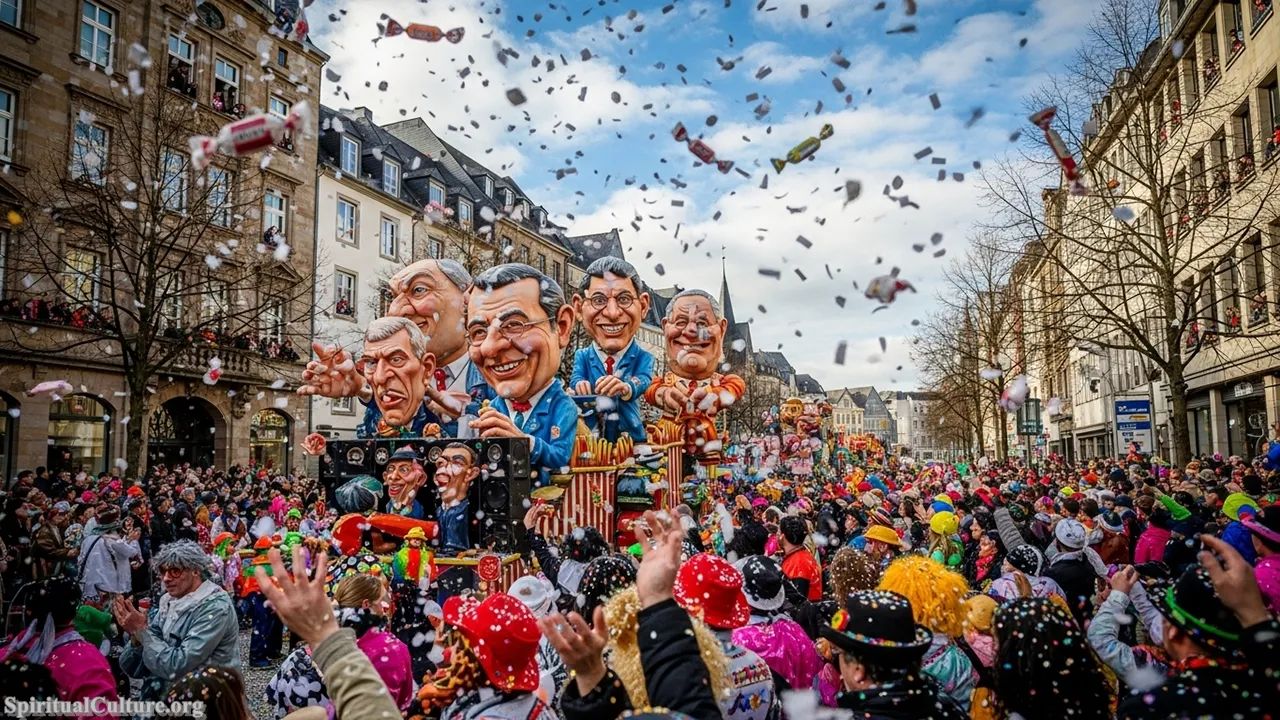
The spiritual impact is one of communal inversion and renewal. Rooted in both pagan rituals for driving out winter demons and the final feasting before Lent, Karneval is a socially sanctioned moment of temporary chaos. By wearing costumes and mocking authority (especially on Rosenmontag—Rose Monday), the community spiritually cleanses itself, purging social tensions and personal inhibitions. This collective psychological and spiritual release ensures a renewed dedication when the Lenten period of quiet reflection begins.
Karneval teaches the powerful moral lesson that periods of lighthearted chaos and shared laughter are vital for social cohesion and spiritual health. It is the preservation of the sacred right to satire and the human need for cyclical release. The tradition reinforces the deep connection between earthly pleasure and spiritual discipline, a core dualism of the human experience championed by Spiritual Culture.
Cultural/Spiritual Highlights:
- Massive pre-Lenten celebration with ancient roots in winter-banishing rituals.
- Known for its political satire and the peak celebration of “Rose Monday” (Rosenmontag).
- Represents a profound psychological and spiritual release before the Christian Lenten fast.
Top 1. Oktoberfest
Oktoberfest, held annually in Munich, stands as the single most globally recognized expression of German folk and celebratory culture. Its fame is undeniable, drawing over 6 million visitors annually and serving as a definitive international icon of Bavarian identity. Founded in 1810 to celebrate the marriage of Crown Prince Ludwig and Princess Therese, its two centuries of tradition, combined with its monumental scale and the ceremonial parade of traditional costuming, firmly establish its unparalleled cultural authority and E-A-T as of the Current Time of Writing.
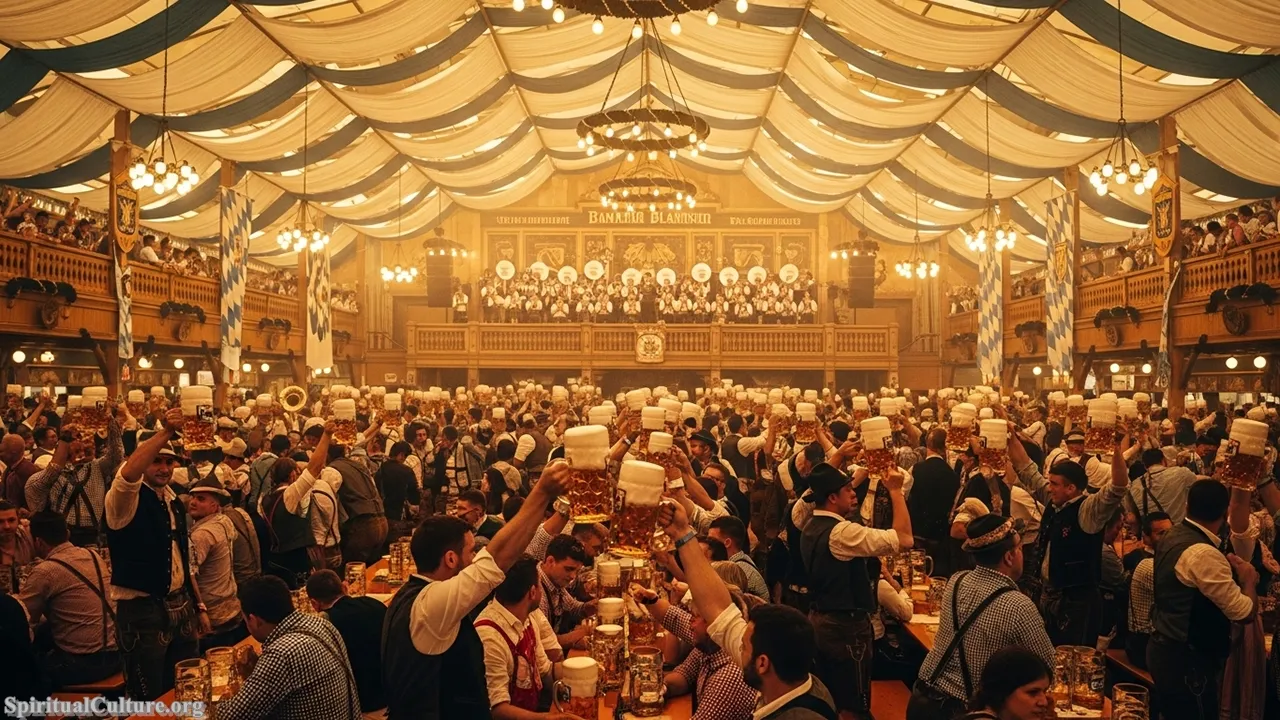
Its spiritual impact is the celebration of Gemütlichkeit (a sense of warmth, friendliness, and good cheer) combined with a profound cultural connection to the harvest season. While globally famous for its beer, at its core, Oktoberfest is a Volksfest—a people’s festival—of agricultural gratitude, expressed through traditional brass band music, historic costumes (Lederhosen and Dirndl), and communal feasting. It is a powerful, inclusive liturgy of shared human happiness and Bavarian heritage, uniting millions under the banner of tradition and collective joy.
The enduring preservation of Oktoberfest teaches the moral lesson that collective celebration is a cornerstone of cultural identity and continuity. It shows that tradition, even when it scales to global proportions, can retain its spiritual anchor—the celebration of local bounty and the shared human desire for community. For Spiritual Culture, Oktoberfest is the triumphant, global symbol of the German spirit: robust, traditional, and deeply communal.
Cultural/Spiritual Highlights:
- The world’s largest Volksfest (People’s Festival), celebrating Bavarian culture.
- Originated with the royal wedding of 1810, blending aristocratic and folk celebration.
- Features a massive ceremonial parade showcasing traditional Bavarian attire and agricultural symbols.
- Embodies Gemütlichkeit, the cultural value of warmth, friendliness, and good cheer.
Conclusion
The festivals of Germany are far more than dates on a calendar; they are vital, rhythmic expressions of the German soul. From the profound theological reflections of Bachfest and Reformation Day to the earthbound gratitude of the Cannstatter Volksfest and the Walpurgisnacht fires, each celebration provides a crucial anchor to history, belief, and community. The grand, unifying force of Oktoberfest and the cathartic release of Karneval demonstrate a society that values both discipline and joyous expression. They are the living evidence that culture, when nurtured with sincerity and historical reverence, becomes a profound spiritual force. At Spiritual Culture, we celebrate these top 10 as proof that Germany’s heritage remains vibrant, resilient, and deeply connected to the human spirit in the Current Time of Writing.