A Protestant is a Christian belonging to one of the many church traditions that developed from, or were shaped by, the Reformation era. Protestantism is not a single denomination: Lutheran, Reformed, Anglican, Baptist, Methodist, Pentecostal, evangelical, and many independent churches differ in worship, sacraments, governance, and theology. Shared Reformation themes exist, but they should not erase that diversity.
A Protestant is a Christian whose church or religious tradition belongs to the broad family that emerged from, or was deeply reshaped by, the Reformation movements of sixteenth-century Europe. Protestantism is not one denomination. It includes Lutheran, Reformed, Anglican, Baptist, Methodist, Pentecostal, evangelical, and many independent traditions, among others.
Where the term comes from
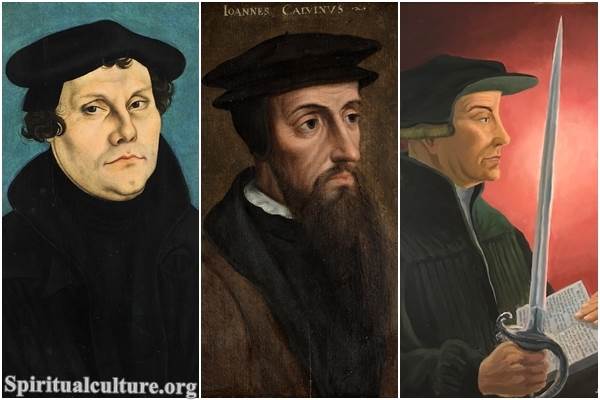
The Protestant Reformation is associated with reformers such as Martin Luther, Huldrych Zwingli, John Calvin, and many other clergy, scholars, rulers, and communities. The English Reformation followed a different political and ecclesial path. Because these movements developed in different places and circumstances, there has never been a single Protestant organization comparable to the Roman Catholic papacy.
Common Protestant themes
Many Protestant traditions emphasize the authority of scripture, salvation by God’s grace, faith in Jesus Christ, preaching, and the participation of ordinary believers in the life of the church. Reformation slogans such as sola scriptura and justification by faith became especially influential. Their interpretation, however, differs among churches.
Do Protestants reject sacraments?
Protestants do not simply reject sacramental life. Lutherans, Reformed Christians, Anglicans, Methodists, Baptists, and Pentecostals understand baptism and the Lord’s Supper in different ways. Some use the language of sacraments; others prefer “ordinances.” Disagreements concern presence, grace, infant baptism, church membership, and the number or meaning of rites.
Church authority and governance
Protestant churches use several forms of governance. Some have bishops, some are governed by presbyteries or synods, and others give substantial authority to the local congregation. Protestant attitudes toward creeds also vary: many affirm historic Christian creeds, while some independent churches emphasize biblical statements of faith instead.
Why “Protestant” is a broad label
Two communities described as Protestant may differ greatly in worship style, theology, social teaching, and institutional structure. For this reason, specific labels such as Lutheran, Reformed, Baptist, Methodist, Anglican, or Pentecostal are often more informative than “Protestant” alone.
What Protestants still share with other Christians
Most historic Protestant churches confess core Christian beliefs about Jesus Christ, the Trinity, baptism, scripture, and the resurrection, even when they disagree with Catholic or Orthodox Christians about authority, sacraments, saints, ministry, and church structure. Protestant identity is therefore best understood as a family within Christianity, not as a separate religion. Some newer independent churches use the label reluctantly or not at all despite historical Protestant roots.


Hi! I could have sworn I’ve been to this blog before
but after reading through some of the post I realized it’s new to me.
Anyways, I’m definitely glad I found it and I’ll be bookmarking
and checking back often!