Yes. Lay Buddhists can marry. Buddhism does not impose a universal rule of celibacy on ordinary followers. Marriage is usually treated as a social and ethical relationship rather than a sacrament required for salvation. Monks and nuns, however, normally follow celibate monastic discipline.
Marriage for lay Buddhists

The Buddha’s teachings include extensive advice for householders about responsibility, generosity, trust, family life, and ethical conduct. The Five Precepts for laypeople include refraining from sexual misconduct, but they do not prohibit marriage or committed relationships.
Exactly how sexual misconduct is interpreted varies among Buddhist traditions and cultures. At minimum, Buddhist ethics emphasizes avoiding harm, betrayal, coercion, exploitation, and irresponsible conduct.
Is there a Buddhist wedding ceremony?
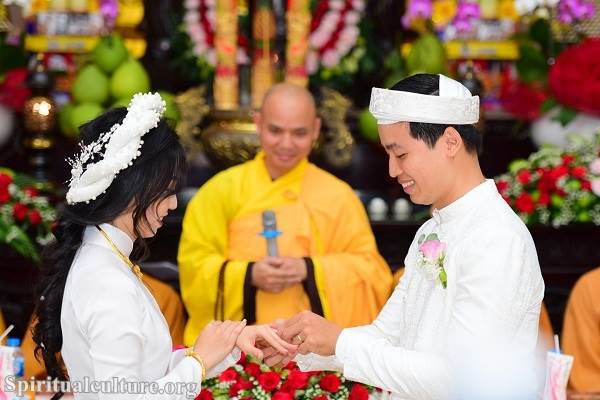
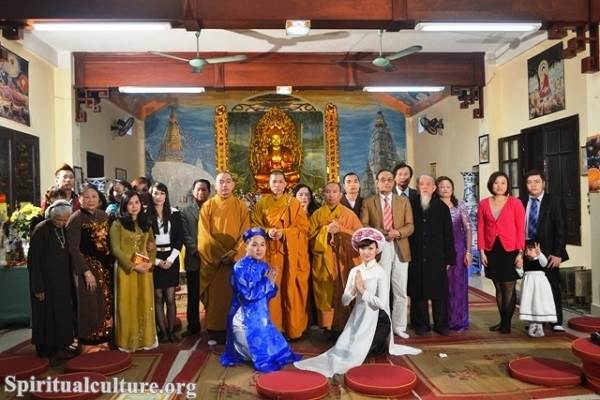
There is no single wedding rite shared by all Buddhist traditions. Civil or family ceremonies often establish the marriage, while monks or other Buddhist teachers may offer blessings, chanting, teachings, or protective recitations.
In some countries, monks do not act as legal officiants. In others, Buddhist clergy or temples may participate more directly. Local law and culture shape the ceremony as much as doctrine does.
Can Buddhists have romantic partners?
Lay Buddhists can have romantic partners. A relationship is not automatically considered an obstacle to Buddhist practice. The ethical question is how the partners treat one another and whether the relationship is characterized by honesty, consent, responsibility, and non-harming.
Some lay practitioners voluntarily adopt periods of celibacy, especially on retreat or observance days. That is different from a universal rule requiring all Buddhists to avoid relationships.
Can Buddhist men have more than one wife?
Buddhism itself does not establish one global civil marriage law. Historical Buddhist societies have had different marriage systems, including monogamous and, in some periods and places, polygynous arrangements.
Modern marriage law is usually determined by the country. A Buddhist ethical evaluation would also consider harm, fairness, responsibility, consent, and family welfare rather than assuming that every historic custom is a religious command.
Why monks and nuns do not marry
Fully ordained Buddhist monks and nuns undertake monastic rules that include celibacy. Renouncing sexual relationships is part of the monastic path of simplifying life and dedicating energy to religious training.
This is one of the clearest differences between lay and monastic Buddhist life. A person who wishes to marry generally remains a lay Buddhist rather than taking celibate ordination.
Interfaith and same-sex relationships
Buddhist communities differ widely in how they approach interfaith marriage and same-sex marriage. Some temples bless such couples, while others reflect conservative local customs or institutional rules.
Because Buddhism is decentralized, it is better to ask about the teaching of a specific school or temple than to assume one worldwide policy.
In summary
Lay Buddhists are allowed to marry and have committed partners. The central Buddhist concern is ethical conduct rather than a universal sacramental marriage law. Monastics normally remain celibate.
For related guidance, see the Five Precepts.