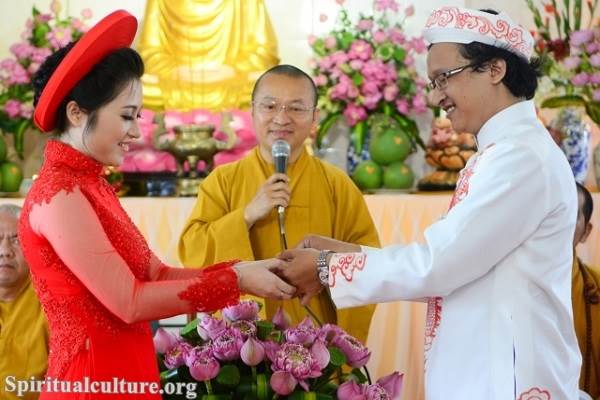
Buddhism does not treat marriage as one universal sacrament governed by a single worldwide Buddhist authority. Lay marriage is shaped by civil law, local culture, family custom, and Buddhist ethics. Divorce is therefore not described by one rule that applies to every Buddhist community. Spiritual Culture focuses on non-harm, honesty, responsibility, and the welfare of the people affected.
Marriage in early Buddhist teaching
DN 31 addresses household relationships rather than presenting a sacramental marriage law. It describes mutual duties between spouses, including respect, fidelity, responsibility, and care.
Divorce is not a monastic Vinaya offense for laypeople
The Vinaya governs monks and nuns. Lay marriage and divorce have historically been regulated mainly by local civil and customary law.
The ethical question is how separation happens
Buddhist ethics asks whether people act with cruelty, deception, revenge, sexual misconduct, neglect, or violence. Ending a harmful relationship can raise different moral concerns from abandoning responsibilities selfishly.
Fidelity still matters
Early Buddhist texts praise faithfulness and mutual ethical conduct between spouses. Separation does not erase obligations concerning honesty or the well-being of children.
Compassion is not the same as remaining in danger
A teaching of patience should not be used to demand that someone stay in an abusive situation. Safety, protection of children, and professional support can be necessary.
Remarriage varies by community
Most Buddhist traditions do not have a universal prohibition on remarriage after divorce, but local temples, families, and civil law may treat remarriage differently.
Monastics and laypeople follow different disciplines
A monk or nun has renounced sexual and married life. Advice given to monastics should not be applied mechanically to householders.
Children and shared responsibilities
When a marriage ends, right speech, generosity, restraint, and compassion remain relevant to co-parenting, property, family relationships, and conflict.
Cultural practice is not always Buddhist doctrine
Divorce stigma in a Buddhist-majority society may reflect family expectations, gender norms, law, or economics as much as scripture.
A Buddhist response may include reflection and counsel
Some people seek guidance from monastics, elders, counselors, or family. Such advice can support ethical reflection but does not replace civil or professional legal help.
Context and interpretation
The most accurate general answer is that Buddhism does not impose one universal ban on divorce. Buddhist ethics places greater emphasis on intention, non-harm, fidelity, responsibility, and compassionate conduct before, during, and after separation.