Iraq contains some of the most important sacred landscapes in Islam as well as ancient Christian, Yazidi, Mandaean, Jewish, and pre-Islamic heritage. Understanding Iraq through religion and sacred heritage gives a clearer picture than treating culture only as food, tourism, or national symbols.
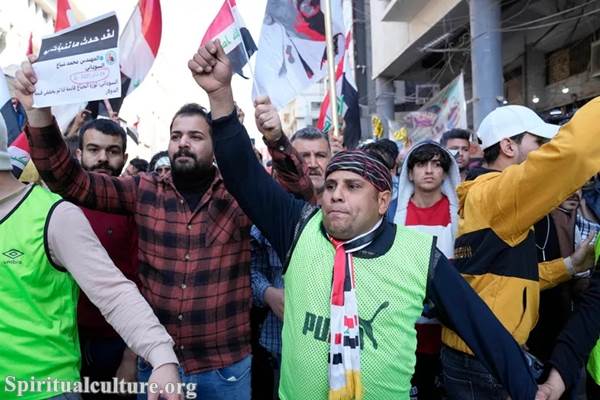
Religious traditions and everyday practice
Shia and Sunni Islam are the largest religious traditions. Najaf and Karbala are major centers of Shia pilgrimage and scholarship, while Sunni mosques and institutions have deep roots in Baghdad, Mosul, and other regions.
Sacred places and religious heritage
Iraq’s sacred geography also includes Yazidi pilgrimage at Lalish, historic Christian monasteries and churches in the Nineveh region, Mandaean communities associated with river-based ritual life, and archaeological sites from Mesopotamian civilizations.
Festivals, rituals, and community life
Ramadan, Eid, Friday prayer, pilgrimage, Muharram and Ashura commemorations, Christian feasts, and Yazidi festivals structure different community calendars. Conflict and displacement have affected many sacred places and minority communities, making preservation a central cultural issue.
Living spiritual culture
Iraq’s spiritual culture cannot be reduced to one sect or period. It is a layered religious landscape in which shrines, scriptures, pilgrimage, memory, and community survival remain deeply connected.
Religious diversity in context
Iraq contains major Shia and Sunni Muslim communities and some of the most important centers of Shia pilgrimage and scholarship. It is also home to ancient Christian traditions, Yazidis, Mandaeans, and other communities whose histories long predate the modern state. Jewish life was once a major part of Iraqi urban culture, although the community was dramatically reduced during the twentieth century.
War, sectarian violence, persecution, and displacement have transformed the religious map. A responsible account therefore needs to describe not only monuments and doctrines but also the survival, migration, and rebuilding of living communities.
Festivals, pilgrimage, and sacred memory
Ramadan and the two Eids are observed across Muslim communities, while Ashura and Arbaeen bring enormous Shia pilgrimages and commemorations centered especially on Karbala. Christian churches maintain ancient liturgical calendars, and Yazidi pilgrimage is closely connected with Lalish.
Najaf, Karbala, historic Baghdad mosques, monasteries, churches, Mandaean places of worship, Yazidi sanctuaries, and archaeological remains from ancient Mesopotamia create a sacred landscape with many chronological layers.
Historical change and regional variation
Iraq’s religious landscape has been formed by the great Shia pilgrimage centers of Najaf and Karbala, Sunni scholarship and mosque traditions, ancient Christian communities, Yazidi and Mandaean religions, Jewish history, and the deeper heritage of Mesopotamia. War, persecution, and displacement have transformed many of these communities and sacred places.
Reading Iraq’s spiritual culture carefully
Religious identity in Iraq is internally diverse and closely tied to locality, language, ethnicity, and memory. A responsible overview distinguishes Sunni and Shia institutions while also recognizing Christian, Yazidi, Mandaean, and other traditions whose communities have faced major disruption.