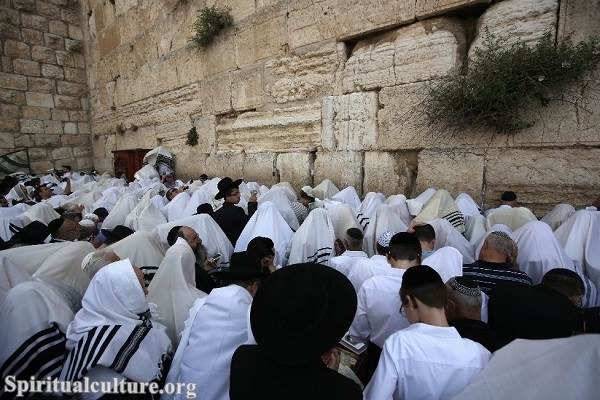
“Israel” can mean an ancient people in the Bible, a name used in Jewish religious memory, or the modern State of Israel. These meanings are connected by history, but they are not interchangeable. Confusing them can turn questions about Jewish identity and biblical covenants into arguments about present-day governments.
Who are the Jewish people?
Jewish identity includes a shared history and religious tradition, but it cannot be reduced to a single test of belief or ancestry. Many Jews practice Judaism; others identify as secular or culturally Jewish. Communities such as Ashkenazi, Sephardi, Mizrahi, Ethiopian, and others reflect varied histories. People can also become Jewish through conversion, though Jewish movements differ in their requirements and in which conversions they recognize.
Historical continuity does not mean that every Jewish family has the same ancestry or that Jewish populations have remained unchanged for thousands of years. Communities moved, intermarried, converted, developed different languages, and maintained forms of belonging. Claims that Jewish people today are categorically unrelated to the Jews of antiquity ignore that long continuity and diversity.
Jewish communities are spread across countries and have never had only one cultural expression. Ashkenazi, Sephardi, Mizrahi, and other histories help explain differences in language, custom, and family experience. Conversion is also a recognized path into Judaism, although requirements vary between religious movements. Describing Jewish people as one unchanging bloodline erases both this diversity and the continuity maintained through communities, learning, and practice.
What does Israel mean in the Bible?
In the Hebrew Bible, Israel refers in several related ways to Jacob, who receives the name Israel, to the people associated with him, and to the kingdoms and communities that developed in the ancient Near East. In Jewish religious life, “the people of Israel” also carries a covenantal meaning. It is a way of speaking about a community’s relationship with God, law, worship, and collective memory.
Those meanings cannot be translated directly into citizenship in a twenty-first-century country. A person may be Jewish without living in Israel, and a citizen of the modern State of Israel may be Jewish, Muslim, Christian, Druze, or belong to another community.
Even the biblical term changes with context. “Israel” can refer to Jacob, a group of tribes, a kingdom, or a people living through exile and return. Later Jewish texts speak about the people of Israel in ways that extend beyond a political border. Readers need to ask which meaning a particular verse uses before relating it to current events.
The covenant with Abraham and the covenant at Sinai belong to religious texts and living Jewish interpretation. They cannot, by themselves, answer every modern question about law, citizenship, or territory. Our article on covenant in Judaism explains that religious background.
What is different about the modern State of Israel?
The State of Israel was established in 1948 and functions as a modern political state, with institutions, laws, citizens, and policies that can be debated and criticized. Biblical references to Israel belong to writings from very different historical settings. Religious communities disagree on how, if at all, biblical promises should be related to the modern state.
Within Christianity, interpretations range from readings that give modern Israel a particular prophetic role to readings that understand biblical promises through different theological frameworks. Jewish interpretations are also diverse. No single Christian political position represents every church or every believer.
The modern state includes citizens of different religions and ethnic backgrounds. At the same time, millions of Jews live outside its borders. Neither state citizenship nor residence is a test of Jewish identity. That simple distinction prevents two common mistakes: calling all Jews Israeli, and treating an Israeli government’s choices as the views of all Jewish people.
Christian interpretations add another layer. Some churches and believers connect biblical promises to the modern state; others distinguish those promises from contemporary nationhood or interpret them through the church and the continuing place of Jewish people in God’s purposes. Those are theological positions, not genealogical findings. A reader can disagree about them without denying anyone’s history or dignity.
Can someone respect Jewish identity while questioning a government?
Yes. Protecting Jewish people from prejudice and antisemitism is a matter of human dignity, not a demand for agreement with every decision of a government. The same distinction allows concern for the rights and safety of Palestinians. Criticism becomes harmful when it targets people because they are Jewish or treats all Jews as collectively responsible for state policy.
Keeping peoplehood, covenant, and statehood distinct makes a difficult discussion more precise. For the religious background, read the meaning of covenant in Judaism and what it means to be Jewish today.