Islamic teachings on women’s dress center on modesty, but Muslim communities and legal schools differ over the exact clothing required in particular settings. Qur’anic passages address both men and women within a broader ethic of modest conduct. Spiritual Culture distinguishes scripture, jurisprudence, cultural clothing, and state law.
Modesty is broader than a headscarf
The Arabic term hijab has several meanings. In modern usage it often refers to a head covering, but Qur’anic modesty also concerns gaze and behavior.
Qur’an 24:31
The verse instructs believing women concerning modesty and the covering of adornment. Jurists interpret its clothing requirements through language, hadith, and legal tradition.
Qur’an 33:59
This passage addresses outer garments in a social setting. Its historical context and legal implications are interpreted differently by scholars.
Face and hands
Many Sunni jurists have held that the face and hands need not be covered, while other legal opinions are stricter.
Loose and non-transparent clothing
Dar al-Ifta describes standard legal expectations in terms of covering and avoiding transparent or body-clinging clothing.
Men also have modesty rules
Islamic law regulates male dress and bodily covering as well. Modesty is not a religious responsibility placed only on women.
Hijab, niqab, and abaya are different
A headscarf, face veil, and long outer garment are distinct forms whose prevalence varies by region and community.
Culture and law
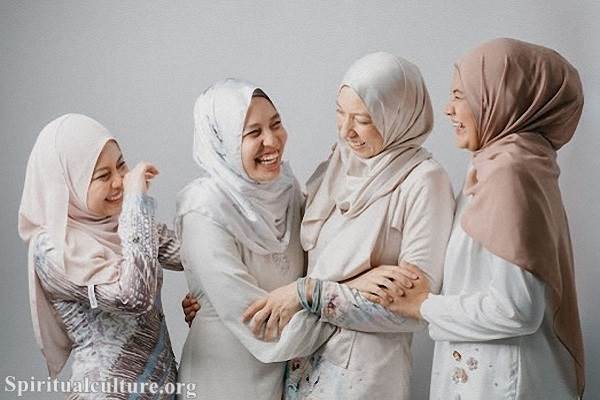
Muslim women across Indonesia, Senegal, Turkey, Bosnia, Egypt, Pakistan, and elsewhere can fulfill modesty expectations through different clothing traditions, while state laws also vary.
Coercion and personal responsibility
Debates about modest dress also concern who interprets and enforces religious obligations. Family pressure, state coercion, personal conviction, and voluntary religious practice are different social realities and should not be collapsed into one description of hijab.
Practice and interpretation
Islamic modest dress is a religious and legal topic with real interpretive diversity. Accurate writing should distinguish Qur’anic texts, juristic rulings, local cultures, and individual practice.