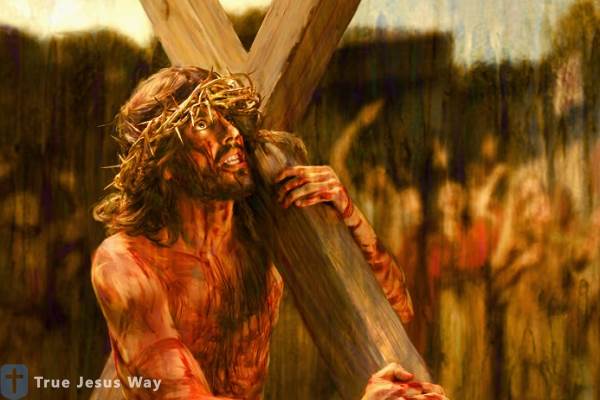
Maybe you’ve felt it — that moment when the weight of life becomes too heavy, when fear, loneliness, or betrayal claw at your heart. You know you should be strong, but all you can do is fall to your knees and weep.
This article takes the view the most breathtaking moments in Scripture are not only those where Jesus shows His divine power, but also where He shows His deep humanity — nowhere more poignantly than in the Garden of Gethsemane.
By doing so, He showed us that He understands every tear, every dread-filled night, every trembling moment of surrender. Understanding this changes everything — how we approach God, how we carry our own pain, and how we find hope in the darkest hours.
One Central Truth: Jesus’ Humanity Fully Revealed
In Gethsemane, we see Jesus not as a distant, untouched divine figure, but as the perfect God-Man, embracing real human emotion and struggle. This is not just a side note; it is a vital truth that reveals the depth of His love and His willingness to be like us — yet without sin.
Gethsemane: The Setting of Ultimate Surrender
Jesus’ Private Agony
The Garden of Gethsemane sits at the foot of the Mount of Olives, a place where Jesus often went to pray. But on this night, it became a stage for the most intense spiritual battle ever fought.
Matthew 26:36-38 (ESV) captures it clearly:
“Then Jesus went with them to a place called Gethsemane, and He said to His disciples, ‘Sit here, while I go over there and pray.’ And taking with Him Peter and the two sons of Zebedee, He began to be sorrowful and troubled. Then He said to them, ‘My soul is very sorrowful, even to death; remain here, and watch with Me.’”
Jesus wasn’t simply sad; He was overwhelmed with sorrow to the point of death. Have you ever felt like grief might actually kill you? Jesus has been there.
The Weight of the Cup
Jesus prayed, “My Father, if it be possible, let this cup pass from Me; nevertheless, not as I will, but as You will” (Matthew 26:39).
The “cup” symbolizes God’s wrath against sin — a cup only Jesus could drink, though it meant unimaginable suffering. In this moment, Jesus expressed a deeply human desire: to avoid pain, to escape the horror. Yet, in perfect obedience, He surrendered to the Father’s will.
Jesus’ Humanity and Our Struggles
He Knows Our Weakness
Hebrews 4:15 (ESV) says:
“For we do not have a high priest who is unable to sympathize with our weaknesses, but one who in every respect has been tempted as we are, yet without sin.”
In Gethsemane, Jesus felt the full weight of fear, anguish, and loneliness. He was so distressed that “His sweat became like great drops of blood falling down to the ground” (Luke 22:44). This rare medical condition, called hematidrosis, underscores the intensity of His emotional agony.
A Mirror to Our Own Hearts
What do you do when dread fills your soul? When you’re betrayed? When your future terrifies you? In Gethsemane, Jesus models a vulnerable, honest wrestling with God. He didn’t hide His feelings; He brought them directly to the Father.
This shows us that faith isn’t about never feeling fear or grief. True faith brings that pain to God in honest prayer and chooses surrender over self-protection.
Jesus Stood Alone — and Stands With Us
The Loneliness of Gethsemane
Even His closest friends could not stay awake with Him. “So, could you not watch with Me one hour?” Jesus asked Peter (Matthew 26:40).
Many of us know what it feels like to face a crisis alone. In Gethsemane, Jesus was left alone so that we would never have to be truly alone. He bore ultimate isolation so we could be eternally accepted.
Betrayal and Abandonment
Judas arrived with soldiers to arrest Him, betraying Him with a kiss. The very symbol of affection became a dagger.
How many of us have felt betrayed by those we trusted most? Jesus knows that sting deeply. He does not only sympathize from a distance; He has lived it.
The Cost of Obedience
Wrestling Yet Submitting
Jesus didn’t submit to the Father’s will lightly or mechanically. He wrestled in agony, yet chose obedience. This is not a picture of passive surrender but a fierce, love-driven commitment.
A Choice for Love
He could have called on “more than twelve legions of angels” (Matthew 26:53), but He chose not to. He chose us instead. He accepted the cup so that we might be spared from the ultimate wrath of God.
Gethsemane and the Cross: The Link
Gethsemane was the place where Jesus spiritually embraced the cross before He physically carried it.
Here He said, “Yes” to every nail, every insult, every moment of divine wrath. The victory on Golgotha began in the surrender of Gethsemane. Without that night of prayer, there would have been no morning of resurrection hope.
Deep Relevance: Gethsemane Moments in Our Lives
When You Are Overwhelmed
Do you feel crushed under anxiety, betrayal, or grief? Remember, Jesus has been there. You can bring every drop of your sorrow to Him.
When You Fear God’s Will
Sometimes God’s path feels too hard or too painful. Jesus understands that fear. Yet He also shows us that God’s will, however difficult, leads to redemption and life.
Pastoral Perspective on Loneliness
Your friends might sleep when you need them most. But Jesus, who knows the depths of abandonment, promises, “I will never leave you nor forsake you” (Hebrews 13:5).
When You Wrestle with Surrender
It’s okay to wrestle. True surrender is not about suppressing feelings but about laying them before God and choosing to trust Him anyway.