Maybe you’ve grown up with the sound of carols, the smell of pine trees, and the twinkle of lights in December. Or maybe you’ve always wondered what Christmas is really about — beneath the gifts, gatherings, and glowing traditions. For many, it’s a season of nostalgia or festivity. But for Christians, Christmas is something far deeper, far more sacred.
It’s the celebration of a moment in history that changed everything — the moment when God entered the world, not in power or glory, but in humility and love. Christmas is the announcement of hope to the hopeless, light to those walking in darkness, and peace to a world in desperate need of healing.
What Is Christmas?
At its heart, Christmas is the Christian celebration of the birth of Jesus Christ — the most extraordinary moment in human history, when God Himself entered our world in human form. It is the fulfillment of ancient promises, the unfolding of divine love, and the beginning of the greatest rescue mission the world has ever known.
Every year on December 25th, Christians around the world gather to remember and rejoice in this event. But Christmas is more than a date — it’s a declaration. It declares that God is not distant or silent, but near and involved. It proclaims that heaven has come down to earth — not in a blaze of political power, but through the birth of a baby in a humble manger.
The name “Christmas” comes from the words “Christ” and “Mass,” referring originally to the worship service held in honor of Christ’s birth. Over the centuries, the word came to represent the entire celebration of Jesus’ arrival into the world. While today’s culture often associates Christmas with decorated trees, festive lights, and gift exchanges, the true essence of Christmas is spiritual, not seasonal. It centers not on what we give each other, but on what God gave us — His only Son.
In Luke 2:10-11, the angel announced to the shepherds, “Do not be afraid. I bring you good news that will cause great joy for all the people. Today in the town of David a Savior has been born to you; He is the Messiah, the Lord.” This announcement captures the meaning of Christmas: it is good news — joyful, universal, and personal. It speaks to every human heart, especially those who are afraid, weary, or waiting.
To say “Merry Christmas” is to remember that Jesus came to bring salvation, to restore what was broken, and to offer light in our darkest nights. It is not a myth or moral tale. It is history — real, raw, and redemptive. It is the story of how the eternal Word became flesh (John 1:14), how the King of heaven became an infant, how the Holy One chose to dwell among sinners — all out of love.
So what is Christmas? It is the celebration of the Incarnation — God with us. It is the arrival of hope in the form of a child. It is the beginning of the Gospel, the moment when God’s love touched earth in a way that would never be undone. And for those who believe, Christmas is not just a date to remember — it is a life-changing truth to receive.
The Spiritual Meaning of Christmas in Christianity
The true meaning of Christmas cannot be measured in ribbons or lights, in shopping lists or sentimental songs. Its meaning is deeper — eternal. Christmas is not about a feeling; it is about a fact: that God became man. And not just to visit, but to redeem. In Christian faith, this is called the Incarnation — the moment when the Word became flesh (John 1:14).
That moment — when Jesus was born — marks the turning point of history. All of time bends around it. All of Scripture points to it. And every human heart, whether it knows it or not, longs for what it offers: the presence of God, the peace of God, and the love of God made visible and tangible in a Person.
Christmas reveals the nature of God in a way nothing else does. In Jesus’ birth, we see that:
- God is not far away. He came near. He entered our pain, our weakness, our reality.
- God is not indifferent. He saw our need and stepped in to save.
- God is not angry with us. He loves us so deeply that He gave His only Son to bring us home.
In that little baby, lying in a manger, is the fullness of God. Colossians 2:9 says, “For in Christ all the fullness of the Deity lives in bodily form.” That baby is the Creator of the universe, wrapped in human flesh — vulnerable, approachable, and yet holy.
Hope in the Darkness
The world Jesus entered was not a gentle place. It was a world of violence, injustice, poverty, and political oppression. And yet, it was into that very world that God came — not to destroy, but to save. That’s what makes Christmas such good news: God doesn’t wait for the world to be perfect. He comes into the mess.
Even today, Christmas still speaks to our brokenness. To the addict, the lonely, the grieving, the guilty — the birth of Christ declares: You are not forgotten. You are not beyond reach. God has come for you.
Isaiah 9:2 says, “The people walking in darkness have seen a great light; on those living in the land of deep darkness a light has dawned.” That light is Jesus — and Christmas is the dawn.
Peace in the Storm
At His birth, the angels declared, “Peace on earth, goodwill toward men” (Luke 2:14). But what kind of peace was this? Not political or circumstantial peace — but something better: peace with God.
Sin had separated humanity from its Maker. But Jesus came to reconcile us. Romans 5:1 says, “Therefore, since we have been justified through faith, we have peace with God through our Lord Jesus Christ.” That’s the peace of Christmas — not a temporary escape from chaos, but a restored relationship with the Father.
Love Beyond Understanding
Perhaps the deepest meaning of Christmas is this: love. Not just any love, but divine love — unearned, undeserved, unconditional. John 3:16 captures it in one sentence: “For God so loved the world that He gave His one and only Son.”
We give gifts at Christmas because God gave first — and gave most. He gave His Son, knowing the path that Son would walk. From the manger to the cross, the story of Jesus is the story of sacrificial love.
1 John 4:9–10 explains it plainly:
“This is how God showed His love among us: He sent His one and only Son into the world that we might live through Him. This is love: not that we loved God, but that He loved us and sent His Son as an atoning sacrifice for our sins.”
The gift of Jesus is not just sentimental — it’s saving. He didn’t come to inspire us, but to rescue us.
How Christians Celebrate Christmas
For Christians around the world, Christmas is not just a cultural holiday — it is a sacred season of worship, reflection, and rejoicing. While traditions may vary from one country to another, the heart remains the same: to honor the birth of Jesus Christ and to respond with love, generosity, and praise.
Christmas is not just remembered — it is relived in spirit. Believers celebrate not only that Jesus came once, but that He still comes to every heart that receives Him.
Worship and Church Services
The center of every true Christmas celebration is worship. In churches large and small, believers gather to read the Nativity story, sing hymns, and lift their hearts in gratitude to the Savior who came.
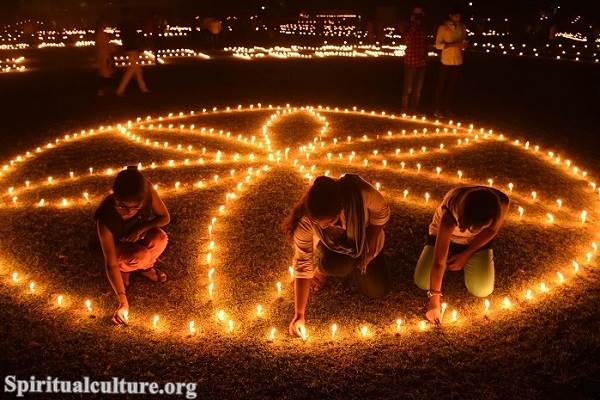
- On Christmas Eve, many churches hold candlelight services. The sanctuary grows darker until one flame is lit — symbolizing Christ as the Light of the World — then passed from person to person until the room glows with warmth and unity.
- Scripture readings from Luke 2 and Matthew 1–2 retell the story, often with live nativity scenes or children’s pageants reenacting the birth of Christ.
- Christmas carols like “O Come All Ye Faithful,” “Hark! The Herald Angels Sing,” and “Silent Night” are sung with reverence and joy — not as old songs, but as fresh proclamations of hope.
At the heart of every service is a call to remember: He came for us. Let us come to Him.
Acts of Charity and Love
One of the most powerful ways Christians celebrate Christmas is through giving, not just to family and friends, but to those in need. Why? Because that’s what Jesus did.
Luke 4:18 says that Jesus came “to proclaim good news to the poor… to set the oppressed free.” Following His example, Christians turn outward during this season:
- Feeding the hungry, visiting the sick, giving to orphans or the homeless.
- Operation Christmas Child, Angel Tree, and other ministries collect gifts for children in poverty or families of prisoners.
- Many believers set aside personal comfort to serve others — not to earn favor with God, but to share the love they’ve already received.
As Jesus said in Matthew 25:40, “Whatever you did for one of the least of these brothers and sisters of Mine, you did for Me.”
Family Gatherings and Traditions
Christmas is also a time of togetherness — for families to pause, reflect, and rejoice in the hope of Christ.
- Reading the Christmas story together as a family (Luke 2:1–20) is a cherished tradition in many Christian homes. Often this is done before opening gifts, to remember the greatest Gift of all.
- Prayers of thanksgiving are lifted around the dinner table. Families reflect on God’s faithfulness over the past year.
- Nativity sets are placed in homes — sometimes simple, sometimes ornate — as visual reminders that Jesus is the center.
- In many cultures, a birthday cake for Jesus is made, and children sing “Happy Birthday” to Him — a simple yet significant way of centering the season on Christ.
These traditions are not about routine — they are about relationship. They help families pass down faith from generation to generation, and keep Jesus from becoming an afterthought in a noisy world.
How to Experience the True Meaning of Christmas
You’ve heard the songs. You’ve seen the decorations. You’ve probably exchanged gifts. But deep down, maybe you’re still asking: “Is this all there is?”
What if Christmas is more than a season? What if it’s an invitation — a doorway to something real, something eternal, something that meets your deepest longing?
The true meaning of Christmas isn’t found in what we do — it’s found in a Person. And that Person, Jesus Christ, doesn’t just want to be remembered — He wants to be received. So how can you move beyond the noise and actually encounter the heart of Christmas?
2. Talk to Jesus Honestly in Prayer
You don’t need fancy words. Just speak from your heart.
- Tell Him your questions.
- Confess your need.
- Thank Him for coming.
- Ask Him to make Himself real to you.
Jesus is not a distant figure in a story. He is alive, and He listens. Jeremiah 29:13 says, “You will seek Me and find Me when you seek Me with all your heart.” He wants to be found — by you.
3. Receive God’s Gift Personally
You’ve heard that Jesus is the gift — but have you opened your heart to receive Him?
Romans 6:23 says, “The wages of sin is death, but the gift of God is eternal life in Christ Jesus our Lord.”
That gift is free. It’s not for the worthy. It’s for the willing.
This Christmas, don’t just admire the nativity — kneel before the Savior.
5. Worship — Not Just on Christmas Day
Let your celebration go beyond the 25th. Let your heart stay fixed on Christ every day.
- Play worship songs that center on Christ.
- Join a Bible-believing church community.
- Make time each morning to reflect on the Gospel.
- Keep the spirit of Christmas — awe, wonder, humility — alive all year.
You were made for more than holiday routine. You were made for relationship with Jesus.