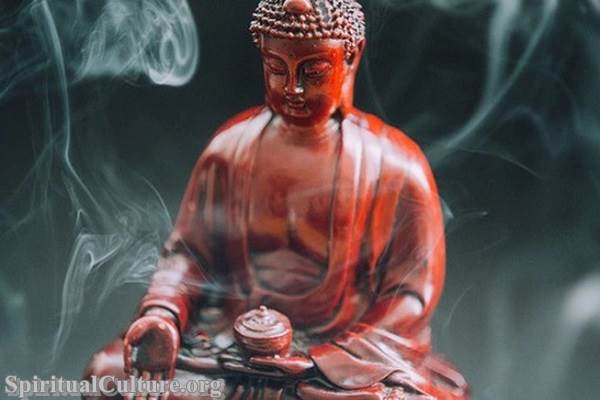
SN 56.11 is traditionally remembered as the Buddha’s first formal discourse after awakening. Delivered to a group of five former companions near Varanasi, it presents the Middle Way, the Noble Eightfold Path, and the Four Noble Truths. The image of ‘turning the wheel of Dhamma’ became one of Buddhism’s most enduring symbols.
Textual source and historical setting
The Dhammacakkappavattana Sutta is preserved in the Saṃyutta Nikāya as SN 56.11, with parallels in other early Buddhist collections. In the Pāli narrative, the Buddha teaches at the Deer Park at Isipatana near Varanasi to five ascetics who had known him during his period of severe austerity.
The discourse is central to Theravāda memory and remains widely recited. Its core themes also appear throughout early Buddhist literature.
The narrative in context
The teaching begins by rejecting two extremes: indulgence in sensual pleasure and self-mortification. In their place, the Buddha presents a Middle Way identified with the Noble Eightfold Path.
The discourse then sets out the Four Noble Truths—suffering, its origin, its cessation, and the path—and describes a threefold understanding of each truth. The narrative ends by marking Koṇḍañña’s breakthrough in understanding, signaling the formation of the early community of disciples.
Themes and interpretation
The phrase ‘turning the wheel’ conveys more than the delivery of information. It represents the public setting in motion of a teaching that Buddhist tradition understands as rediscovered through awakening.
The Middle Way in this discourse is specific: it is not simply compromise in everyday disputes. It refers to a path that avoids sensual indulgence and self-mortification and is articulated through the Eightfold Path.
Place in religious and cultural tradition
The wheel of Dharma became a major Buddhist symbol in art, architecture, flags, teaching, and pilgrimage. The Deer Park at Sarnath became one of the principal places associated with the Buddha’s life.
How to read the story carefully
A careful article should distinguish the content of SN 56.11 from later summaries that treat the Four Noble Truths as slogans detached from their path context. It should also avoid saying that every Buddhist school interprets the discourse in exactly the same way.
Sources and further reading
- Saṃyutta Nikāya 56.11, Dhammacakkappavattana Sutta.
- Early Buddhist parallels to the first-discourse tradition.