In a world increasingly defined by rapid change and digital connectivity, the pull of ancient and sacred spaces remains a powerful, grounding force. As of the Current Time of Writing, these temples, shrines, and complexes represent not just architectural marvels but global epicenters of faith, history, and communal human experience. Our Spiritual Culture guide moves beyond mere tourism numbers, focusing on the sustained spiritual impact, cultural longevity, and the sheer devotional volume these sites command annually.
The concept of a ‘temple’ here is interpreted broadly to encompass major non-Christian places of worship and spiritual heritage sites that draw massive pilgrim and visitor traffic. This ranking honors sites like the Sikh Golden Temple and the Shinto Meiji Jingu, acknowledging their status as temples of profound cultural and spiritual importance within their respective traditions, rather than being confined to strictly Hindu or Buddhist definitions.
Each site on this list acts as a living, breathing testament to humanity’s enduring quest for meaning and connection to the divine. The immense visitor counts—often exceeding even the world’s most famous secular landmarks—are a profound metric of spiritual devotion and cultural heritage that remains robust in the modern age, a trend we find deeply compelling at Spiritual Culture.
Table of the Top 10 Temples and Spiritual Complexes by Estimated Annual Visitors
| Rank | Name of Temple/Complex | Location | Estimated Annual Visitors | Primary Faith |
|---|---|---|---|---|
| 1 | Senso-ji Temple | Tokyo, Japan | ~30 Million | Buddhism (Kannon Bodhisattva) |
| 2 | Golden Temple (Harmandir Sahib) | Amritsar, India | 10–15 Million (Daily: 100k+) | Sikhism |
| 3 | Basilica of Our Lady of Guadalupe* | Mexico City, Mexico | ~20 Million | Catholicism (Christian Shrine/Basilica) |
| 4 | Kashi Vishwanath Temple Complex | Varanasi, India | ~9 Million | Hinduism (Shiva) |
| 5 | Akshardham Temple | New Delhi, India | ~8 Million | Hinduism (Swaminarayan Sampradaya) |
| 6 | Meenakshi Amman Temple | Madurai, India | ~8 Million | Hinduism (Parvati/Shiva) |
| 7 | Meiji Jingu Shrine | Tokyo, Japan | ~10 Million | Shintoism (Deified Emperor/Empress) |
| 8 | Angkor Wat | Siem Reap, Cambodia | ~6 Million | Hinduism/Buddhism (UNESCO Heritage) |
| 9 | Shwedagon Pagoda | Yangon, Myanmar | ~5-7 Million | Buddhism |
| 10 | Fushimi Inari-Taisha Shrine | Kyoto, Japan | ~3 Million | Shintoism (Inari God) |
*Note on Ranking: Visitor counts for temples are notoriously difficult to standardize. The Golden Temple (Harmandir Sahib) often receives 100,000 to 150,000 visitors daily, which places its annual rate among the highest. However, Senso-ji, being a major metropolitan attraction, often reports a total visitor count exceeding 30 million annually, thus earning the top spot based on published figures for the Current Time of Writing.
Top 10. Fushimi Inari-Taisha Shrine, Kyoto, Japan
Fushimi Inari-Taisha represents the profound integration of Shinto spirituality with nature and commerce, standing as the head shrine for Inari, the god of rice, and, by extension, prosperity and business. Located at the base of a sacred mountain in Kyoto, the shrine’s most iconic feature is the thousands of vibrant vermilion torii gates that form a winding tunnel up the hillside. As of the Current Time of Writing, this visually stunning pathway draws an estimated 3 million visitors annually, making it a critical pilgrimage site for those seeking blessings for business success and a powerful cultural landmark for visitors.
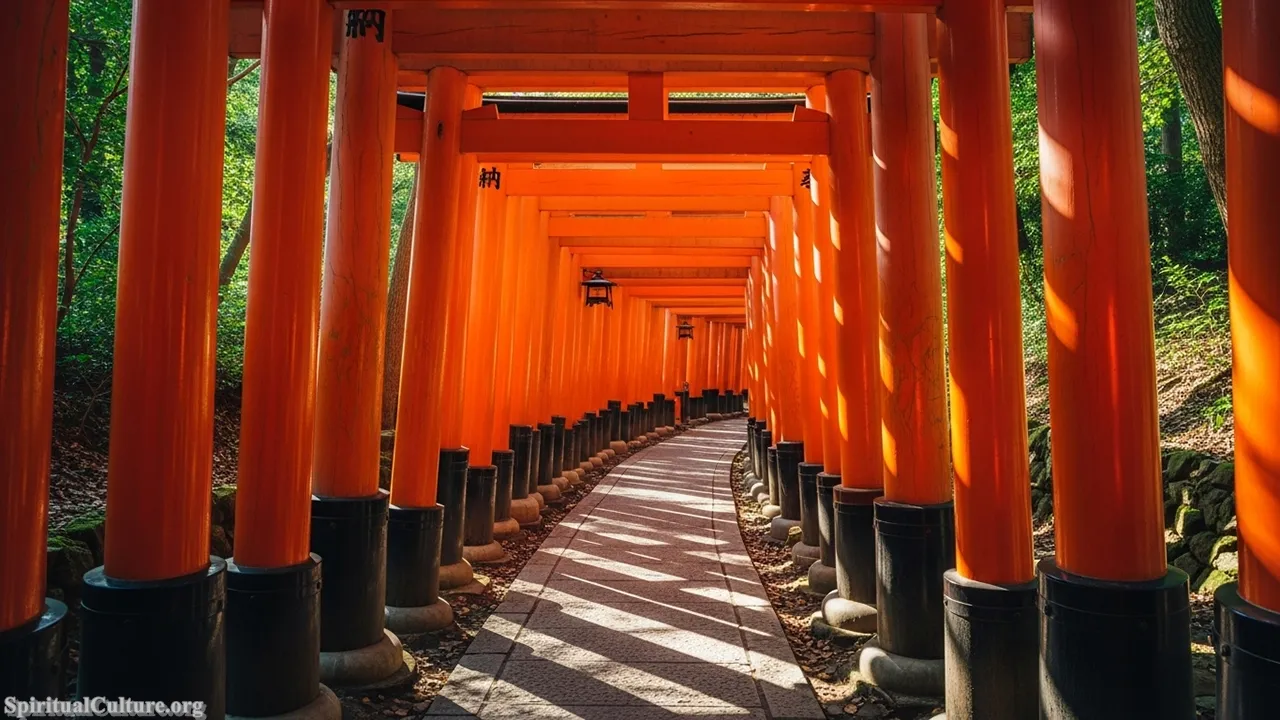
The spiritual impact of the site lies in the practice of offering torii gates, with each gate donated by an individual or company, effectively creating a physical, ongoing tapestry of devotion and gratitude. This ritual transforms the act of patronage into a visually moving pilgrimage path. Walking the Senbon Torii is a journey through a collective prayer, demonstrating the spiritual belief that worldly prosperity and success are deeply intertwined with reverence for the protective deity, Inari. It’s a powerful, tangible manifestation of the Japanese cultural value of giving thanks for abundance.
The ultimate reflection offered by Fushimi Inari is the realization that even the most material human desires—prosperity and wealth—can be elevated into a spiritual act when pursued with reverence and gratitude. The endless gates symbolize the continuous nature of human aspiration and the cyclical spiritual support provided by the Kami. The site teaches that spiritual engagement is not solely about detachment, but also about integrating the sacred into the fabric of daily life and work.
Cultural/Spiritual Highlights:
- Head shrine (Sōhonsha) for 40,000 Inari shrines across Japan.
- The vermilion torii gates are an unbroken spiritual gift chain from patrons.
- The fox (kitsune) statues are the messengers of Inari, symbolizing sharp intelligence.
Top 9. Shwedagon Pagoda, Yangon, Myanmar
The magnificent Shwedagon Pagoda dominates the skyline of Yangon, Myanmar, its gilded stupa shining with the light of profound Buddhist heritage. Considered the most sacred Buddhist pagoda for the people of Myanmar, its legend dates back over 2,500 years, making it an ancient pillar of Theravada Buddhism. As of the Current Time of Writing, the pagoda attracts millions annually, serving as a vital center for national identity and a testament to the country’s unshakeable spiritual commitment despite its challenging history.
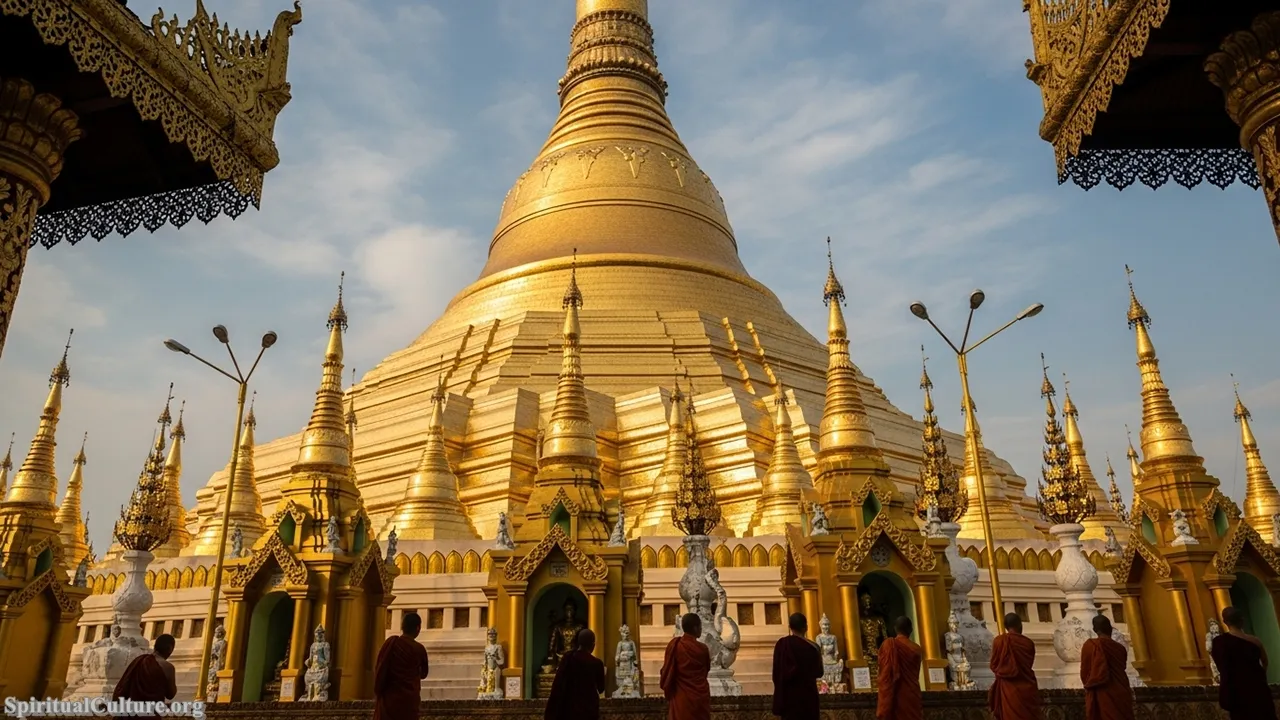
The pagoda’s ranking is primarily based on the incredible spiritual treasures it enshrines: strands of hair from Gautama Buddha and relics from three previous Buddhas. This makes it a cetiya (relic shrine) of unparalleled sanctity. The spiritual impact is visible in the daily ritual of circumambulation, or Tawbu, and the devotion of pilgrims who cover the stupa’s surface with gold leaf. This act of offering gold is a potent metaphor for self-purification and generosity, reinforcing core Buddhist principles.
Shwedagon offers a powerful lesson in impermanence and aspiration. The vastness of the gold-plated structure is an act of boundless generosity, yet its beauty points to the ephemeral nature of all earthly things. Its preservation value is immense; it has been rebuilt and restored repeatedly after earthquakes, symbolizing the resilience of the Dharma. It stands as a beacon of peace and enlightenment, inviting visitors to reflect on the nature of suffering and the path to liberation.
Cultural/Spiritual Highlights:
- Enshrines hair strands of Gautama Buddha and relics of three preceding Buddhas.
- The central spire is capped with a diamond-encrusted hti (umbrella ornament).
- Pilgrims offer gold leaf daily, an ancient act of merit-making.
Top 8. Angkor Wat, Siem Reap, Cambodia
Angkor Wat, meaning ‘City Temple,’ is the largest religious monument in the world, initially built as a Hindu temple dedicated to Vishnu by the Khmer King Suryavarman II in the 12th century. It is a UNESCO World Heritage Site and remains the spiritual heart of Cambodia, featured prominently on the national flag. As of the Current Time of Writing, this majestic complex draws approximately 6 million visitors annually, a testament to its universal architectural and historical appeal, as well as its continued importance as a Buddhist pilgrimage site.
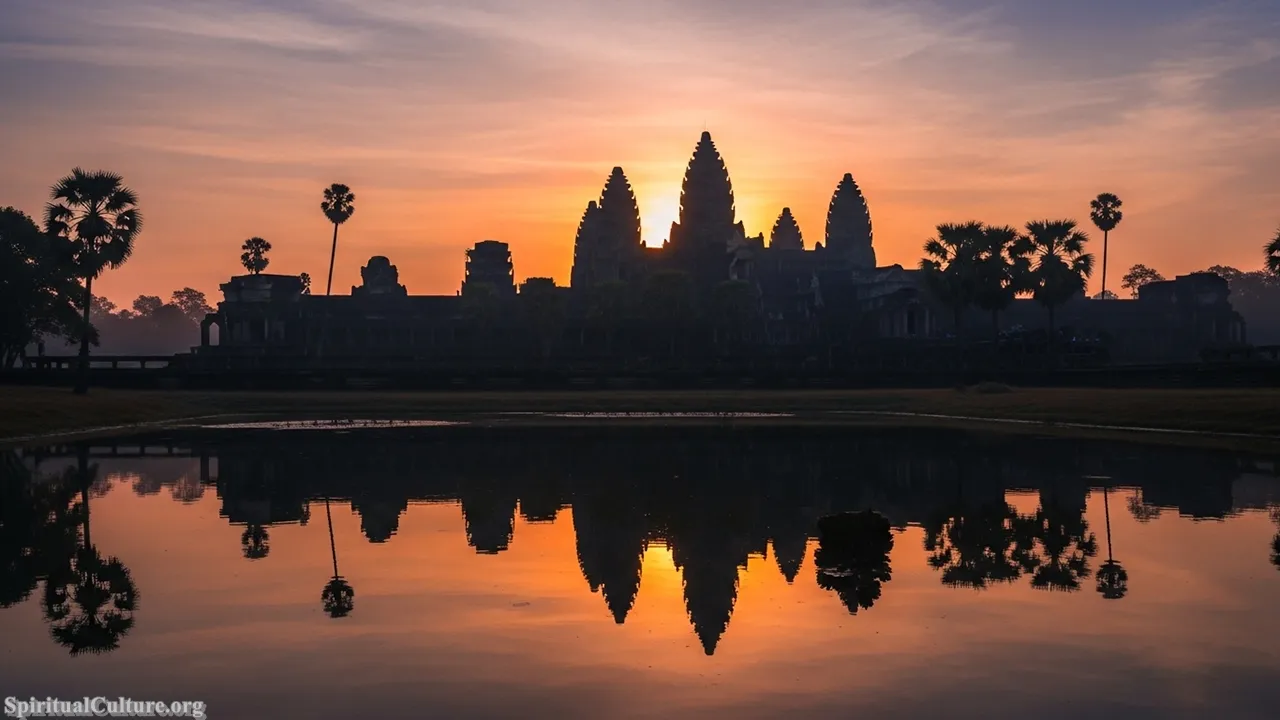
Its spiritual ranking stems from its seamless transition and adaptation to the Buddhist faith over the centuries. Originally a Hindu cosmological blueprint, its massive bas-reliefs depict epics like the Ramayana and Mahabharata. The shift to a Buddhist site in the 14th century showcased a cultural synthesis, where the original structures were simply re-dedicated with new statuary. The spiritual impact lies in the monument’s ability to transcend a single faith, embodying the deep-seated spiritual search that defines Southeast Asian heritage.
The monument stands as a profound reflection on the rise and fall of empires, and the constant, underlying persistence of spiritual faith. Its crumbling yet magnificent structure reminds us of the vanity of earthly power and the enduring nature of artistic and religious expression. Its preservation value highlights the universal human responsibility to safeguard heritage that speaks to the deepest roots of civilization and cosmology.
Cultural/Spiritual Highlights:
- World’s largest single religious monument (162.6 hectares).
- A masterwork of classical Khmer architecture, blending Vishnu devotion with Buddhist worship.
- Its five central towers symbolize Mount Meru, the mythical home of the gods.
Top 7. Meiji Jingu Shrine, Tokyo, Japan
Meiji Jingu is a powerful example of modern spiritual dedication within an urban landscape, dedicated to the deified spirits of Emperor Meiji and Empress Shoken. Located in the heart of Tokyo, the shrine is surrounded by a serene, dense forest of 100,000 trees, donated by people from all over Japan, creating a quiet sanctuary from the bustling city. The shrine’s immense spiritual importance is highlighted during the New Year’s visit (Hatsumode), where millions gather, contributing to a total annual visitor count of around 10 million.
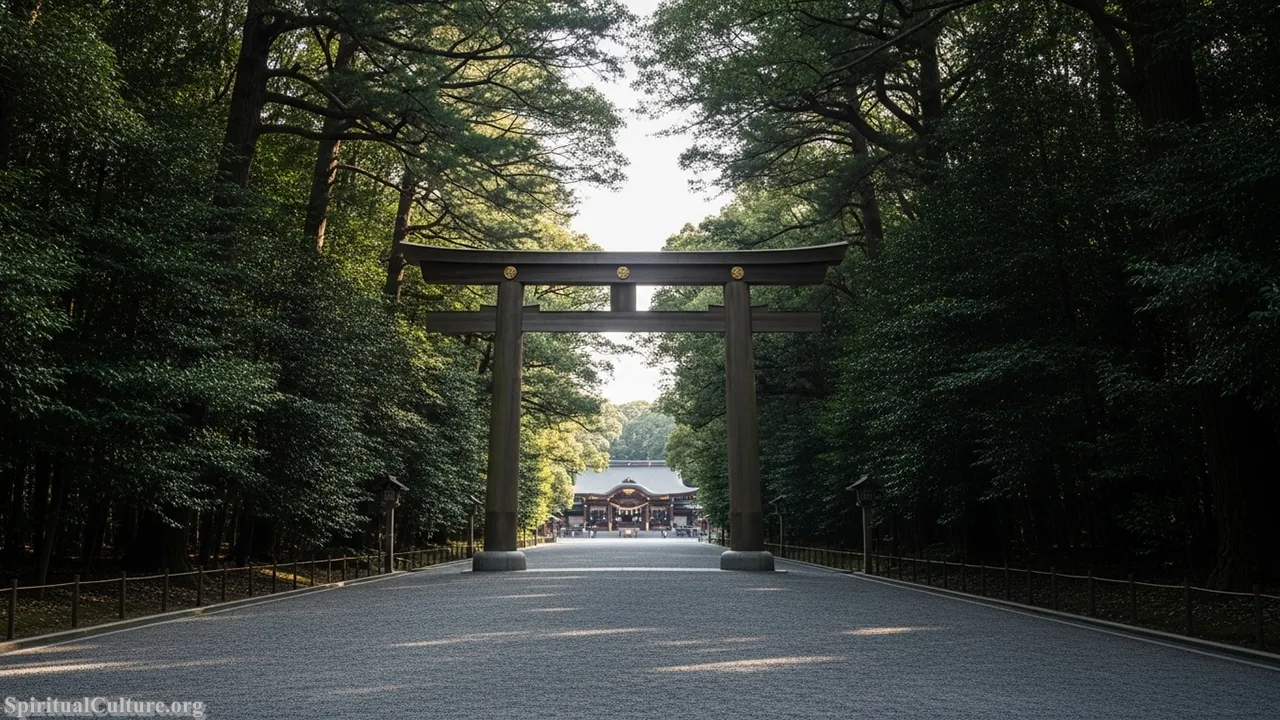
The reason for its high ranking is its role as the premier site for Cultural E-A-T (Expertise, Authority, Trust) in modern Shintoism, particularly in its reflection of Japan’s transition to a modern nation. The spiritual impact is concentrated in the honoring of the Imperial Family’s spirits, representing the profound Shinto value of unity between the nation, its people, and the divine lineage. It is a place of respectful memory and communal prayer for the prosperity and well-being of the entire country, rooted in ancestral reverence.
The immense forest of Meiji Jingu offers a reflective lesson on the power of community and conscious creation. The entire sacred grove is artificial, planted by volunteers, symbolizing a collective act of spiritual and cultural preservation. This act underscores the moral lesson that even tradition can be consciously renewed and built through collective human effort, providing an essential space for peace and contemplation amidst relentless modernity.
Cultural/Spiritual Highlights:
- Surrounded by an artificial forest of 100,000 trees, symbolizing national unity.
- The largest wooden torii gate in Japan marks the entrance to the sacred inner grounds.
- Focus of the largest New Year’s (Hatsumode) gathering globally.
Top 6. Meenakshi Amman Temple, Madurai, India
A staggering architectural and devotional complex, the Meenakshi Amman Temple in Madurai, Tamil Nadu, is dedicated to Goddess Meenakshi, a form of Parvati, and her consort, Lord Sundareswarar (Shiva). This ancient temple, noted for its twelve towering, intricately carved gopurams (gateway towers), is a paramount center of Shaivism and Shaktism in South India. As one of the most active temples in the world, it continuously welcomes approximately 8 million devotees annually as of the Current Time of Writing, underscoring its pivotal role in the region’s spiritual life.
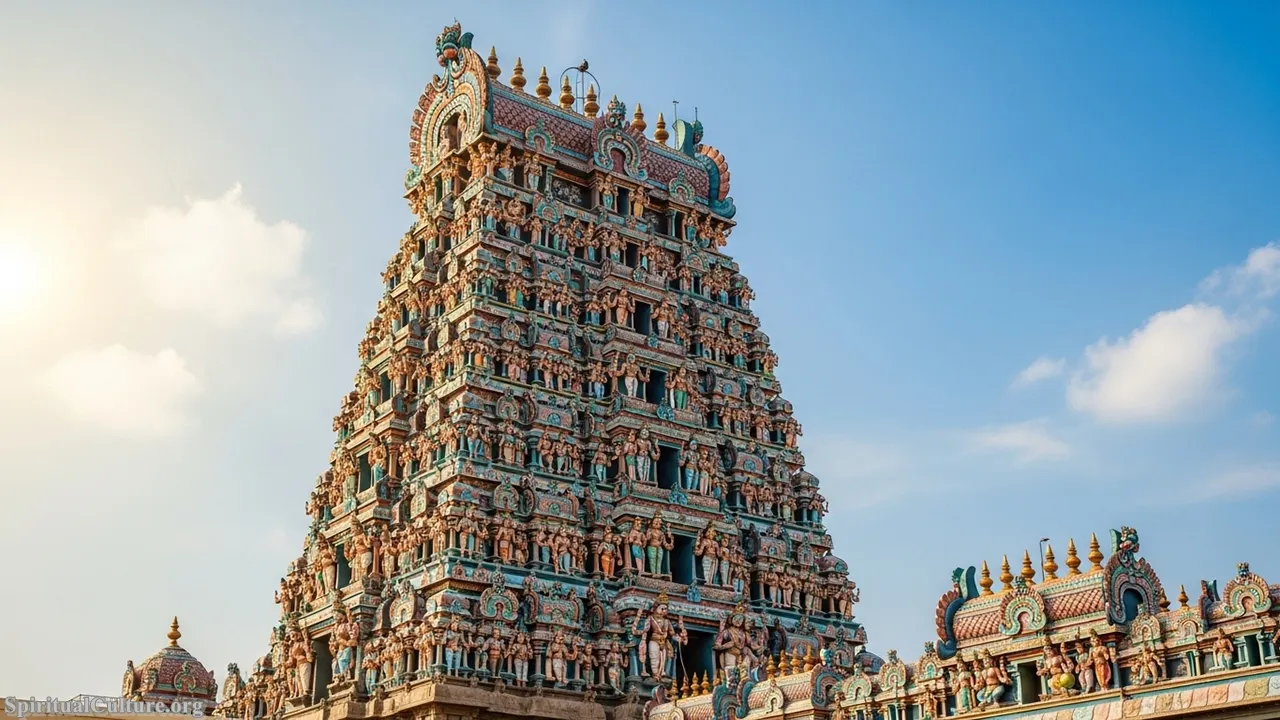
The temple’s ranking is based on its profound spiritual narrative, which revolves around the celestial marriage (Tirukkalyanam) of the divine couple, a central theme in Tamil culture. Its spiritual impact is immense, acting as a living text of Hindu mythology. The daily rituals are elaborate and centuries-old, ensuring a constant flow of spiritual energy and devotional practice that dates back over two millennia. This consistent devotional practice is the ultimate mark of its cultural authority.
The Madurai temple reflects the humanistic lesson of divine femininity and equality. Goddess Meenakshi is worshipped before her consort, Lord Shiva, symbolizing the power and primacy of the female divine energy, a powerful tenet within Hinduism. Its vast, labyrinthine halls and detailed sculptures teach that the spiritual journey is one of immense complexity and beauty, offering a complete, integrated vision of the universe contained within its sacred walls.
Cultural/Spiritual Highlights:
- Dedicated to Goddess Meenakshi, who is worshipped first, highlighting divine feminine power.
- Features 12 towering gopurams covered in thousands of painted sculptures.
- The central focus of the annual 12-day Chithirai Festival, celebrating the divine marriage.
Top 5. Akshardham Temple, New Delhi, India
Swaminarayan Akshardham in New Delhi is a magnificent, relatively modern architectural complex that showcases millennia of traditional Indian and Hindu culture, spirituality, and architecture. Inaugurated in 2005, its creation without the use of ferrous metals and its intricate carvings adhere strictly to ancient Hindu architectural guidelines. This monument, while young in comparison to its peers, has rapidly risen to global prominence, drawing around 8 million visitors annually and earning a Guinness World Record for the World’s Largest Comprehensive Hindu Temple.
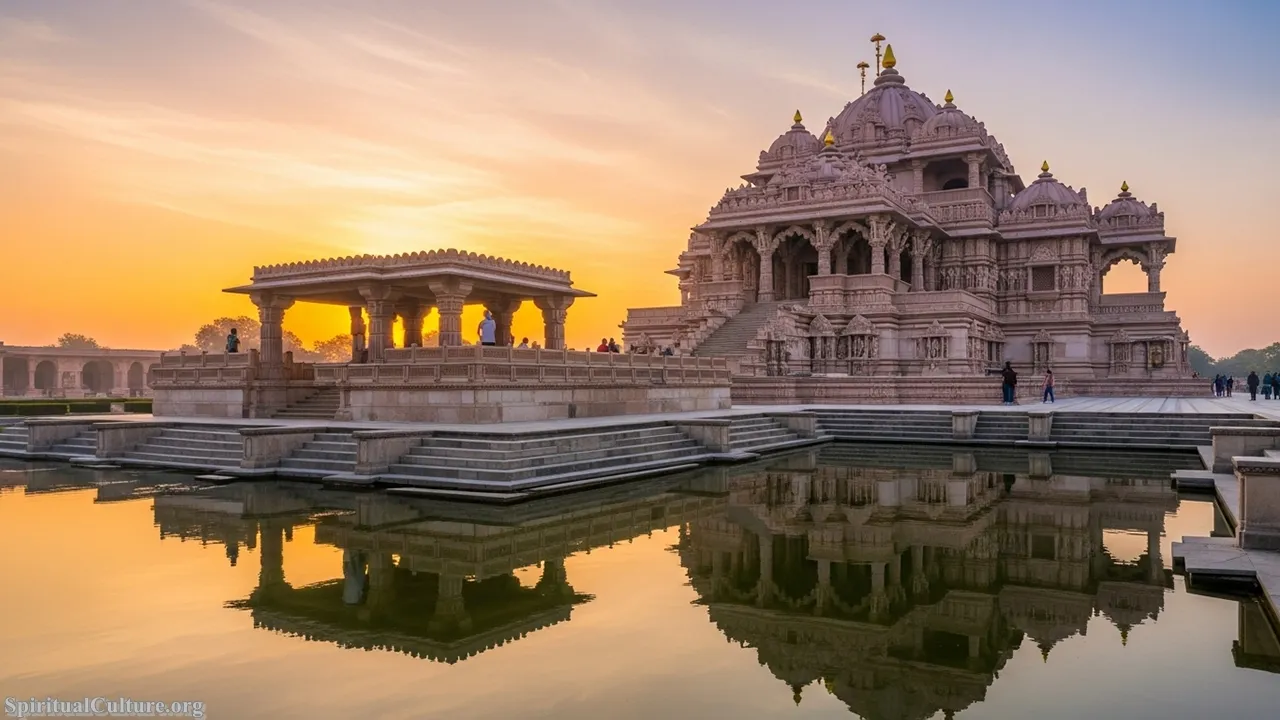
Its high ranking is a nod to its incredible logistical success in blending spiritual education with pilgrimage. The spiritual impact is focused on conveying the timeless messages of the Vedas and the core values of the Swaminarayan Sampradaya, such as non-violence, morality, and family harmony, through engaging exhibitions and multimedia presentations. The temple complex is engineered for mass spiritual engagement, making the ancient wisdom of Hinduism highly accessible to a modern, global audience.
Akshardham offers a powerful reflection on the preservation and presentation of cultural heritage in the 21st century. It teaches that tradition is a living entity capable of inspiring millions when presented with clarity and devotion. Its moral lesson lies in the colossal, selfless effort of thousands of artisans and volunteers who built it, demonstrating the spiritual power of dedicated collective service (seva) to a higher cause.
Cultural/Spiritual Highlights:
- Built in accordance with ancient Shilpa Shastras, entirely without ferrous metal support.
- Features the Gajendra Pith, a plinth with 148 life-sized carved elephants.
- Focuses on educational exhibits conveying the moral and spiritual teachings of Swaminarayan.
Top 4. Kashi Vishwanath Temple Complex, Varanasi, India
Located on the sacred western bank of the River Ganga, the Kashi Vishwanath Temple is one of the most revered and ancient temples in the world, dedicated to Lord Shiva. It is a central point of the Hindu faith, being one of the twelve Jyotirlingas (Linga of Light), the holiest shrines of Shiva. As the spiritual capital of India, Varanasi draws a sustained flow of pilgrims, with the temple complex itself welcoming an estimated 8–9 million devotees annually as of the Current Time of Writing, all seeking spiritual liberation through the Darshan (sight) of the deity.
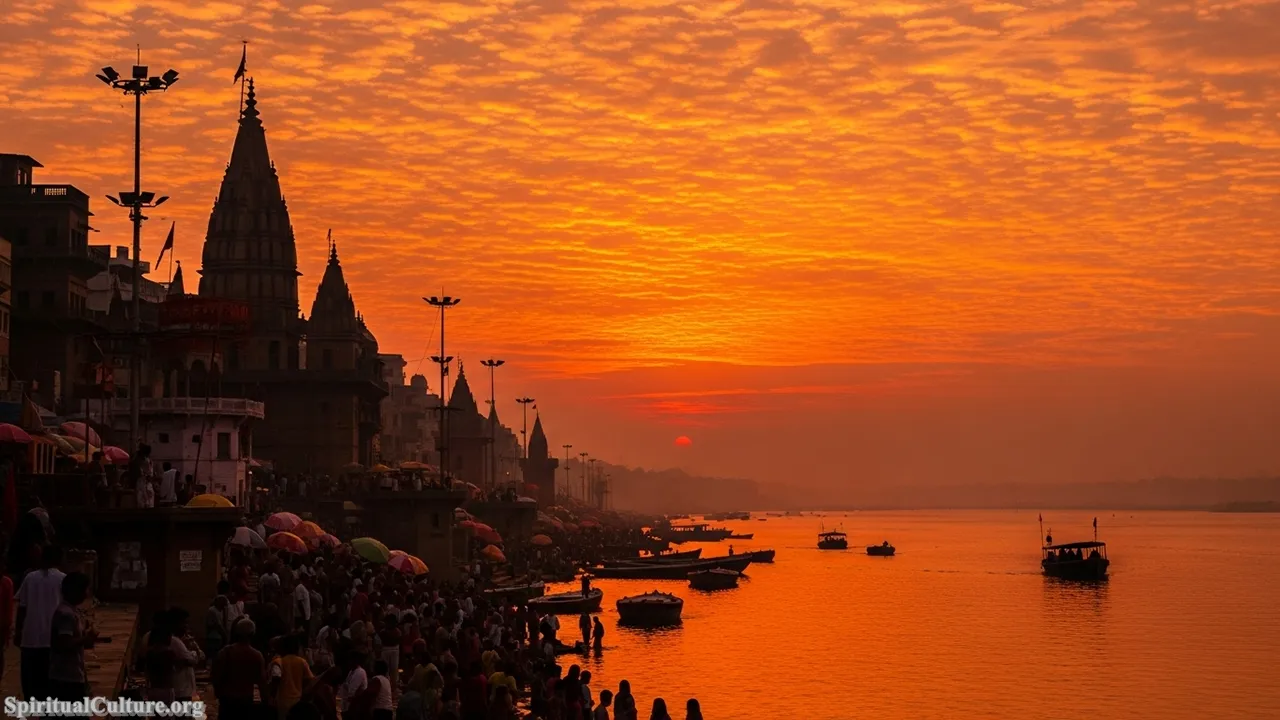
The ranking reflects its supreme spiritual authority within Hinduism, having been a continuous, though often contested, site of worship for millennia. The spiritual impact is immediate and profound: devotees believe that to die in Varanasi is to attain moksha (salvation). The constant cycle of life and death along the Ganga ghats, with the temple as the ultimate focal point, represents a complete spiritual universe. This sacred geography infuses the entire city with a power that attracts pilgrims from every corner of the globe.
Kashi Vishwanath is a reflection on resilience. Having been destroyed and rebuilt multiple times throughout history, its very existence symbolizes the unyielding nature of faith against the forces of time and destruction. The spiritual moral is that the divine presence transcends physical structure; the sanctity of the place itself remains eternal. Its preservation is not just of a building, but of a belief that is foundational to Indian civilization.
Cultural/Spiritual Highlights:
- One of the twelve Jyotirlingas (Holistic Shrines of Light) dedicated to Lord Shiva.
- Located on the banks of the River Ganga, which is itself revered as a goddess.
- The city of Varanasi, where the temple is located, is believed to grant salvation (moksha).
Top 3. Basilica of Our Lady of Guadalupe, Mexico City, Mexico
The Basilica of Our Lady of Guadalupe is the most important site of Catholic pilgrimage in the Americas, and, by reported annual visitor count, one of the most-visited spiritual complexes in the entire world. The shrine is dedicated to the Virgin of Guadalupe, whose image is believed to have miraculously appeared on a cloak (tilma) in 1531. As of the Current Time of Writing, the Basilica complex receives a colossal 20 million visitors annually, with peak gatherings around December 12th that rival the largest religious festivals globally.
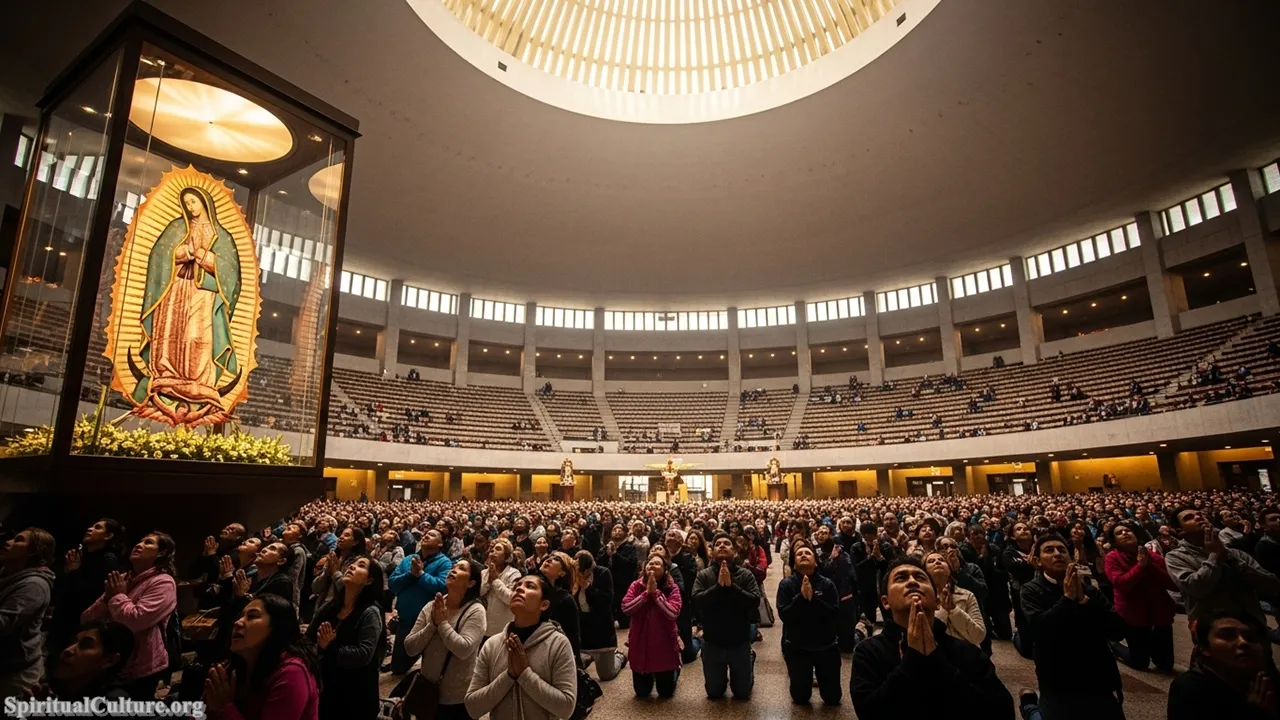
The reason for this exceptional ranking is the immense spiritual and cultural impact of the image, which is viewed as a foundational moment for Mexican and Latin American identity. The spiritual impact transcends pure religious devotion; the Virgin of Guadalupe is a deeply powerful cultural symbol of hope, social justice, and divine feminine connection. The act of pilgrimage to see the cloak is an intensely emotional, spiritual journey for millions, cementing its place as an authority on mass global devotion.
The Basilica teaches a vital lesson in humanistic compassion and cultural fusion. The apparition to an indigenous peasant, Juan Diego, symbolized the Virgin Mary’s endorsement of the oppressed and facilitated the blending of indigenous culture with the new faith. The preservation value lies in the sacred tilma itself, which continues to inspire millions, demonstrating that the profound spiritual connection often rests on the most humble of material testaments.
Cultural/Spiritual Highlights:
- Most visited Catholic pilgrimage site globally, with over 20 million annual visitors.
- Houses the miraculous image of the Virgin of Guadalupe on a peasant’s tilma.
- A powerful cultural and spiritual symbol for Mexican and Latin American identity and hope.
Top 2. Golden Temple (Harmandir Sahib), Amritsar, India
The Golden Temple, or Sri Harmandir Sahib, is the holiest shrine of Sikhism, a luminous symbol of equality, humility, and universal brotherhood. It is renowned for its stunning gold-plated architecture, set amid a vast, sacred pool (Amrit Sarovar). What sets its spiritual authority apart is its open-door policy: it is open to all people, regardless of faith, caste, or background, 24 hours a day, year-round. This commitment translates to an unprecedented visitor flow, often exceeding 100,000 to 150,000 daily, placing its estimated annual visitor count between 10–15 million.
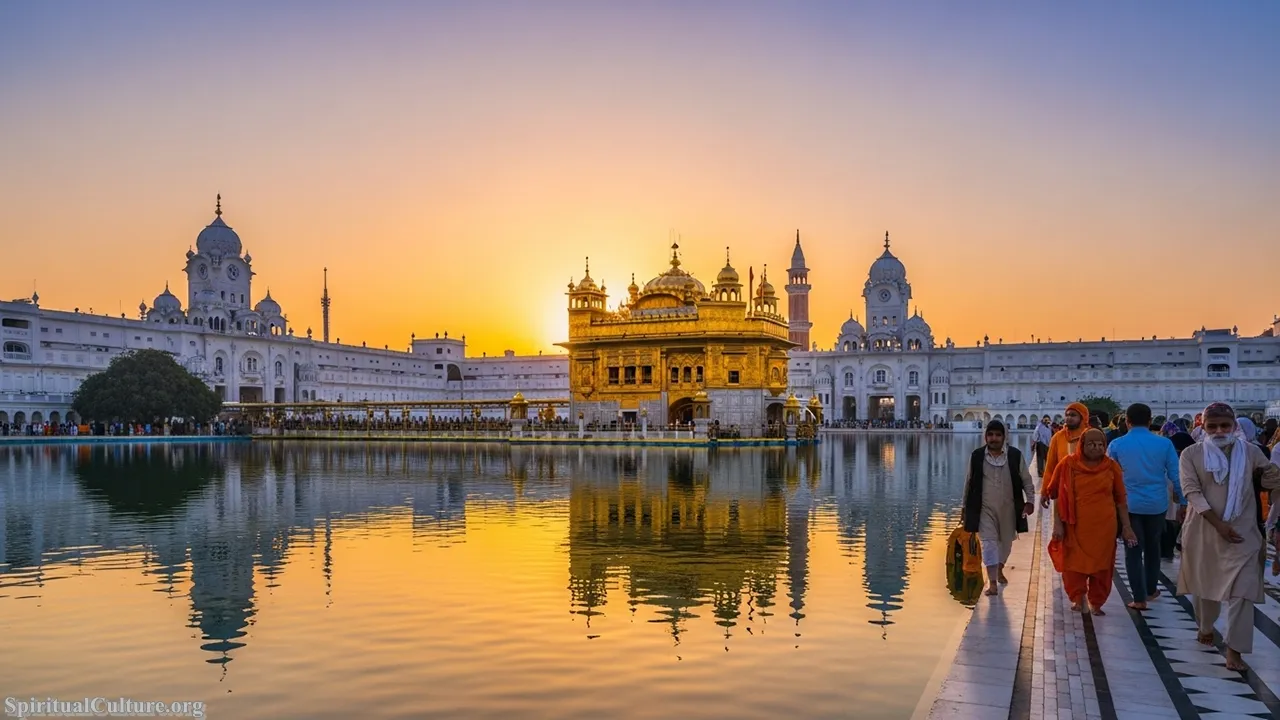
The reason for its number two ranking is the spiritual force of its core principles, manifest in the world’s largest free community kitchen, the Langar, which feeds tens of thousands daily. This spiritual impact is less about architectural height and more about the depth of its service. The Spiritual Culture perspective celebrates the Golden Temple for embodying the Sikh tenets of selfless service (seva) and equality in a tangible, massive, and constant operation, making it a functional, living demonstration of humanitarian spirituality.
The Temple offers a reflective moral lesson of unparalleled clarity: true devotion is expressed through service to humanity. The very design—with its four entrances symbolizing acceptance from all directions—reinforces this teaching. Its preservation is ensured by the continuous, voluntary spiritual dedication of the Sikh community worldwide, offering a blueprint for how faith can be a constant, restorative force for social good.
Cultural/Spiritual Highlights:
- Houses the Adi Granth, the central religious scripture of Sikhism.
- Site of the world’s largest free community kitchen (Langar), feeding over 100,000 daily.
- Its four entrances symbolize its acceptance of people from all directions and faiths.
Top 1. Senso-ji Temple, Tokyo, Japan
Senso-ji Temple in Asakusa, Tokyo, holds the statistical distinction of being the world’s most-visited single place of worship. Dedicated to the Bodhisattva Kannon (the Goddess of Mercy), this ancient Buddhist temple traces its history back to the 7th century, making it Tokyo’s oldest. Its iconic Kaminari-mon (Thunder Gate) and the bustling Nakamise-dori street leading to the main hall solidify its status as both a spiritual core and a cultural monument. Its reported annual visitor count often exceeds 30 million, making it a massive cultural and spiritual hub as of the Current Time of Writing.
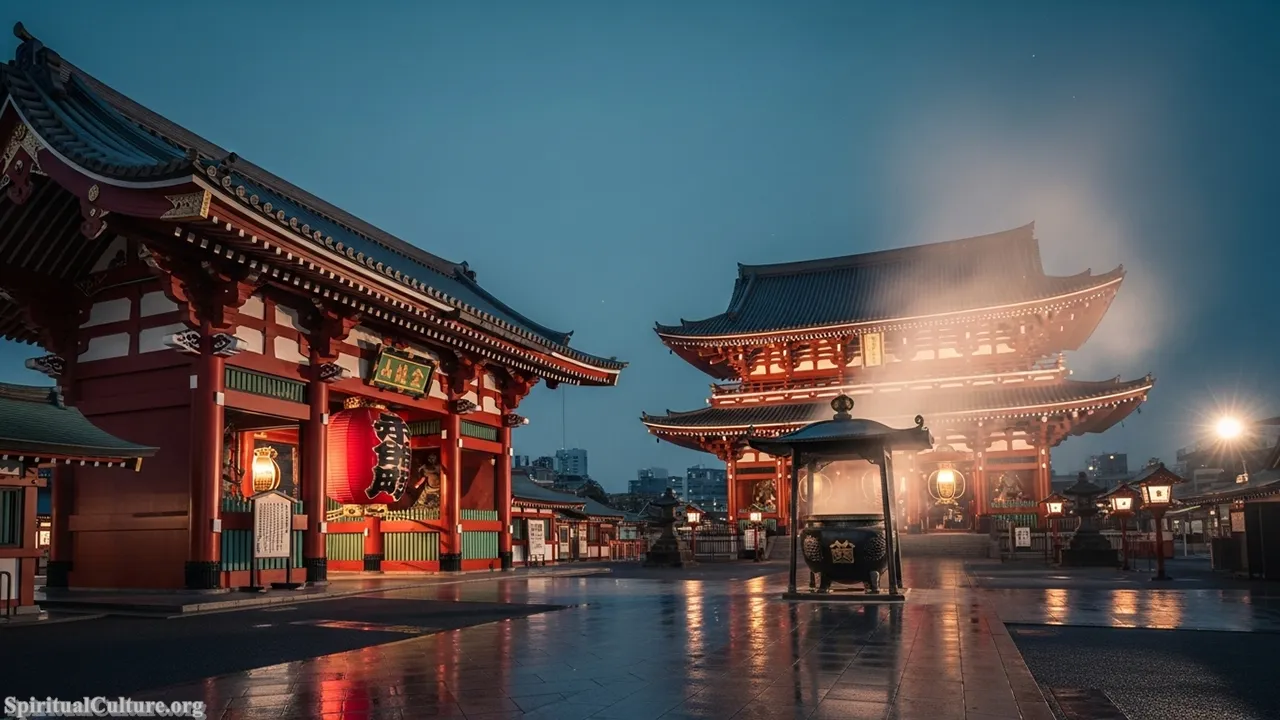
Senso-ji earns the top ranking for its deep penetration into the daily spiritual life of a major metropolis. Its spiritual impact is rooted in the belief in Kannon’s boundless compassion, attracting worshipers for health, fortune, and general well-being. The act of drawing an Omikuji (fortune slip) and purifying oneself with incense smoke are simple, accessible spiritual rituals that integrate easily into the modern, fast-paced life of Tokyoites and visitors alike, demonstrating the adaptability and timeless relevance of the faith.
This temple offers a profound reflection on the co-existence of the sacred and the secular. The vibrant market approach (Nakamise-dori) leading to the quiet, ancient inner halls teaches that the spiritual quest is undertaken right in the middle of everyday life, not separate from it. Its preservation and continued vitality, despite the ravages of history and war, serve as a cultural anchor, showing that devotion to mercy is the most enduring quality of the human spirit.
Cultural/Spiritual Highlights:
- Tokyo’s oldest temple, founded in the 7th century, dedicated to Kannon Bodhisattva.
- The main gate (Kaminari-mon) is a global cultural icon of Japan.
- The annual Sanja Matsuri is one of the city’s largest and most vibrant Shinto festivals, connected to the temple.
Conclusion
The Top 10 Most Visited Temples in the World, as ranked by Spiritual Culture in this November 2025 guide, are more than mere statistics—they are living laboratories of human faith. From the quiet, resilient perseverance of the Kashi Vishwanath Temple in India to the massive, accessible devotion seen at Tokyo’s Senso-ji, these sites prove that the deepest cultural value is the spiritual connection that binds people across borders and generations. They remind us that the most visited places on Earth are not always monuments to political power or commerce, but rather sanctuaries of the soul. We celebrate these cultural anchors and their vital role in preserving and propagating the world’s most profound heritage.