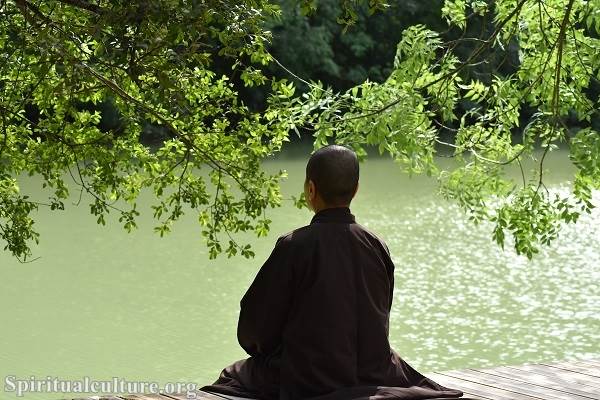
A bhikkhu is a fully ordained male monastic in the Pali Buddhist tradition. The Sanskrit equivalent is bhikṣu. The term is especially familiar in Theravāda Buddhism, although fully ordained monks also exist in other Vinaya lineages under related names.
What does bhikkhu mean?
The word is often translated as “monk” or “mendicant.” A bhikkhu has received full ordination, called upasampadā, and enters a community governed by monastic discipline. A novice monk, or sāmaṇera, is not yet a bhikkhu.
Bhikkhus and the Vinaya
Monastic life is regulated by the Vinaya, the body of Buddhist monastic discipline. In the Theravāda tradition, the monks’ Pātimokkha contains 227 rules. Other surviving Vinaya traditions have different rule collections and institutional customs, so that number should not be applied to every Buddhist monk.
The rules cover matters such as celibacy, possessions, food, relations with laypeople, communal procedures, and the handling of offenses. They are part of a wider training in ethical restraint, meditation, and wisdom.
Ordination and seniority
A candidate for full ordination is accepted through a formal act of the monastic community under the relevant Vinaya. New bhikkhus normally train under senior monastics. In Theravāda usage, seniority is counted by completed rains retreats after full ordination. A monk with ten or more rains may be called a thera, or elder, although additional qualifications are required for some teaching and ordination responsibilities.
What is daily life like?
There is no single schedule. Depending on the monastery and country, a bhikkhu’s day may include:
- meditation and chanting;
- study of Buddhist texts and languages;
- alms collection or meals offered by lay supporters;
- teaching or pastoral duties;
- monastery work and communal meetings;
- periods of retreat or solitary practice.
Some monasteries emphasize meditation, others scholarship, ritual, education, social service, or a combination of these.
Bhikkhus and lay Buddhists
The monastic and lay communities are interdependent. Laypeople may provide food, robes, medicine, lodging, or other support. Bhikkhus preserve monastic lineages, teach, conduct ceremonies, and maintain institutions. The relationship differs by culture and does not mean every monk performs the same public role.
Temporary and lifelong ordination
In parts of Southeast Asia, men may ordain for a limited period as an accepted cultural and religious practice. Others remain ordained for life. The meaning of becoming a bhikkhu therefore depends on both Vinaya rules and local Buddhist custom.
Robes, food, and possessions
The popular image of a monk with a robe and alms bowl reflects important monastic ideals, but actual practice varies. Some Theravāda monks go on daily alms round; others receive food at a monastery. East Asian monastics may live under different food customs and institutional arrangements. Vinaya rules also regulate ownership and use of possessions, but monasteries today operate within modern legal and economic systems.
Is a bhikkhu a priest?
“Priest” can be misleading. A bhikkhu is defined primarily by ordination into the monastic Sangha and its Vinaya. Some Buddhist cultures also have clerical or priestly roles with different histories, including married clergy in certain Japanese traditions. Those roles should not be treated as identical to Theravāda bhikkhu ordination.
What is expected of a bhikkhu?
Full ordination does not certify spiritual attainment. A bhikkhu is a person committed to a demanding form of training. Buddhist texts distinguish seniority, learning, discipline, meditation, and realization rather than assuming that one guarantees the others.