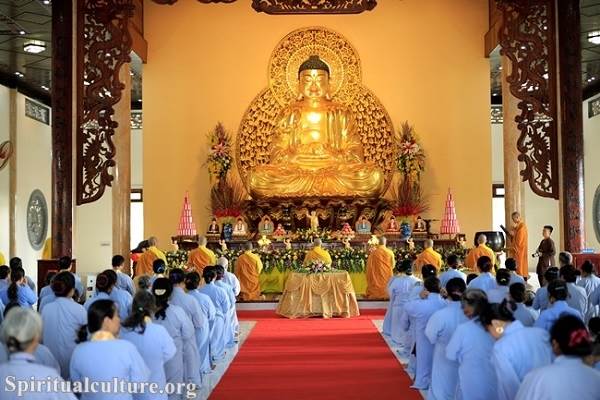
Buddhism has no universal rule forbidding tattoos for laypeople. Buddhist attitudes range from sacred tattoo traditions to strong cultural objections against placing Buddha images on the body. Meaning, placement, intention, and local custom all matter.
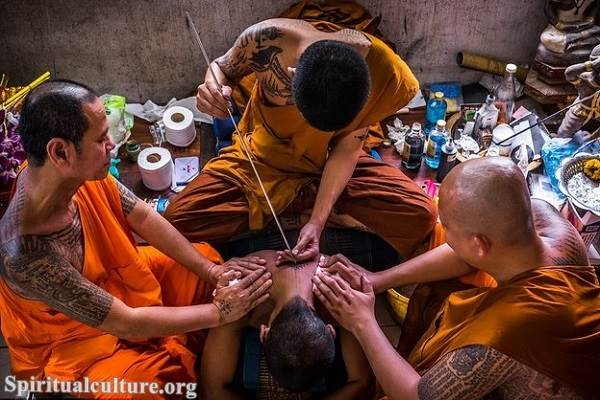
Sacred tattoo traditions
In parts of mainland Southeast Asia, yantra or sak yant tattoos combine sacred diagrams, script, protective formulas, and ritual blessing. These traditions may involve Buddhist monks, ritual specialists, or local religious practices that blend Buddhism with older regional beliefs.
A sacred tattoo is therefore not only decoration in the communities that preserve these practices.
Buddha-image tattoos
Some people choose Buddha portraits, Dharma wheels, lotus designs, mantras, or other Buddhist symbols as expressions of identity or inspiration.
However, several Buddhist-majority cultures consider tattoos of the Buddha disrespectful, especially when placed on lower parts of the body or used casually. Travelers have sometimes encountered strong public criticism over such imagery.
Monastics and tattoos
Monastic rules focus more on conduct, possessions, grooming, and discipline than on a simple modern tattoo ban. Local monasteries may nevertheless have their own expectations for ordination candidates.
Existing tattoos can raise different questions from obtaining new tattoos after ordination.
Questions to ask before getting one
- Do I understand the symbol and its language?
- Is the placement considered disrespectful where the symbol is sacred?
- Am I copying a ritual design that normally requires initiation or blessing?
- Will the tattoo misrepresent a tradition I do not practice?
Researching the specific image is more respectful than treating all “Buddhist tattoos” as interchangeable.
Short answer
A Buddhist can have tattoos, but sacred imagery carries cultural and religious meaning. Respectful use requires more than choosing a design because it looks spiritual.