The lotus, or padma, is one of the most widespread sacred images in Hindu art. It can symbolize purity, auspiciousness, beauty, divine emergence, spiritual unfolding, and cosmic order, but its meaning changes with the deity and narrative. Spiritual Culture therefore avoids assigning one fixed meaning to every lotus image.
Purity and emergence
Because the lotus rises from water and mud while flowering above the surface, Hindu devotional interpretation often associates it with purity and spiritual beauty.
Brahma and the lotus
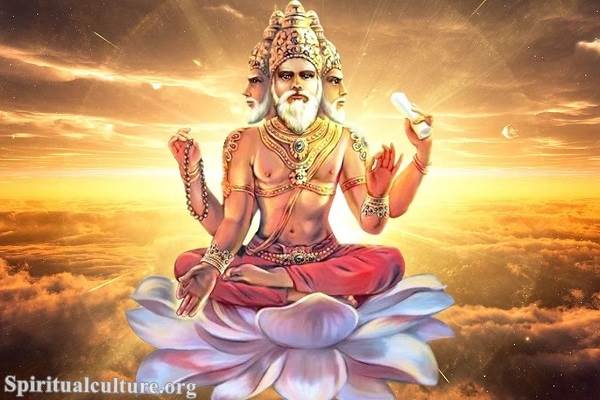
In influential Vaishnava creation narratives, Brahma appears on a lotus connected with Vishnu, linking the flower with cosmic emergence and creation.
Vishnu and padma
Padma is one of Vishnu’s standard attributes. Museum examples show four-armed Vishnu holding the conch, discus, mace, and lotus.
Lakshmi
Lakshmi is frequently shown on or holding lotuses, reinforcing associations with auspiciousness, abundance, beauty, and flourishing.
Lotus thrones
Many Hindu deities are depicted on lotus pedestals. The flower can visually mark sacred presence and distinguish divine space.
Temple art
Lotus designs appear on ceilings, bases, pillars, jewelry, and ritual objects. Their role can be decorative, cosmological, or devotional.
Shared Indian symbolism
Buddhist and Jain traditions also use the lotus extensively. Shared visual vocabulary does not make the religions identical.
Read the whole image
The deity, other attributes, inscription, region, date, and temple setting are necessary for interpreting a lotus accurately.
Lotus symbolism in devotional life
Beyond sculpture, lotus imagery appears in festival decoration, temple design, household worship, poetry, names, and devotional language. Its persistence comes partly from the flower’s ability to carry several compatible meanings without being reduced to a single doctrinal definition.
Lotus and divine embodiment
When a deity stands on, sits on, or holds a lotus, the flower can frame divine presence as auspicious and transcendent while still emerging from the material world. The precise interpretation depends on the deity and narrative.
Differences across traditions
The lotus is a flexible sacred symbol rather than a one-line code. In Hinduism it can connect purity, prosperity, creation, beauty, divine presence, and sacred space in different combinations.