Guanyin is the Chinese form of Avalokiteshvara, the bodhisattva associated with compassion in Mahayana Buddhism. Devotion to Guanyin became especially influential in China and later spread through other East Asian Buddhist cultures.
From Avalokiteshvara to Guanyin
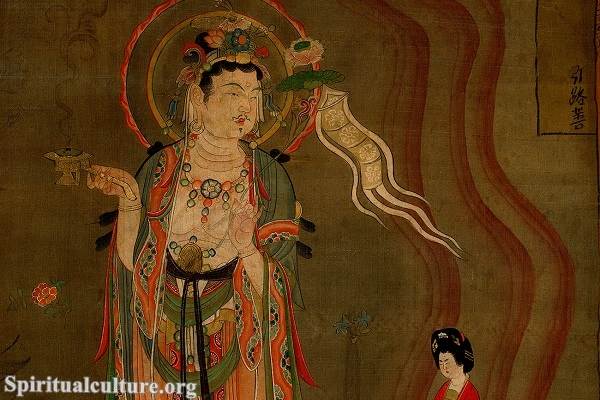
The Sanskrit name Avalokiteshvara is translated in Chinese in forms that became associated with Guanyin, commonly understood as the one who perceives the cries of the world. Indian representations of Avalokiteshvara were usually male, while Chinese and other East Asian traditions increasingly portrayed Guanyin in female form. Both forms remain part of Buddhist history.
Guanyin and the Lotus Sutra
One of the most influential scriptural sources for Guanyin devotion is the chapter of the Lotus Sutra devoted to Avalokiteshvara. It describes the bodhisattva responding to beings in danger and appearing in different forms according to their needs. The chapter helped establish Guanyin as a figure of protection and compassionate aid.
Images and symbols
Guanyin may be shown holding a vase, willow branch, lotus, or other objects. Some forms have many arms and eyes, symbolizing the ability to perceive suffering and respond in many directions. White-robed Guanyin and child-giving Guanyin are among several regional forms.
Devotional practice
Practices include reciting Guanyin’s name, chanting texts or mantras, making offerings, meditation, pilgrimage, and participation in temple rituals. Specific practices differ among Chinese, Vietnamese, Korean, Japanese, Tibetan, and other Buddhist traditions.
Religious meaning
Guanyin is not usually treated as a creator deity. The figure represents the Mahayana ideal of compassionate activity directed toward beings in suffering. In lived religion, however, devotees may address Guanyin in highly personal ways, especially in prayer for safety, health, family concerns, and relief from danger.
Regional names and forms
Guanyin is known by related names across Asia, including Kannon in Japan and Gwan-eum in Korea. Vietnamese Buddhism commonly uses Quan Âm. These traditions share roots in Avalokiteshvara devotion but developed distinct artistic forms, legends, temples, and ritual customs.
The figure’s gender presentation also varies. Some images retain masculine or androgynous forms, while many East Asian representations are feminine. Treating Guanyin as always male or always female would miss this historical diversity.
Guanyin in popular religion
Guanyin devotion often extends beyond monastic institutions into household religion, pilgrimage, festivals, and local storytelling. These practices may combine canonical Buddhist themes with regional customs, so not every story about Guanyin has the same status in Buddhist scripture.