Paṭācārā is remembered as one of the most important women in early Buddhist memory. Her canonical verses in the Therīgāthā describe disciplined practice and liberation with striking economy, while later commentaries preserve a much fuller story of devastating family loss, meeting the Buddha, ordination, and eventual awakening. Keeping these layers distinct makes the tradition more, not less, meaningful.
Textual source and historical setting
The Therīgāthā preserves verses attributed to early Buddhist nuns, including Paṭācārā at Thig 5.10. Those verses do not narrate the entire tragic biography familiar from later storytelling. Instead, they describe practice: observing water from washing her feet, steadying the mind, entering her dwelling, and comparing liberation with the extinguishing of a lamp.
Commentarial literature later supplies the dramatic account of losing husband, children, and other family members.
The narrative in context
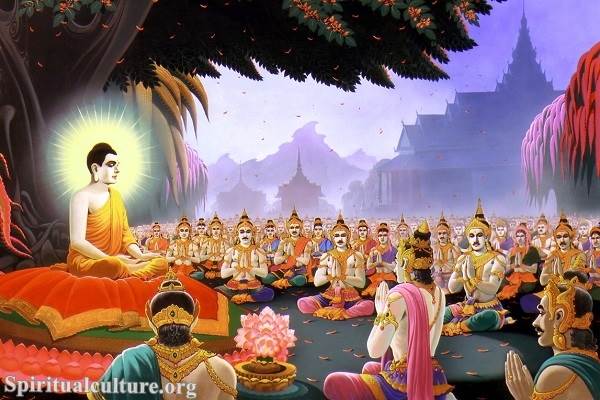
In the later biography, repeated losses overwhelm Paṭācārā until she encounters the Buddha and enters the Buddhist community. Her life then changes from one defined by catastrophe to one centered on discipline and insight.
The canonical verses focus less on the spectacle of grief than on the work of practice. Ordinary observations—flowing water, a lamp, the act of settling into a room—become part of a movement toward concentrated awareness and liberation.
Themes and interpretation
Paṭācārā’s tradition is often read through the themes of grief and impermanence, but it is also a story about women’s religious authority. She is remembered not only as someone who suffered, but as an accomplished nun and teacher within Buddhist memory.
The contrast between early verse and later biography is valuable. It shows how a concise voice preserved in scripture can become the center of a larger sacred life story.
Place in religious and cultural tradition
Paṭācārā appears prominently in Theravāda teaching, especially in discussions of grief, monastic discipline, and the early community of nuns. Modern retellings often foreground her losses, while traditional sources also emphasize her attainment and exemplary practice.
How to read the story carefully
Editors should avoid blending canonical verses and commentarial narrative into one undifferentiated historical report. It is better to say which details come from the Therīgāthā and which are supplied by later biography. This approach respects both the early textual witness and the tradition that grew around it.