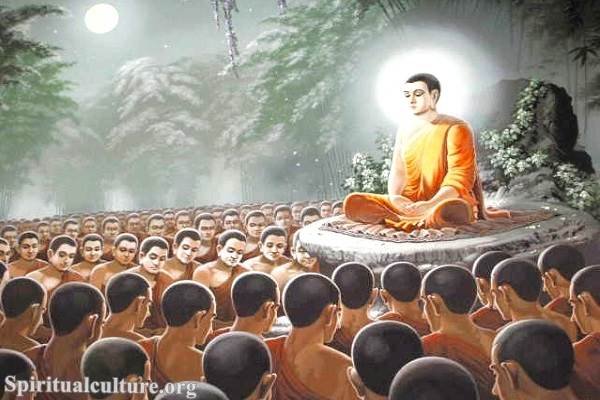
Accounts of Siddhartha Gautama’s awakening combine early discourses about meditation and liberation with later sacred biography centered on the Bodhi tree. Together they form one of Buddhism’s foundational narratives: after abandoning self-mortification and cultivating a different path, Siddhartha realizes the knowledge that Buddhist tradition identifies with buddhahood.
Textual source and historical setting
MN 36 contains an important early autobiographical account of the Buddha-to-be’s austerities, his rejection of extreme self-mortification, recollection of a meditative experience from youth, renewed nourishment, and the meditative path leading to awakening.
Later biographies add richly developed scenes involving Māra, the earth-touching gesture, cosmic witnesses, and the Bodhi tree. These later elements became central to Buddhist art and devotion but should be distinguished from the exact content of early discourses.
The narrative in context
The early narrative emphasizes a turning point. Severe asceticism has weakened Siddhartha without producing the sought-for knowledge. He recalls a form of meditative absorption that is not based on sensuality or self-torment and recognizes it as a possible path.
After regaining strength, he practices meditation and describes a sequence of knowledges culminating in liberation. Later sacred biography places this process in a dramatic night beneath the Bodhi tree and represents obstacles through the figure of Māra.
Themes and interpretation
The awakening narrative supports the Buddhist rejection of self-mortification as an end in itself. Discipline remains essential, but pain is not treated as automatically purifying.
The story also explains why the Bodhi tree became a symbol of awakening. A specific place and tree came to represent a transformation understood by Buddhists as insight into the structure of suffering, causation, and liberation.
Place in religious and cultural tradition
Bodh Gaya became the most important pilgrimage site associated with the Buddha’s awakening. The earth-touching Buddha image, Māra scenes, and Bodhi tree imagery spread widely through Buddhist art and ritual.
How to read the story carefully
A good article should identify which elements come from early discourses and which belong to later biography. That approach avoids treating sacred symbolism as failed history while also avoiding the opposite mistake of presenting every later scene as an early textual fact.