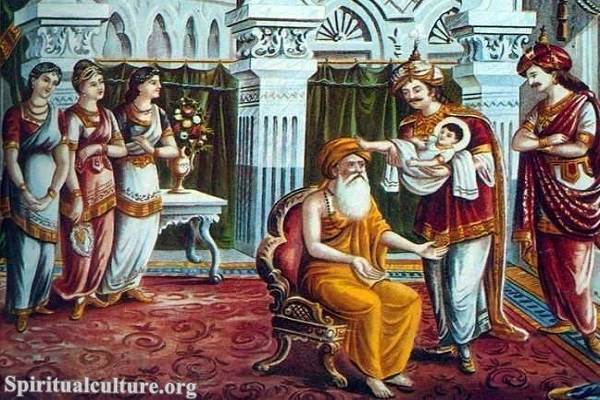
The story of Siddhartha and the wounded swan is one of the best-known childhood legends about the future Buddha. In the familiar version, Siddhartha protects an injured bird while another young man claims it because he shot it. The dispute becomes a moral lesson about compassion and the difference between taking life and preserving it.
Textual source and historical setting
Unlike episodes firmly anchored in early Pāli discourses, the wounded-swan story belongs to later Buddhist biographical and educational tradition. It is widely retold in modern lives of the Buddha, children’s books, temples, and school materials, but it should not be presented as an episode documented in the earliest strata of Buddhist scripture.
That distinction does not make the story unimportant. Later sacred biography often expresses a community’s understanding of an exemplary figure by projecting mature virtues into childhood.
The narrative in context
In the common retelling, Siddhartha finds a swan wounded by an arrow and cares for it. Devadatta, often portrayed as the one who shot the bird, argues that the swan belongs to him because he brought it down. Siddhartha argues from the opposite direction: the person trying to save a living creature has the stronger claim than the person trying to kill it.
Some versions place the decision before elders or a council, and wording varies considerably. Those details are signs of the story’s long retelling history rather than evidence for one fixed canonical script.
Themes and interpretation
The legend condenses several themes associated with Buddhist ethics: concern for living beings, resistance to needless harm, and the moral significance of intention. It also presents compassion as a quality visible before Siddhartha’s awakening, thereby linking childhood character with the later Buddha remembered by tradition.
At the same time, the story works as moral education. Its courtroom-like dispute invites the listener to ask what creates legitimate moral authority: power over a victim, or responsibility for preserving life.
Place in religious and cultural tradition
The wounded-swan story has become part of the global popular image of the Buddha’s youth, even where readers know little about Buddhist textual history. That makes source labeling especially important. It is best understood as a later legend that communicates Buddhist values rather than as a historically verified childhood incident.
How to read the story carefully
The story is both culturally influential and ethically meaningful, while its textual status remains later than the early discourses. Retellings are best kept close to attested versions, with names, adjudicators, and dialogue identified as variable when sources differ.