There is no single way that “Muslim people” live. Muslims form a global religious community spread across many languages, ethnic groups, political systems, and cultural traditions. Shared beliefs and practices connect these communities, but daily life in Indonesia, Nigeria, Turkey, India, Saudi Arabia, Bosnia, the United States, or Senegal can look very different.
A global and diverse religious community
Pew Research Center estimates that Muslims numbered about 2.02 billion in 2020, representing 25.6% of the world’s population. Most Muslims live in the Asia-Pacific region, not the Middle East. Large Muslim populations are found in countries such as Indonesia, Pakistan, India, Bangladesh, and Nigeria.
This geographic diversity means that Muslim culture cannot be reduced to Arab culture. Arabic is the liturgical language of the Qur’an, but most Muslims are not Arabs and speak other languages in everyday life.
Shared religious practices
Across Sunni, Shia, and other Muslim communities, central practices include belief in one God, prayer, charity, fasting in Ramadan, and pilgrimage to Mecca for those able to perform it. Muslims also look to the Qur’an and to traditions about the Prophet Muhammad, although schools and communities differ in law, theology, devotional practice, and authority.
Daily prayer and the rhythm of time
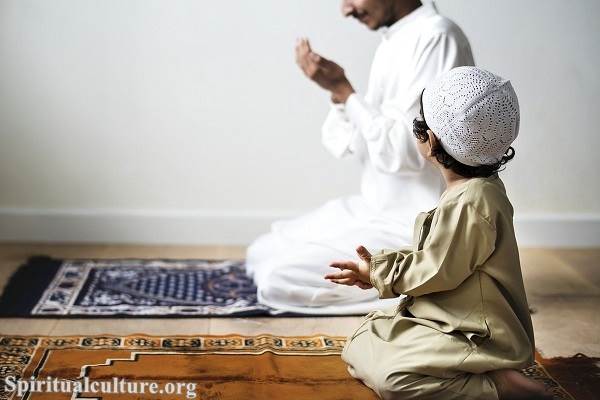
Five daily prayers structure religious time for observant Muslims. Work, school, travel, and local conditions affect how people arrange prayer in practice. Friday has special importance for congregational prayer, while Ramadan creates a distinctive yearly rhythm of fasting from dawn until sunset, evening meals, charity, Qur’an recitation, and communal worship.
Family, dress, food, and local culture
Family life is shaped by both religious teachings and local customs. Wedding celebrations, clothing, architecture, food, music, and forms of hospitality differ enormously across Muslim societies. Halal dietary rules are widely recognized, but cuisines range from West African and Arab dishes to South Asian, Malay, Balkan, and Chinese traditions.
Muslim women and men also make different choices about religious dress. Practices such as hijab are interpreted through scripture, law, culture, family expectations, and personal conviction.
Muslims as majorities and minorities
Some Muslims live in Muslim-majority states, while hundreds of millions live as minorities. Their experiences are shaped by citizenship, law, migration, secularism, religious freedom, and relations with neighbors of other faiths. There is therefore no single political or social model that represents Muslim life worldwide.