Thailand’s spiritual culture is centered on Theravada Buddhism while also incorporating spirit traditions, Brahmanical elements, Chinese religious practices, Islam, Christianity, and local ethnic traditions. Understanding Thailand through religion and sacred heritage gives a clearer picture than treating culture only as food, tourism, or national symbols.
Religious traditions and everyday practice
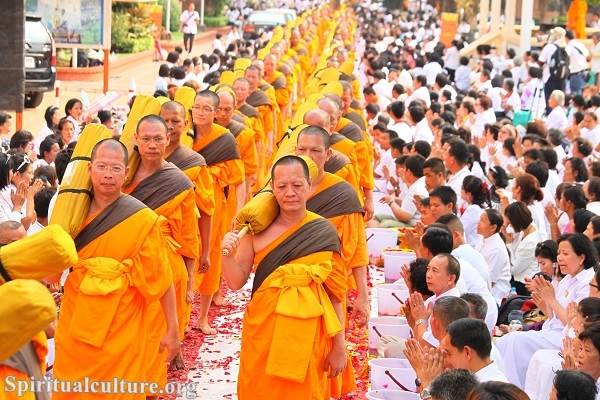
Buddhist monks, temples, merit-making, meditation, funerals, and almsgiving are highly visible. Household and community spirit shrines, protective amulets, astrology, and Brahmanical ceremonies often coexist with Buddhist practice rather than being treated as separate systems.
Sacred places and religious heritage
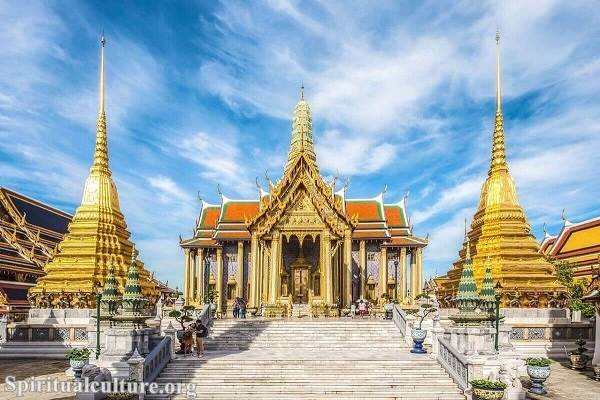
Major sacred places include Buddhist temple complexes in Bangkok and historic capitals, mountain temples such as Wat Phra That Doi Suthep, pilgrimage sites, Chinese shrines, mosques in the south, and churches in urban communities.
Festivals, rituals, and community life
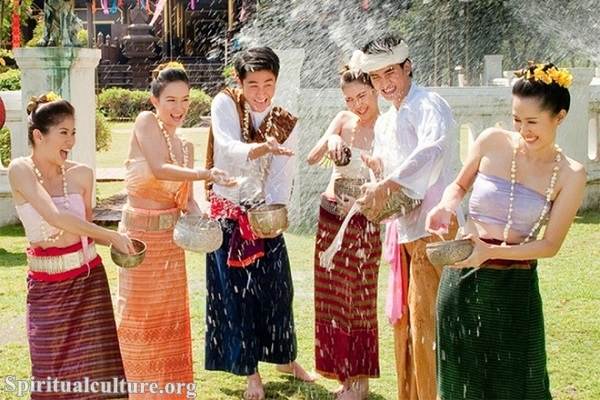
Visakha Bucha, Makha Bucha, Kathina, temple fairs, ordinations, Songkran, and local festivals connect religious calendars with family and community. Muslim festivals are especially important in southern provinces.
Living spiritual culture
Thai spiritual culture is therefore not simply “Buddhist” in a narrow doctrinal sense. It is a living combination of monastic Buddhism, popular devotion, spirit beliefs, royal ritual traditions, regional Islam, and minority faiths.
Religious diversity in context
Theravada Buddhism is the most visible institutional tradition in Thailand, especially through monasteries, monks, merit-making, ordination, and temple-centered community life. At the same time, many Thai practices also involve protective spirits, household spirit shrines, Brahmanical court and civic rituals, Chinese popular religion, and ancestor observance. Muslim communities are especially important in the southern provinces, while Christian and other religious minorities contribute to the country’s plural landscape.
For many people, these traditions are not experienced as mutually exclusive categories. A Buddhist household may make offerings at a spirit shrine, participate in a Brahmanical blessing, and visit a Chinese temple without seeing those acts as a contradiction.
Festivals, pilgrimage, and sacred memory
Visakha Bucha and other Buddhist holy days structure the monastic calendar, while Songkran combines New Year customs with merit-making, temple visits, and respect for elders. Local temple fairs and regional festivals connect religious observance with music, food, procession, and community identity. In the south, Islamic Ramadan and Eid observances are central to Muslim community life.
Thailand’s sacred landscape ranges from neighborhood monasteries to major pilgrimage temples, forest monasteries, mountain shrines, spirit sites, and mosques. Their meanings are best understood through the communities that use them rather than through tourism alone.
Historical change and regional variation
Thai religious life has developed through the interaction of Theravada monastic institutions, royal ritual, local spirit traditions, Chinese communities, and Muslim societies in the south. Modern schooling, urbanization, tourism, and migration have changed how some practices are organized without erasing the importance of temples, merit-making, household shrines, and regional custom.
Reading Thailand’s spiritual culture carefully
Calling Thailand simply “Buddhist” can hide important differences in practice. Monastic Buddhism, protective rituals, spirit beliefs, Brahmanical ceremonies, Chinese shrine traditions, and Islam may all shape religious life, depending on place and community.