British music history is often presented as a sequence of commercially influential movements, but music also carries worship, migration, protest, mourning, identity, and community memory. Spiritual Culture therefore reframes the old ranking around ten traditions and movements whose meaning reaches beyond chart success.
1. Anglican choral and cathedral music
The English Reformation, cathedral choirs, anthems, psalmody, organs, and composers such as Tallis, Byrd, Purcell, and later church musicians created a long sacred-music tradition that still shapes worship and concert life.
2. Methodist and evangelical hymnody
Revival movements used congregational singing to teach doctrine, strengthen participation, and carry religious language beyond church buildings. Hymns by Charles Wesley and others became transnational Christian repertoire.
3. Salvation Army brass-band culture
The Salvation Army developed a distinctive relationship among evangelism, public worship, street presence, brass bands, and community service. Music functioned as proclamation and social identity.
4. Black British gospel
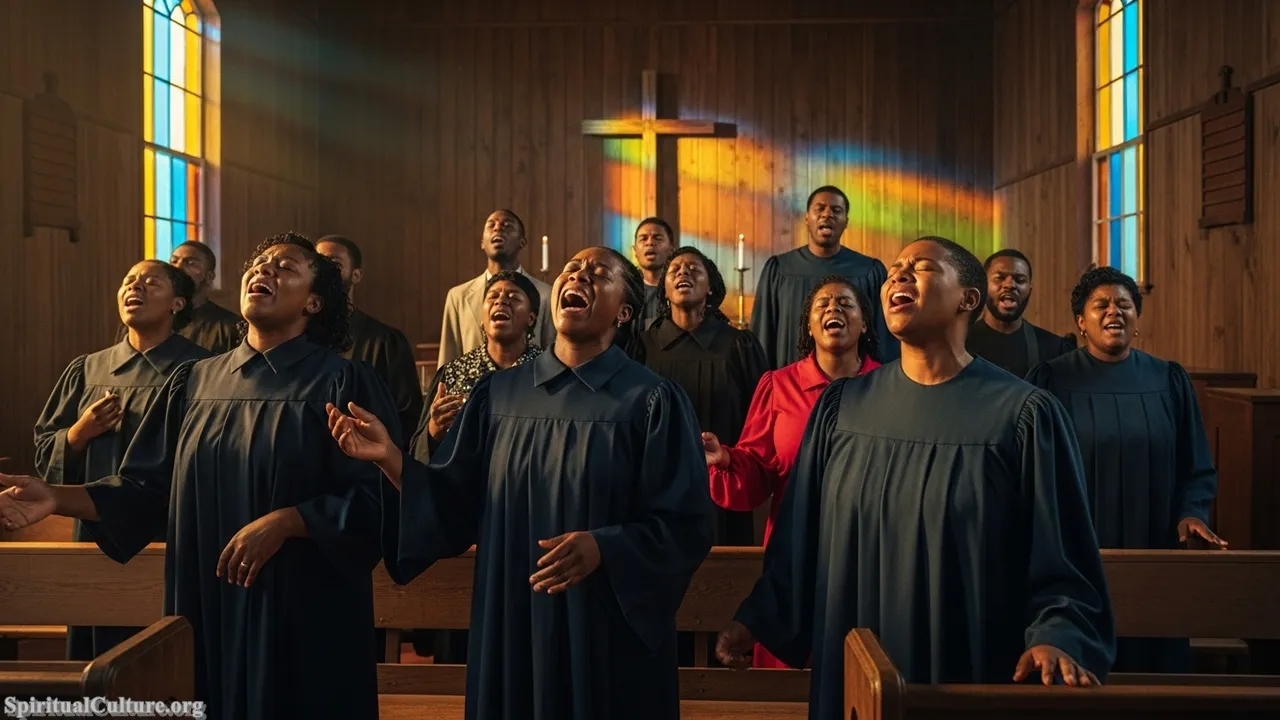
African and Caribbean Christian communities expanded British gospel through churches, choirs, family networks, migration, recordings, and exchange with Caribbean and African traditions. The British Library’s Beyond the Bassline project places gospel within a much longer Black British musical history.
5. Reggae, dub, and Rastafari influence
Postwar Caribbean migration transformed British cities and music. Reggae, dub, sound-system culture, and Rastafari thought carried spiritual, anti-colonial, political, and communal meanings.
6. Ska and Two-Tone
Two-Tone connected Jamaican ska with British punk-era energy and multiracial bands. Its significance included anti-racist politics, working-class identity, migration, and youth culture rather than one religious message.
7. British folk revival
Folk revivals collected and reinterpreted ballads, seasonal customs, work songs, local memory, and rural traditions. Some material carries Christian references, while other songs preserve secular or political memory.
8. Punk
British punk challenged authority, class structures, consumer culture, monarchy, and social convention. It is not a sacred tradition, but its protest and community formation are important to modern cultural memory.
9. Rave, jungle, and electronic community
Rave and later electronic movements created temporary communities through clubs, warehouses, festivals, pirate radio, and dance. Spiritual language sometimes appears, but these scenes should not be romanticized as inherently religious.
10. Contemporary worship and Christian popular music
British churches participate in global worship networks while also producing local songwriters, festivals, and congregational repertoires. Contemporary worship sits alongside hymnody, gospel, liturgical music, and independent Christian scenes.
Editorial context
These traditions do not share one theology or moral purpose. The value of the article lies in showing how sacred music, migration, racial identity, protest, class, technology, and community spaces contributed to British musical life.