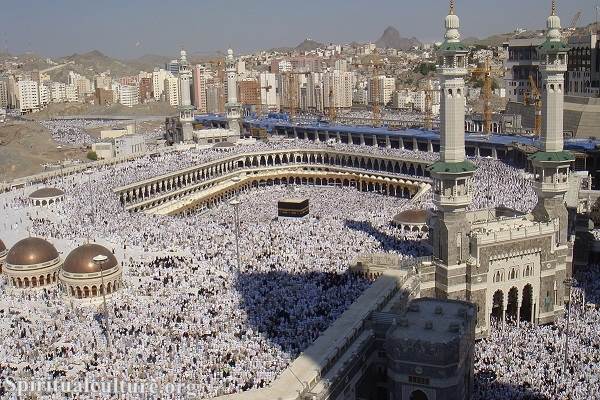
Ramadan 2024 is now a historical date reference rather than an upcoming observance. In Saudi Arabia, the Supreme Court confirmed that the first day of Ramadan 1445 AH was Monday, March 11, 2024. Many Muslim communities in the United States also began fasting on March 11, while local practice could vary according to moon-sighting or calendrical methodology.
Eid al-Fitr was observed on Wednesday, April 10, 2024, by Saudi Arabia and many North American communities.
When Did Ramadan 2024 Begin?
Ramadan is the ninth month of the Islamic lunar calendar. Its beginning is determined according to Islamic calendrical methods that may include local or official moon sighting, astronomical calculation, or a combination of established institutional rules.
For Saudi Arabia, the Saudi Press Agency reported that the Supreme Court’s Moon Sighting Committee confirmed Monday, March 11, 2024, as 1 Ramadan 1445 AH.
In North America, many communities following the Fiqh Council of North America calendar also treated Monday, March 11, as the first fasting day. Other Muslim communities may have followed different local authorities, so one-day differences can occur.
When Did Ramadan 2024 End?
Ramadan lasts 29 or 30 lunar days. In 2024, many communities completed the month on Tuesday, April 9, with Eid al-Fitr celebrated on Wednesday, April 10.
The beginning of Shawwal, the month after Ramadan, is determined through the same kinds of calendrical and moon-sighting considerations used for the start of Ramadan. For this reason, historical references should identify the community or authority whose dates are being used.
What Muslims Observe During Ramadan
Ramadan is a month of fasting, prayer, Quran recitation, charity, and community life. Adult Muslims who are able to fast abstain from food and drink from dawn until sunset, with exemptions recognized in Islamic law for circumstances such as illness, travel, pregnancy, and other conditions.
Suhoor and Iftar
The pre-dawn meal is commonly called suhoor or sehri. It is completed before the dawn prayer time. Iftar is the meal with which the daily fast is broken after sunset.
There is no single worldwide clock time for suhoor or iftar. The times change by date, latitude, longitude, and local prayer-time calculation, so a local timetable is necessary.
Night Prayer and Quran Recitation
Many Muslims attend additional congregational prayers known as tarawih during Ramadan. Quran reading, private prayer, charitable giving, and shared iftar meals are also important parts of the month in many communities.
Laylat al-Qadr in Ramadan 2024
Laylat al-Qadr, the Night of Decree or Night of Power, is associated in Islamic tradition with the revelation of the Quran. The Quran describes it as a night of exceptional religious significance.
Its exact date is not universally fixed. Many Muslims especially seek Laylat al-Qadr during the odd-numbered nights of the final ten nights of Ramadan, and the 27th night is widely observed in many communities. It is therefore more accurate to describe a range of nights than to state one Gregorian date as certain.
Eid al-Fitr 2024
Eid al-Fitr marks the beginning of Shawwal and the end of Ramadan. In 2024, Wednesday, April 10, was widely observed as Eid al-Fitr in Saudi Arabia and across many Muslim communities in North America.
Eid observances commonly include a special congregational prayer, charitable giving associated with the end of Ramadan, family visits, festive meals, and community gatherings. Customs vary widely across countries and cultures.
Why Ramadan Dates Differ by Location
The Islamic calendar is lunar, so Ramadan moves about 10 or 11 days earlier through the Gregorian calendar each year. In addition, Muslim communities do not all use the same method for establishing the beginning of a lunar month.
Some rely primarily on physical crescent sightings in a particular country or region. Others use astronomical criteria or follow a recognized religious authority elsewhere. These differences explain why Ramadan or Eid can occasionally begin on different Gregorian dates in different places.
Historical Sources for Ramadan 2024
For Saudi Arabia, the official Saudi Press Agency published the Royal Court announcement confirming March 11, 2024, as the first day of Ramadan 1445 AH.
For North America, communities following the Fiqh Council of North America methodology announced March 11 as the first fasting day and April 10 as Eid al-Fitr.
Because this article concerns 2024, its dates should not be reused for later years. Each Ramadan requires a new calendar determination.
Conclusion
For historical reference, Ramadan 2024 began on Monday, March 11, in Saudi Arabia and in many U.S. Muslim communities, and Eid al-Fitr was widely observed on Wednesday, April 10. Local differences were still possible because Islamic communities use different moon-sighting and calendrical methods.
The religious meaning of Ramadan extends beyond its dates: fasting, prayer, charity, Quran recitation, and community life remain central to the month across diverse Muslim traditions.