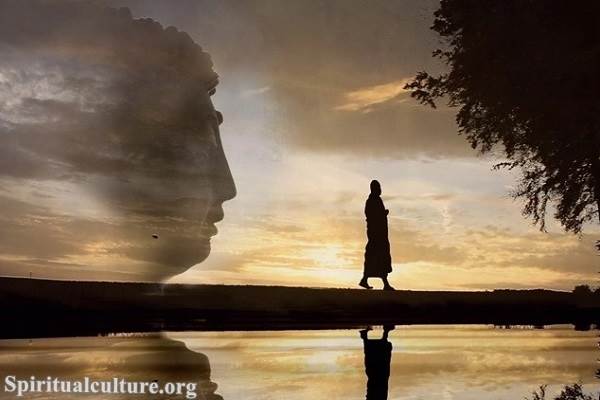
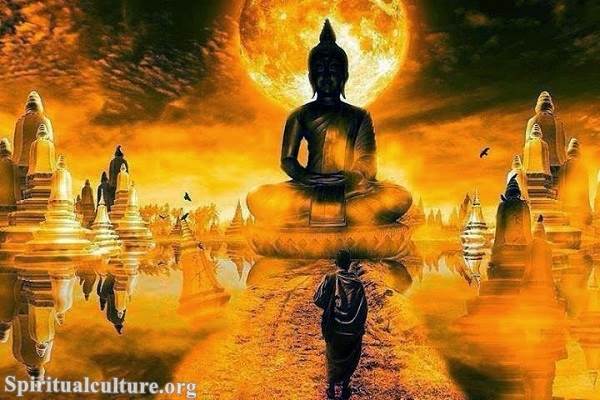
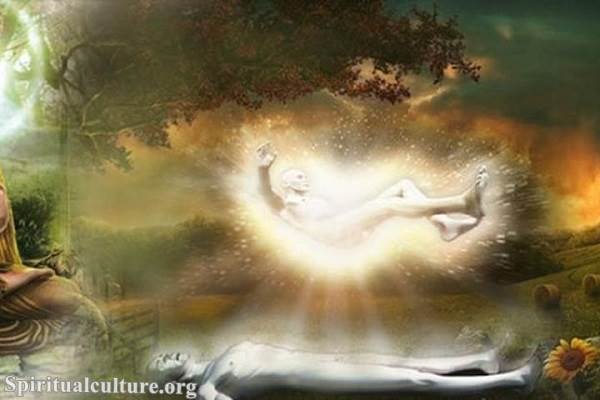
They view death as an opportunity to let go of the physical body and all its attachments and to be reborn into a new life.
In Buddhist teachings, death is not seen as an end or a punishment but rather as a transformation and a chance to continue the cycle of rebirth until one reaches enlightenment and is liberated from suffering. Buddhists believe that how one lives and actions directly impact their future life and how one experiences death.
Buddhists also believe in karma, the law of cause and effect. According to this belief, the actions and choices a person makes in their current life will determine the circumstances of their future lives, including the conditions of their death.
Many Buddhists strive to live their lives in a way that will bring them closer to enlightenment and help them to experience a peaceful and joyous death. This may involve practicing mindfulness, compassion, and other virtues and engaging in spiritual practices such as meditation and prayer.
Buddhism teaches that the experience of death and dying can provide an opportunity for spiritual growth and transformation. Many Buddhists believe that the way a person faces death can reflect their inner state and the degree of their spiritual development.
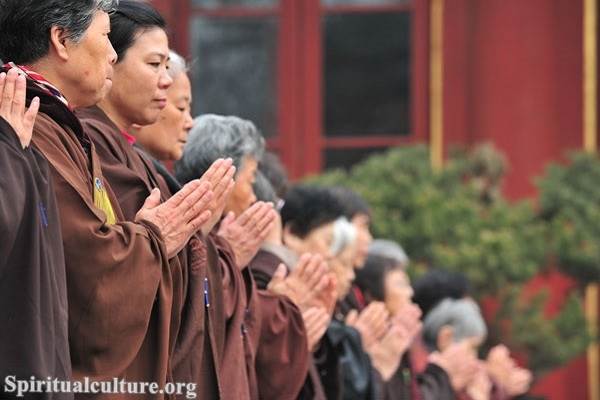
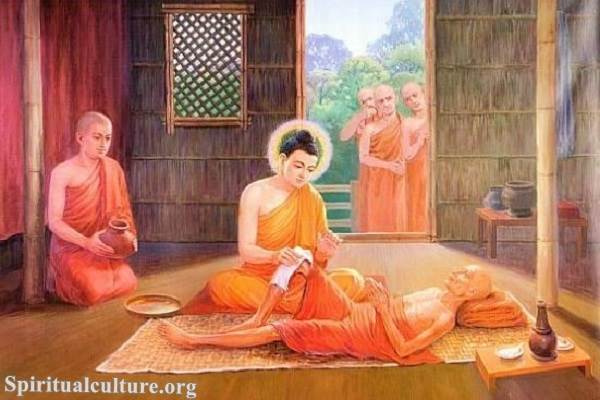
In the Buddhist tradition, some specific practices and rituals are often performed to help support a person during the process of dying and to assist them in achieving a peaceful death. These may include offering prayers, chanting the Buddha’s names, and providing physical and emotional support to the dying person and their loved ones.
Buddhists also believe it is important to prepare for death and consider the impact one’s death will have on others. This may involve making arrangements to care for loved ones, settling outstanding debts and conflicts, and expressing love and forgiveness.
Overall, the Buddhist view of death is one of acceptance and understanding, focusing on finding peace and preparing for the next stage of life.
Related Questions
Buddhism's beliefs about death
The ultimate goal in Buddhism is to reach enlightenment, which is believed to be a state of liberation from the cycle of death and rebirth. It is believed that through following the Eightfold Path, which includes ethical conduct, meditation, and wisdom, one can eventually achieve this liberation and escape the cycle of death and rebirth.
Buddhists believe in the concept of reincarnation, which holds that after death, the soul is reborn into a new body. The nature of the next life is determined by the individual’s karma or the accumulation of good and bad deeds in their previous life. This belief in reincarnation means that death is not seen as an end but rather as a continuation of the cycle of existence.
In addition, Buddhism teaches that attachment to the self and material possessions is the cause of suffering and that attaining enlightenment requires releasing these attachments. Therefore, at the time of death, Buddhists aim to let go of attachments and focus on attaining a peaceful state of mind.
Many Buddhist practices, such as meditation and chanting, are believed to help prepare for death and guide the individual to a peaceful death. Many Buddhist temples hold ceremonies and rituals to help the dying and their loved ones cope with dying and encourage a peaceful death.
In summary, Buddhism teaches that death is a natural part of the cycle of life and that through following the Eightfold Path, one can reach enlightenment and escape the cycle of death and rebirth. At the time of death, Buddhists aim to release attachments, let go of the self, and attain a peaceful state of mind so that they can pass on to the next life with a sense of peace and equanimity.
Where do you go after death in Buddhism?
However, the nature of the continuation of consciousness and the exact process of what happens after death is a subject of debate and interpretation within the tradition.
One of the key teachings of Buddhism is the concept of reincarnation or the belief that consciousness can be reborn in a new physical body after death. According to this belief, a person’s consciousness who has died may be reborn in a new body, either on this earth or in a different realm, depending on the individual’s karma.
Karma is the law of cause and effect in Buddhism, and it is believed that our actions and choices in this life determine the circumstances of our future lives. It is believed that the quality of our next life depends on the quality of our actions in this life and that we can work to improve our future lives by cultivating positive states of mind and engaging in virtuous actions.
Some Buddhists believe in the existence of multiple realms or levels of existence, including heaven and hell realms, and that the consciousness of a person who has died may be reborn in one of these realms based on their karma. Others believe in enlightenment, or the attainment of perfect understanding and liberation from suffering, which can be achieved after death or in this life.
Ultimately, the Buddhist understanding of what happens after death is a complex and multifaceted concept that can be interpreted in many different ways. It is important to remember that the ultimate goal of Buddhism is to find freedom from suffering and to cultivate compassion, kindness, and understanding in this life, regardless of what happens after death.
Do Buddhists believe in an afterlife?
However, many Buddhists believe in reincarnation, in which the consciousness or mind of a person is reborn in another body after death. This belief is based on the Buddhist teaching of dependent origination, which states that all phenomena arise in dependence upon other factors and conditions and that there is no permanent, unchanging self or soul.
According to some interpretations of Buddhist teachings, the ultimate goal of spiritual practice is to achieve liberation from the cycle of death and rebirth, known as nirvana. In this state, one is said to be free from suffering and the cycle of samsara, or cyclic existence.
Some Buddhists believe that nirvana is a state of ultimate happiness and peace beyond the limitations of time and space, while others believe that it is simply the end of suffering and the end of the cycle of death and rebirth.
It is important to note that the concept of an afterlife in Buddhism is not necessarily the same as the concept of an afterlife in some other religious traditions.
In Buddhism, the focus is on understanding and transcending the cycle of death and rebirth rather than on the belief in a particular place or state one goes to after death.
What do Buddhists believe happens after death?
This process is known as reincarnation, which is believed to happen repeatedly in a cycle until the individual reaches enlightenment. At this point, the cycle of reincarnation will be broken, and the individual will reach a state of permanent peace and happiness.
The specific beliefs about what happens after death can vary somewhat within Buddhism, as there are different schools and traditions within the religion. However, the concept of reincarnation is a central belief in most forms of Buddhism. Some Buddhists believe that a person’s consciousness is reborn into a new physical body, while others believe that the consciousness can be reborn in a non-physical form, such as a god or a spirit.
It is important to note that the beliefs about what happens after death in Buddhism are not meant to be taken literally but rather are meant to be understood as metaphorical or symbolic ways of explaining the concept of the continuity of consciousness.