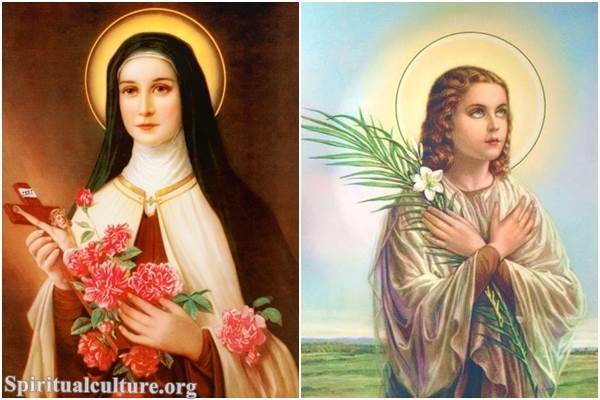
These young female saints weren’t born perfect. They faced fears, pressures, and challenges, much like the ones we encounter today. But what made them different was their choice: to live fully for God, to embrace His love, and to witness to the truth even when it cost them everything.
Key Takeaway — The Witness of Young Female Saints
In the complex mix of Catholic history, the stories of young female saints stand as radiant threads, woven together by their shared love for Christ and unwavering commitment to holiness. These young women, though often overlooked by the world because of their youth and perceived fragility, demonstrated a strength far greater than physical might. Their courage was born from a heart wholly surrendered to God, their purity sustained by grace, and their witness amplified by the circumstances they faced.
But what exactly defines young female saints? In Catholicism, these are women who, in the earliest years of life—sometimes as young as 11 or 12—chose to live lives entirely for Christ. Some were martyrs, shedding their blood rather than renouncing their faith. Others embraced a life of prayer, humility, and charity, reflecting the Gospel in every word and action. Their youth did not limit their capacity for holiness; rather, it highlighted it. In a world that often devalues or underestimates the contributions of the young, these saints defied expectations and left a legacy of faith that still inspires.
Consider, for instance, St. Agnes of Rome. At barely thirteen years old, she refused marriage to a powerful Roman suitor, declaring her heart belonged solely to Christ. Her refusal wasn’t an act of rebellion; it was an act of significant devotion and faith. Even when faced with threats of death, she chose Christ over comfort, eternity over earthly rewards. Her story shows that even the youngest believers can possess an unshakable faith and can stand firm in the face of trials.
Similarly, St. Maria Goretti, another shining example of young female saints, showed that sanctity is not only about martyrdom but about the everyday choice to love and forgive. At age 11, after a brutal attack, she chose to forgive her assailant on her deathbed. Her witness of mercy and grace demonstrates that true holiness is as much about the posture of our hearts as the sacrifices we make.
What makes the witness of young female saints so compelling is that it speaks to a universal truth: holiness is not confined by age or circumstance. These saints lived in different centuries, from ancient Rome to modern Italy, but their stories echo the same core message: that a life surrendered to Christ—regardless of age—is powerful and transformative. Their youth was not a hindrance but a vehicle through which God’s glory shone brilliantly.
For many of us today, this truth is both convicting and comforting. It convicts us because it challenges our tendency to associate spiritual maturity with age or experience. It comforts us because it reassures us that God calls each of us—whether young or old—to live lives that reflect His love, His truth, and His grace. The witness of young female saints assures us that no one is too young to answer God’s call, too inexperienced to live a life of faith, or too insignificant to make an eternal impact.
Their legacies continue to call out across the ages: “Do not be afraid to give everything to Jesus. Even in your youth, you can be a shining light in a world overshadowed by darkness.”
The Truth in God’s Word: Biblical Foundations for Youthful Faith
The foundation of every saint’s life—whether young or old—is firmly rooted in the Word of God. The stories of young female saints in Catholicism vividly illustrate how God’s truth and grace empower even the youngest hearts to live in holiness and faithfulness. Though the Church’s process of canonization comes from tradition, the Bible lays a clear framework for understanding how God calls young people to live for Him.
Scripture is filled with encouragement for the young. One of the most powerful verses comes from Paul’s letter to Timothy:
“Let no one despise your youth, but be an example to the believers in word, in conduct, in love, in spirit, in faith, in purity.” (1 Timothy 4:12)
This verse speaks directly to the mission of young female saints. It shows that even those who are young can—and should—be shining examples of faith, love, and purity. Their youth is not a limitation but an opportunity to reflect God’s glory.
Another passage comes from the Psalms:
“How can a young person stay on the path of purity? By living according to your word.” (Psalm 119:9)
Here, the psalmist asks a question that resonates with every generation, including ours. The answer is simple yet significant: by embracing God’s Word and living by it. Young female saints exemplify this truth, showing us that a life of purity and faith is possible through obedience to Scripture.
Jesus Himself also blesses the pure-hearted in the Beatitudes:
“Blessed are the pure in heart, for they shall see God.” (Matthew 5:8)
This beatitude is a perfect description of young female saints who, through their purity of heart, experienced an extraordinary closeness with God. Their witness shows that true purity is not only external behavior but an inner devotion and love for Christ.
Additionally, consider the youthful examples found in the Bible:
- Mary, the Mother of Jesus, was likely a teenager when she said “yes” to God’s plan of salvation. Her fiat (“let it be done to me according to your word”) set in motion the story of redemption itself.
- David, the young shepherd boy, stood up to Goliath not with worldly strength but with faith in God’s power.
- Jeremiah, a youth called by God to be a prophet, once protested, “I am too young,” yet God assured him, “Do not say, ‘I am too young’… I have appointed you a prophet to the nations.” (Jeremiah 1:7)
These biblical figures, though not canonized saints, echo the same pattern of God working through the young and humble. The lives of young female saints such as St. Agnes, St. Maria Goretti, and St. Thérèse of Lisieux reflect this biblical foundation: God’s call to holiness transcends age and status. They remind us that purity, courage, and deep faith are not reserved for a distant past but are still possible for young people today.
The Bible, in its enduring wisdom, affirms what the lives of young female saints demonstrate so clearly: God delights in using young hearts to advance His kingdom. Whether through acts of forgiveness like Maria Goretti, unwavering courage like Agnes, or childlike trust like Thérèse, these young saints embody the truth that age does not limit God’s calling or capacity to work through His children.
As we reflect on their stories, we are invited to consider:
- Are we willing to stand as examples in our words, actions, love, and purity?
- Do we believe that God can use us, regardless of our youth or perceived insignificance?
- Will we, like the young female saints, allow Scripture to shape our lives and guide us into deeper intimacy with Christ?
Theological Significance
The stories of young female saints are not relics of the past. They are not confined to stained glass windows or ancient texts. Their lives, full of vibrant faith and unshakable courage, speak directly to the struggles, hopes, and questions of today’s world. In an age where many young people wrestle with identity, purpose, and truth, these saints offer a radiant example of what it means to live a life fully devoted to Christ.
Our modern culture often tells us that youth is a time for self-indulgence, for following fleeting desires, and for avoiding the challenges of faith and discipline. Social media, peer pressure, and an ever-changing cultural landscape can make it seem like compromise is the only way forward. Many young people feel overwhelmed by expectations, anxiety, and the search for meaning. In this context, the lives of young female saints shine like beacons of hope.
These saints, some of whom were teenagers or even younger, remind us that holiness is not about age but about the heart’s posture toward God. Their choices—whether to forgive a persecutor, to refuse marriage for the sake of consecration to Christ, or to embrace a hidden life of prayer—demonstrate that even in youth, it is possible to live a life that transforms the world.
Take St. Maria Goretti, for example. Her story speaks strongly to issues young people face today, including the pressure to conform, the struggle for purity, and the challenge of forgiveness. When attacked by her assailant, Maria resisted, not out of pride or stubbornness, but out of love for God and a desire to remain pure. Her dying words of forgiveness reveal a heart formed by grace—a heart that offers an alternative to the cycles of violence and bitterness that often grip our world.
Or consider St. Thérèse of Lisieux, who embraced the “Little Way,” showing that small acts of love and humility can have eternal impact. Her hidden life in the Carmelite convent, though unnoticed by the world, became a powerful witness that holiness does not require public recognition or grand gestures. In a culture obsessed with fame and validation, her story encourages readers to find meaning and purpose in quiet faithfulness.
The relevance of young female saints today is significant. They remind us:
- That identity is not found in external achievements or popularity but in belonging to Christ.
- That true beauty is not measured by appearances but by the purity of heart and love for God.
- That courage is not the absence of fear but the willingness to stand for truth, even when it costs us.
- That forgiveness is not weakness but strength rooted in grace.
Their lives ask us pressing questions:
- Where are we seeking our worth and identity?
- Are we willing to stand firm in faith, even when it means standing alone?
- Have we allowed the noise of the world to drown out God’s gentle invitation to holiness?
Lives of Young Female Saints: Examples from Catholicism
The witness of young female saints comes alive in the stories of real young women whose lives continue to echo across the centuries. Each of them, though unique in background and experience, embodied the call to holiness with courage and love. Here are 10 remarkable young female saints in Catholicism, whose testimonies illuminate what it means to live fully for Christ.
2. St. Maria Goretti
Born in 1890 in Italy, Maria Goretti was a simple farm girl who, at the age of 11, faced a brutal attack when she resisted sexual assault. Fatally wounded, she forgave her attacker before dying. Her sanctity lay not only in her defense of purity but in her radical forgiveness, demonstrating the power of grace. Canonized in 1950, she is a powerful patron for youth, purity, and mercy.
5. St. Kateri Tekakwitha
Born in 1656 to a Mohawk father and Algonquin Christian mother, Kateri Tekakwitha embraced Catholicism in a culture that often opposed it. After being baptized at 20, she committed to a life of prayer, chastity, and penance. Despite ridicule and rejection from her community, she remained faithful. She died at just 24, and her last words were, “Jesus, I love you.” Canonized in 2012, she is known as the “Lily of the Mohawks,” and her story inspires young people to stand firm in their faith.
6. St. Joan of Arc
Perhaps one of the most well-known young female saints, Joan of Arc was a French peasant girl who, at age 17, led the French army to several victories, inspired by visions from saints and angels. Captured and condemned by a political and ecclesiastical trial, she was burned at the stake at age 19. Joan’s courage and obedience to God’s call, despite fear and injustice, make her a enduring model of bravery and faith.

