The Avataṃsaka Sūtra is a vast Mahayana Buddhist scriptural collection known in English through titles such as the Flower Ornament Scripture and, in Tibetan translation, A Multitude of Buddhas. It became especially important for the Huayan school of Chinese Buddhism. The article treats it as a layered textual tradition rather than one simple sermon delivered in a single historical setting.
Why the title varies
The Sanskrit avataṃsaka can be interpreted through imagery of a garland or ornament, while Buddhist Hybrid Sanskrit usage can also suggest a multitude or collection. Chinese Huayan and Tibetan translations therefore developed different title traditions.
A large composite scripture
The Avataṃsaka contains many chapters and textual layers. It grew in different recensions rather than surviving as one single early Sanskrit manuscript copied unchanged across Asia.
Vairocana
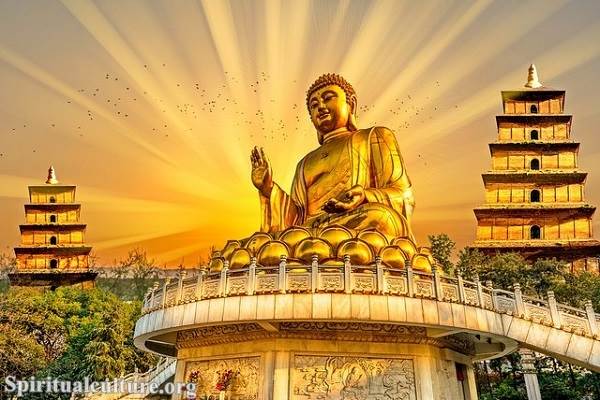
A major theological vision of the scripture presents countless Buddha manifestations in relation to Vairocana, expanding the scale of buddhahood far beyond one historical location.
The Ten Bhūmis
The Ten Bhūmis chapter presents ten stages of a bodhisattva’s progress toward buddhahood. 84000 describes this chapter as a standard Mahayana presentation of the bodhisattva path.
The Gaṇḍavyūha
The Gaṇḍavyūha or Stem Array became the final major section of influential versions. It follows the pilgrim Sudhana as he learns from a long series of spiritual teachers.
Huayan Buddhism
The Chinese translation associated with Śikṣānanda became foundational for the Huayan school. Huayan thinkers developed influential teachings about interpenetration, the dharma realm, and the relation of part and whole.
Indra’s Net
Modern introductions often use the image of Indra’s Net to summarize mutual reflection and interdependence. The image is useful, but readers should not reduce the entire Avataṃsaka tradition to one metaphor.
Bodhisattva practice
The scripture repeatedly joins vast cosmology with generosity, vows, wisdom, compassion, and long cultivation of the bodhisattva path.
Chinese, Tibetan, and Sanskrit witnesses
Different versions preserve different structures. Responsible study should identify which recension or chapter is being discussed.
Translation matters
Modern English readers encounter the text through translations from Chinese or Tibetan and through partial Sanskrit materials. Translation choices can shape familiar terms such as Flower Ornament, Buddha Garland, or Multitude of Buddhas.
Editorial context
The Avataṃsaka is best understood as a major Mahayana scriptural world that shaped Huayan, East Asian Buddhism, and bodhisattva theory. Its complexity makes source and recension especially important.