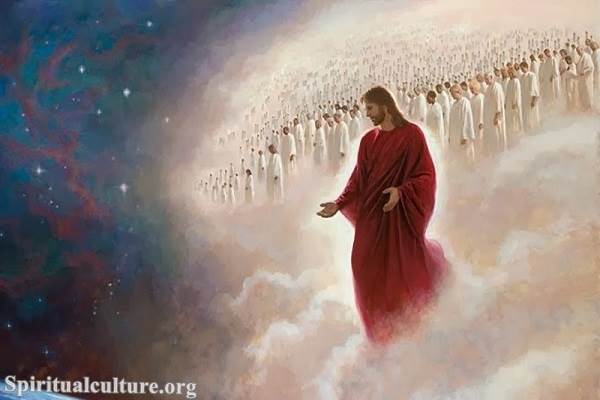
For thousands of years, the idea of the “End Times” has stirred the hearts and minds of Christians around the world. It evokes both awe and apprehension, pointing toward a time when history as we know it will give way to something new, something eternal.
But how do Christians interpret the End Times? Is it about fire and destruction—or healing and redemption? Do all Christians agree on what will happen?
The Foundation: What Does the Bible Say About the End Times?
Before exploring various Christian interpretations, it’s important to understand what the Bible actually teaches about the End Times. Christians look to both the Old and New Testaments for clues about what the end of the world entails.
Apocalyptic Language in Scripture
The Bible is filled with symbolic and visionary passages describing the end of days. Key books include:
- Daniel (Old Testament) – Contains prophetic visions of kingdoms rising and falling, culminating in divine judgment.
- The Book of Revelation (New Testament) – A powerful vision of cosmic struggle, judgment, and the establishment of a new heaven and new earth.
- The Gospels – Jesus speaks of the coming of the Son of Man, tribulations, and the final judgment (e.g., Matthew 24, Mark 13, Luke 21).
Central Themes in the Biblical Vision
- Judgment – A final reckoning where good and evil are separated (Matthew 25:31-46).
- Resurrection – The dead will be raised; some to eternal life, others to judgment (John 5:28–29).
- Second Coming of Christ – Jesus will return to bring justice and peace (Acts 1:11).
- New Creation – God will make all things new (Revelation 21:1-5).
These themes are foundational, but how they are interpreted varies widely among Christians.
Major Christian Interpretations of the End Times
Over the centuries, Christians have developed different theological frameworks to understand how and when the End Times will unfold. These interpretations often center on three key concepts: the Second Coming of Christ, the Millennium (1,000-year reign), and the Final Judgment.
Let’s examine the main perspectives.
1. Premillennialism: Christ Returns Before the Millennium
Premillennialism holds that Jesus will return before a literal thousand-year reign of peace on Earth. This view takes much of the Book of Revelation literally.
Historic Premillennialism
- Believers will go through a time of tribulation.
- Christ will return visibly, defeat evil, and establish a 1,000-year reign on Earth.
- After the millennium, there will be a final rebellion, followed by judgment and new creation.
Dispensational Premillennialism (Popular in Evangelical Circles)
- Emphasizes a rapture: believers are taken up before a 7-year tribulation period.
- Christ returns twice: first secretly for believers, then visibly to defeat the Antichrist.
- Often tied to modern-day events (wars, earthquakes, etc.) as signs of the end.
Scriptural Basis: Revelation 20:1–6; 1 Thessalonians 4:16–17
Influence: Left Behind series, many Evangelical churches
2. Postmillennialism: Christ Returns After the Millennium
Postmillennialism teaches that Christ will return after a symbolic or literal golden age where Christianity flourishes and transforms society.
Key Beliefs:
- The millennium is a time of peace and righteousness ushered in by the spread of the Gospel.
- The world gradually becomes more Christ-like.
- After this golden age, Christ returns for final judgment.
Scriptural Basis: Matthew 13:31–33 (parables of growth), Revelation 20 (symbolic reading)
Influence: Puritans, early American revivalists
This view emphasizes hopeful progress, seeing human history as moving toward redemption rather than decline.
3. Amillennialism: No Literal Millennium
Amillennialism interprets the “thousand-year reign” of Revelation symbolically. It teaches that we are already in the millennium—Christ reigns spiritually through the Church.
Key Beliefs:
- There is no literal thousand-year earthly kingdom.
- The reign of Christ began with His resurrection and continues through the Church.
- The End Times culminate in the return of Christ, resurrection, and final judgment—all at once.
Scriptural Basis: Revelation 20 (symbolic), John 18:36 (“My kingdom is not of this world”)
Influence: Roman Catholic Church, Eastern Orthodox Church, many mainline Protestants
This view stresses spiritual fulfillment and the unseen rule of Christ.
4. Preterism: Most End-Time Prophecies Already Fulfilled
Preterists believe many of the prophecies in Revelation and the Gospels were fulfilled in the first century, especially with the destruction of Jerusalem in A.D. 70.
Partial Preterism:
- Some prophecies (e.g., judgment on Israel, tribulation) are already fulfilled.
- The Second Coming and resurrection are still future.
Full Preterism (less common):
- All End Time prophecies, including the Second Coming, have been fulfilled symbolically.
- Christ’s “coming” was a spiritual event, not a physical return.
Scriptural Basis: Matthew 24:34 (“this generation will not pass away…”), Luke 21:20–22
Influence: Growing interest among some scholars and Reformed theologians
This view focuses on the historical context of early Christian persecution.
5. Eastern Orthodox Eschatology: Mystery and Humility
The Eastern Orthodox Church does not endorse a detailed timeline of End Time events. It teaches:
- Christ will return to judge the living and the dead.
- The focus is not on predicting dates, but on preparation through prayer and repentance.
- The language of Revelation is mystical and symbolic.
Orthodoxy sees eschatology (study of the last things) as a sacred mystery, not a code to be cracked.
Scriptural Basis: Entire New Testament interpreted liturgically and sacramentally
Influence: Deep spiritual emphasis on theosis (union with God)
Themes Common to All Christian Views
Despite the differences, most Christians agree on key pillars of the End Times:
The Return of Christ
Christians affirm that Jesus will return again in glory:
“This same Jesus, who has been taken from you into heaven, will come back in the same way you have seen him go into heaven.”
— Acts 1:11
Resurrection of the Dead
There will be a general resurrection—of both the righteous and unrighteous:
“The hour is coming when all who are in the graves will hear His voice and come forth.”
— John 5:28–29
Final Judgment
Every soul will stand before God. Justice will be revealed:
“We must all appear before the judgment seat of Christ.”
— 2 Corinthians 5:10
New Creation
All things will be made new—no more suffering or death:
“He will wipe every tear from their eyes.”
— Revelation 21:4
These truths are the heart of Christian hope, regardless of the timeline or interpretation.
Interpreting Symbols and Prophecy: Literal or Figurative?
A major reason for the diversity of views is how Christians interpret the imagery of books like Revelation.
Literal Interpretation
- Sees the events as actual future occurrences (beasts, battles, numbers, etc.).
- Popular among dispensationalists and some evangelicals.
Symbolic Interpretation
- Sees the imagery as metaphorical, expressing spiritual truths.
- Common in Orthodox, Catholic, and Reformed traditions.
Both approaches seek to be faithful to Scripture—one through direct meaning, the other through mystical depth.
Why Does It Matter? The Spiritual Meaning of the End Times
Far more than future speculation, the End Times reveal what Christians believe about God, humanity, and destiny.
A Call to Wakefulness
Jesus often urged watchfulness—not fear:
“Therefore keep watch, because you do not know the day or the hour.”
— Matthew 25:13
The End Times invite us to live as though Christ might come today, with hearts full of faith, love, and readiness.
A Message of Hope
For persecuted Christians past and present, the promise of Christ’s return offers hope:
“He who testifies to these things says, ‘Yes, I am coming soon.’ Amen. Come, Lord Jesus.”
— Revelation 22:20
The End Times are not simply about wrath—they are about God setting all things right.
A Mirror for Our Lives
The End Times challenge us to consider our lives:
- Are we living in love, truth, and justice?
- Are we aligned with the values of the Kingdom of God?
- Do we long for a world made new?
So, how do Christians interpret the End Times? There is no single answer—but there is a common yearning: for justice, peace, and the full presence of God.
Whether viewed through premillennial timelines or mystical expectation, the End Times point to a divine conclusion to history—where love triumphs, evil ends, and God dwells with humanity once again.
Let this truth shape how you live today. Let the end be not a source of fear, but a catalyst for faith, a call to holiness, and a vision of hope.
Are you watching with fear—or waiting with love?
“Behold, I am coming soon… Blessed is the one who keeps the words of the prophecy written in this scroll.”
— Revelation 22:7