The Roman Catholic Church: History, Leadership, Organization, Global Presence, and Contemporary Role

Learn about the Roman Catholic Church, its history, beliefs, sacraments, leadership, worship, traditions, and global influence today.

The real history of the Catholic Church
The Roman Catholic Church is the world’s largest Christian community and one of the most influential religious institutions in human history. Its members live on every inhabited continent and belong to communities shaped by many languages, cultures, political systems, and local traditions. Although Rome and the papacy are central to its organization, Catholic life is not limited to Vatican City, Europe, or the Latin liturgical tradition.

Catholics understand the Church as a worldwide communion founded through the life and mission of Jesus Christ, guided by the Holy Spirit, and historically connected to the apostles. Historians, while examining the same early Christian communities, generally describe Catholic institutions, doctrines, and structures as developing gradually across many centuries. These theological and historical perspectives are related but should not be treated as identical.

The Roman Catholic Church is known for its sacramental worship, episcopal leadership, devotion to Scripture and tradition, veneration of saints, global missionary history, schools, hospitals, charities, sacred art, and public teachings on human dignity and social responsibility. It has also faced serious historical and contemporary controversies, including religious conflict, colonial entanglement, failures of governance, and clerical sexual abuse. Understanding the Church therefore requires attention both to its religious teachings and to the complex history of the people and institutions that have represented it.

The Roman Catholic Church: History, Leadership, Organization, Global Presence, and Contemporary Role

What Is the Roman Catholic Church?

The expression Roman Catholic Church is commonly used in English to describe the worldwide Catholic Church whose bishops are in communion with the bishop of Rome, known as the pope. However, the terminology can be more complicated than it first appears.

In official documents, the institution normally refers to itself simply as the Catholic Church. The word catholic comes from a Greek term meaning universal or according to the whole. In Christian creeds, the word may refer to the universal Church rather than exclusively to the institution governed in communion with Rome.

The term Roman Catholic is sometimes used broadly for all Catholics. In more precise Catholic terminology, however, the Latin Church is the largest of 24 self-governing Catholic Churches. The other 23 are Eastern Catholic Churches with their own liturgical, spiritual, legal, and historical traditions. All are in full communion with the pope, but Eastern Catholics may celebrate worship according to Byzantine, Alexandrian, Antiochene, Armenian, Chaldean, or other Eastern traditions rather than the Roman Rite.

For this reason, “Roman Catholic Church” may be understood in two ways:

  • As a popular name for the entire Catholic Church.
  • As an imprecise name for the Latin Church and its Roman liturgical tradition.

This article uses the title in its familiar global sense while recognizing that Catholicism includes more than the Latin or Roman tradition.

According to Catholic Church statistics published by the Vatican’s Fides agency in October 2025, the number of Catholics worldwide stood at approximately 1.405 billion as of June 30, 2023. The figure represented Catholics in every continent and illustrated the Church’s increasingly global character.

The Catholic Understanding of the Church

Catholic teaching describes the Church not only as an administrative organization but as a spiritual communion. The Second Vatican Council used several biblical and theological images, including the People of God, the Body of Christ, and the temple of the Holy Spirit.

The Church is also professed in the Nicene Creed as “one, holy, catholic, and apostolic.” These four qualities are known as the Four Marks of the Church.

One

Catholic teaching holds that the Church is one because it has one Lord, one faith, one baptism, and one Spirit. This unity does not require cultural uniformity. Catholic communities may use different languages, music, forms of sacred art, spiritual disciplines, and liturgical traditions while remaining united through shared faith, sacraments, and ecclesial communion.

The historical divisions among Christians are therefore regarded as wounds to Christian unity rather than evidence that division is spiritually desirable.

Holy

The Church is called holy because Catholics believe that its source and purpose are found in God. This does not mean that every Catholic, priest, bishop, religious community, or Church institution behaves morally.

Catholic teaching openly acknowledges that members of the Church are capable of serious sin. The holiness claimed in the creed is understood as God’s presence, the sanctifying work of the Holy Spirit, the sacraments, and the calling of Christians to conversion.

This distinction is especially important when discussing corruption, violence, abuse, or institutional failure. Catholic doctrine does not require believers to describe wrongdoing by Church representatives as holy.

Catholic

The Church is called catholic, or universal, because it is understood to proclaim the Christian message to all peoples and to contain the means of sacramental and spiritual life entrusted to it.

Universality is not meant to erase local identity. Catholicism has taken root in African, Asian, European, Middle Eastern, Oceanian, Latin American, and North American societies, producing many forms of architecture, music, pilgrimage, prayer, theological reflection, and community organization.

Apostolic

Catholics believe the Church is apostolic because its faith is rooted in the witness of the apostles and because bishops continue an apostolic ministry through what is called apostolic succession.

In Catholic theology, bishops are not simply local administrators. They are successors to the apostles, while the pope, as bishop of Rome, has a distinctive ministry associated with the role of Saint Peter. The exact nature and historical development of Roman primacy have long been discussed among Catholic, Orthodox, Protestant, and academic scholars.

Origins and Early Development

Jesus, the Apostles, and Catholic Teaching

Catholic doctrine teaches that Jesus Christ founded the Church through his preaching, gathering of disciples, death, resurrection, and sending of the apostles. Particular importance is placed on New Testament passages concerning Peter, the apostolic mission, baptism, the Eucharist, forgiveness of sins, and the command to proclaim the gospel.

Within this religious interpretation, the Church is not considered a later human invention. It is believed to be part of God’s work of salvation, entrusted to a visible community led by the apostles and sustained by the Holy Spirit.

Historical scholarship approaches the question differently. Historians study how diverse communities of Jesus’ followers developed forms of worship, ministry, doctrine, leadership, and identity during the first centuries. The institutional form now associated with the Catholic Church did not emerge fully developed at a single identifiable date.

The Early Christian Community in Rome

A Christian community existed in Rome during the apostolic period. The New Testament includes Paul’s Letter to the Romans, and early Christian tradition associates both Saint Peter and Saint Paul with ministry and martyrdom in the city.

Catholic tradition identifies Peter as the first bishop of Rome and regards later popes as his successors. Historians agree that the Roman Christian community became highly influential, although they debate how early the office of the bishop of Rome assumed the precise authority later claimed by the papacy.

Rome’s importance arose from several factors. It was the capital of the empire, was associated with the martyrdom of leading apostles, and became a significant center for communication among Christian communities.

From Persecution to Imperial Recognition

Christians experienced periods of persecution under Roman authorities, although the severity and geographical extent varied. During the fourth century, the political position of Christianity changed dramatically.

The emperors Constantine and Licinius granted legal toleration to Christianity in 313. Later in the century, Nicene Christianity received imperial support and eventually became the dominant religious tradition of the Roman Empire.

The legalization of Christianity allowed churches to own property, construct large buildings, hold councils more openly, and develop extensive charitable and educational activities. It also brought Christianity into a close and often difficult relationship with political power.

Ecumenical councils addressed major theological disputes about Christ, the Trinity, Scripture, worship, and Church discipline. Catholics, Eastern Orthodox Christians, Oriental Orthodox Christians, and other ancient Churches share parts of this early conciliar heritage, although they do not all recognize exactly the same councils or interpret their authority in the same way.

Medieval Catholicism

After the decline of imperial authority in Western Europe, bishops, monasteries, and Christian institutions often assumed important educational, charitable, diplomatic, and administrative roles.

Monastic communities preserved manuscripts, cultivated land, provided hospitality, cared for the sick, and developed traditions of prayer and learning. The Benedictine, Cistercian, Franciscan, Dominican, and other religious movements shaped Catholic spirituality in different periods.

Medieval Catholicism was not a single unchanging system. It included cathedral schools, universities, pilgrimage networks, popular devotions, theological debates, reform movements, conflicts between popes and rulers, and disagreements about wealth and ecclesiastical authority.

The period also included actions now widely recognized as grave injustices. Crusading warfare, coercion against religious minorities, anti-Jewish persecution, inquisitorial systems, and the use of religious authority for political purposes left lasting historical wounds. These subjects should not be reduced either to simple condemnation of every medieval Catholic or to uncritical defense of Church institutions.

The Division Between Eastern and Western Christianity

Christian communities in the Greek-speaking East and Latin-speaking West developed different theological vocabularies, liturgical customs, political relationships, and forms of ecclesiastical government.

The separation commonly associated with the year 1054 was not a single sudden creation of two entirely new Churches. It was part of a long process of estrangement involving questions of papal authority, the wording of the creed, jurisdiction, language, culture, and political rivalry.

The resulting division developed into the distinction between the Catholic Church in communion with Rome and the Eastern Orthodox Churches. Catholics and Orthodox share apostolic succession, ancient creeds, sacramental worship, bishops, monastic traditions, and devotion to the saints, but they remain divided over major ecclesiological and doctrinal questions.

The Reformation and Catholic Reform

During the late medieval and early modern periods, criticism of corruption, clerical misconduct, financial practices, and Church authority intensified. In the sixteenth century, reform movements associated with Martin Luther, Huldrych Zwingli, John Calvin, English reformers, and others resulted in enduring Protestant traditions.

The Protestant Reformation challenged Catholic teaching on authority, justification, the sacraments, the papacy, purgatory, indulgences, and other matters. Political interests, local grievances, printing, humanist scholarship, and conflicts among European rulers also shaped the course of the Reformation.

The Catholic response included both doctrinal clarification and institutional reform. The Council of Trent, held in several periods between 1545 and 1563, addressed disputed teachings, reformed clerical formation, strengthened episcopal responsibilities, and affirmed Catholic positions on Scripture, tradition, justification, and the sacraments.

New and renewed religious communities became influential. The Society of Jesus, or Jesuits, played a major role in education, missionary activity, scholarship, and Catholic reform. Other communities served the poor, cared for the sick, founded schools, and encouraged spiritual renewal.

Catholicism and Global Expansion

Catholic Christianity spread globally through merchants, migrants, missionaries, religious orders, colonial governments, and local converts. Catholic communities developed in the Americas, sub-Saharan Africa, East Asia, South Asia, Southeast Asia, and Oceania.

This history cannot be described only as a European religion moving outward. Local Christians translated beliefs, prayers, music, images, festivals, and communal practices into regional cultural settings. Indigenous clergy, religious sisters, catechists, families, artists, and lay leaders played essential roles in transmitting Catholic life.

Catholicism and Global Expansion

At the same time, missionary activity was often connected to European imperial expansion. Some missionaries defended Indigenous peoples against exploitation, documented local languages, or challenged colonial abuses. Others participated in systems that disrupted local cultures, supported forced assimilation, or benefited from colonial power.

Modern Catholic communities continue to examine this mixed inheritance. Questions about cultural destruction, residential schools, slavery, land, missionary archives, and the return of sacred or cultural objects remain important in several countries.

The First and Second Vatican Councils

The First Vatican Council

The First Vatican Council met from 1869 to 1870. It is especially associated with its teaching on papal primacy and papal infallibility.

Papal infallibility does not mean that every statement or personal opinion expressed by a pope is free from error. In Catholic doctrine, the teaching applies only under specific conditions when the pope definitively proclaims a doctrine of faith or morals to be held by the whole Church.

Such definitions are rare. Most papal homilies, interviews, administrative choices, disciplinary decisions, and political judgments are not considered infallible.

The Second Vatican Council

The Second Vatican Council met in four sessions from 1962 to 1965. It did not establish a new Church, but it reshaped how Catholicism presented its tradition and engaged with the modern world.

Its documents emphasized the biblical and communal character of the Church, the active participation of the laity, the importance of Scripture, liturgical renewal, religious liberty, ecumenism, interreligious dialogue, and the human vocation to dignity and community.

The council encouraged greater use of vernacular languages in the liturgy, although Latin remained part of the heritage of the Latin Church. It also taught that Catholics should work for Christian unity and approach followers of other religions with respect, dialogue, and cooperation.

Core Beliefs of the Roman Catholic Church

God and the Trinity

Catholics believe in one God who is eternally Father, Son, and Holy Spirit. The Trinity is not understood as three gods but as one divine being in three persons.

This belief is shared with Eastern Orthodox Christians and most Protestant communities. It is expressed in baptismal formulas, creeds, prayers, blessings, and the structure of Catholic worship.

Jesus Christ

Catholic teaching holds that Jesus Christ is truly divine and truly human. He is understood as the eternal Son of God who became human, taught, healed, suffered crucifixion, died, and rose from the dead.

The resurrection is not treated merely as a symbol of hope. It is a central religious claim about God’s action in Christ and the foundation of Christian faith.

Catholics believe that salvation is made possible through the life, death, resurrection, and continuing work of Christ.

Grace, Faith, and Human Response

Catholicism teaches that salvation is a gift of divine grace and cannot be earned by human effort alone. Human beings are called to receive grace through faith, conversion, baptism, love, perseverance, and participation in the life of Christ.

Good works are not viewed as a way of purchasing salvation. They are understood as the fruit of grace and a necessary expression of living faith.

Catholic teaching therefore rejects both the idea that people save themselves by moral achievements and the idea that faith may remain authentic while being deliberately separated from love of God and neighbor.

Scripture, Tradition, and the Magisterium

Catholics regard the Bible as the inspired word of God. Scripture is read in public worship, private prayer, theological study, religious education, and spiritual reflection.

Catholicism also teaches that divine revelation is transmitted through both Sacred Scripture and Sacred Tradition. Tradition in this context does not mean every inherited custom. It refers to the apostolic faith handed on within the life, teaching, worship, and witness of the Church.

The Magisterium is the Church’s teaching office, exercised by the pope and bishops in communion with him. Catholic doctrine teaches that the Magisterium serves the word of God rather than standing above it. Scripture, Tradition, and the teaching office are therefore described as closely connected.

Sin and Reconciliation

Catholicism teaches that sin damages a person’s relationship with God, other people, the wider community, and creation. It distinguishes between different levels of moral responsibility and between venial and mortal sin.

Conversion is not understood as a single emotional event only. It is a continuing reorientation of life toward God.

The sacrament of Penance and Reconciliation, commonly called confession, involves sorrow for sin, confession to a priest, absolution, and an intention to repair harm where possible. Catholics believe that forgiveness comes from God and that the priest serves sacramentally in the Church’s ministry of reconciliation.

Mary and the Saints

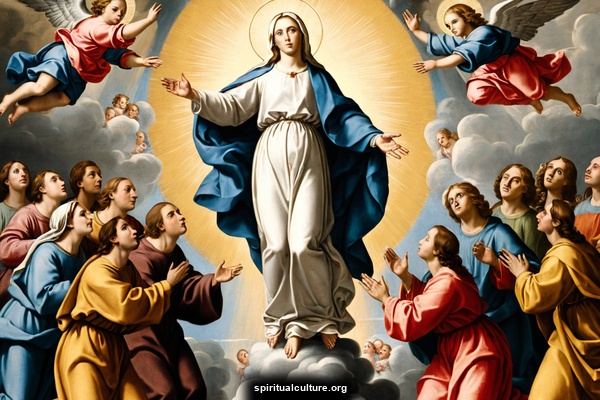
Catholics honor Mary as the mother of Jesus and call her the Mother of God because of their belief in Christ’s divine identity. Catholic teachings about Mary include her Immaculate Conception, perpetual virginity, and Assumption.

These teachings should be explained as doctrines of the Catholic Church, not as historical conclusions accepted by all Christians.

Catholics do not teach that Mary or the saints are gods. Worship in the strict sense is directed to God alone. Saints are honored as faithful members of the Christian community who have completed their earthly lives and are believed to live with God.

Requests for the prayers of saints are understood by Catholics as an extension of asking other Christians to pray for them. Many Protestant Christians reject or question this practice, while Orthodox Christians also maintain strong traditions of venerating Mary and the saints.

Death, Judgment, Heaven, Hell, and Purgatory

Catholic teaching includes belief in personal judgment after death, the resurrection of the body, heaven, hell, and the final judgment.

Purgatory is understood as purification for those who die in God’s grace but are not yet fully prepared for the complete holiness of heaven. It is not officially presented as a second opportunity to choose salvation after death.

Descriptions of the afterlife belong to religious teaching and theological interpretation. They should not be presented as conclusions established through scientific observation.

The Seven Sacraments

Sacraments are central to Catholic life. Catholics believe they are visible signs through which Christ communicates grace in the life of the Church.

The seven sacraments are commonly grouped into three categories.

Sacraments of Christian Initiation

Baptism marks entry into Christian life. It is performed with water in the name of the Father, the Son, and the Holy Spirit. The Catholic Church baptizes infants as well as older children and adults.

Confirmation is associated with the strengthening of baptismal grace and the gift of the Holy Spirit. Its usual minister and its relationship to baptism vary between Latin and Eastern Catholic practice.

The Eucharist is the central act of Catholic worship. Catholics believe that the consecrated bread and wine become the Body and Blood of Christ while retaining the outward appearances of bread and wine.

The Eucharist is understood as thanksgiving, memorial, sacrificial offering, real presence, sacred meal, and communion with Christ and the Church. Catholic teaching calls it the source and summit of Christian life.

Sacraments of Healing

Penance and Reconciliation celebrates God’s forgiveness and the restoration of communion after sin.

Anointing of the Sick is offered to people facing serious illness, the difficulties of advanced age, or significant medical danger. It is not limited exclusively to the final moments before death.

The sacrament involves prayer and anointing with blessed oil. Catholics believe it offers spiritual strength, peace, and union with Christ. It must not be described as guaranteeing physical recovery.

Sacraments at the Service of Communion

Holy Orders ordains bishops, priests, and deacons for ministries of teaching, worship, pastoral service, and governance.

Matrimony joins a baptized man and woman in a covenant of married life. Catholic teaching understands marriage as a lifelong union ordered toward the good of the spouses and openness to family life.

Catholic marriage practices and annulment procedures are frequently misunderstood. An annulment is not a Catholic form of divorce. It is a judgment that a valid sacramental marriage was not established at the time consent was exchanged.

Catholic Worship and Spiritual Life

The Mass and Divine Liturgy

The principal public worship of Latin Catholics is called the Mass. In many Eastern Catholic Churches, the Eucharistic celebration is called the Divine Liturgy.

A Catholic Eucharistic celebration normally includes readings from Scripture, a homily, prayers, the presentation of bread and wine, the Eucharistic Prayer, the Lord’s Prayer, Communion, and a concluding dismissal.

Although local languages are widely used, Catholic worship is not identical everywhere. Liturgical forms differ among rites, regions, religious communities, and historical periods. Eastern Catholic worship may include icon screens, extensive chanting, incense, different Eucharistic prayers, and distinctive calendars or disciplines.

The Liturgical Year

Catholic worship follows a calendar centered on the life, death, and resurrection of Christ.

Major seasons include:

  • Advent
  • Christmas
  • Lent
  • The Easter Triduum
  • Easter
  • Ordinary Time

Holy days, saints’ commemorations, Marian feasts, fasting practices, and local patronal celebrations vary among countries and Catholic traditions.

Lent is traditionally associated with prayer, fasting, repentance, and almsgiving in preparation for Easter. These practices are intended to support conversion and service rather than to function as magical techniques for obtaining favors.

Prayer and Devotion

Catholic prayer includes public liturgy, spontaneous prayer, biblical meditation, silence, sacred music, processions, pilgrimages, and established devotional forms.

Well-known practices include:

  • The Rosary
  • Eucharistic adoration
  • The Stations of the Cross
  • Novenas
  • The Liturgy of the Hours
  • Devotion to the Sacred Heart
  • Pilgrimage to shrines
  • Prayers associated with particular saints

These practices are not equally important to every Catholic. The Eucharist and the sacraments occupy a different doctrinal place from optional private devotions.

Catholic teaching does not hold that a novena, medal, pilgrimage, relic, blessing, or devotional prayer automatically guarantees healing, financial success, protection, marriage, or another desired result.

Leadership and Organization

The Pope

The pope is the bishop of Rome and the visible center of communion among Catholic bishops. Catholics regard him as the successor of Saint Peter and as possessing a unique ministry of unity and pastoral authority.

As of August 2026, the pope is Pope Leo XIV, formerly Robert Francis Prevost. He was elected in May 2025 and is the first pope from the Order of Saint Augustine. Before his election, he served for many years in Peru and later held leadership responsibilities in Rome.

The pope is not regarded as a replacement for Christ. Catholic teaching identifies Christ as the head of the Church. The pope’s office is understood as a ministry within the Church.

Bishops and Dioceses

The worldwide Catholic Church is organized into local Churches, most commonly dioceses or their Eastern Catholic equivalents, eparchies.

A diocesan bishop has responsibility for teaching, sanctifying, and governing within the local Church entrusted to him. Bishops may be assisted by auxiliary bishops, priests, deacons, religious communities, and lay professionals.

Groups of bishops within a country or region commonly form an episcopal conference. These conferences coordinate pastoral work, liturgical adaptations, education, public statements, and other matters, but they do not replace the authority of individual diocesan bishops in every area.

Parishes

Most Catholics encounter the Church primarily through a parish. A parish is a local community usually entrusted to a pastor.

Parishes celebrate worship, provide religious education, prepare people for sacraments, support marriages and funerals, organize charity, and create forms of community life.

In areas with priest shortages or widely dispersed populations, several parishes may share clergy. Laypeople, deacons, religious sisters, religious brothers, and catechists may carry substantial pastoral responsibility.

Cardinals and the Roman Curia

Cardinals are senior Church officials appointed by the pope. Their best-known collective responsibility is electing a new pope when the papal office becomes vacant, provided they meet the age requirements established by Church law.

The Roman Curia consists of institutions that assist the pope in serving the worldwide Church. Its departments address doctrine, bishops, worship, evangelization, Eastern Churches, interreligious dialogue, charity, education, culture, canon law, and other concerns.

The 2022 apostolic constitution Praedicate Evangelium reorganized the Curia and emphasized evangelization, service, coordination, and internal reform.

Clergy, Consecrated Life, and the Laity

Catholic clergy include bishops, priests, and deacons. The majority of Catholics, however, are laypeople.

Lay Catholics participate in family life, employment, education, politics, art, science, social service, parish ministry, and many other areas. Vatican II emphasized that the laity share responsibility for the mission of the Church through baptism rather than serving merely as passive recipients of clerical leadership.

Consecrated life includes monks, nuns, religious sisters, religious brothers, friars, and members of other communities. They may follow vows or commitments involving poverty, chastity, obedience, prayer, community life, teaching, health care, scholarship, contemplation, or service to marginalized people.

Not every priest belongs to a religious order. Many are diocesan priests serving under a local bishop.

Latin and Eastern Catholic Traditions

The Latin Church includes the great majority of Catholics, and the Roman Rite is its most widespread liturgical form. Nevertheless, the Catholic Church also includes Eastern Catholic Churches with ancient roots in the Middle East, Eastern Europe, India, and northeastern Africa.

Examples include the Maronite, Melkite Greek Catholic, Ukrainian Greek Catholic, Chaldean Catholic, Armenian Catholic, Coptic Catholic, Syro-Malabar, and Syro-Malankara Churches.

Eastern Catholic Churches preserve their own forms of liturgy, theology, spirituality, music, fasting, canon law, architecture, and Church government. In some Eastern Catholic traditions, married men may be ordained to the priesthood, although bishops are ordinarily chosen from celibate clergy.

The Second Vatican Council affirmed the dignity of Eastern Catholic traditions and encouraged their members to preserve their authentic heritage rather than imitate Latin customs unnecessarily.

Catholic Social Teaching

Catholicism teaches that faith has social as well as personal consequences. Prayer and sacramental worship are intended to shape how people treat families, workers, migrants, the poor, the sick, political opponents, and the natural world.

Major themes of Catholic social teaching include:

  • The dignity of every human person
  • The common good
  • Solidarity
  • Subsidiarity
  • The dignity of work
  • The rights of workers
  • Care for people experiencing poverty
  • The responsibilities attached to property
  • Peace and reconciliation
  • Care for creation
  • Participation in social life

The principle of the common good concerns social conditions that allow individuals, families, and communities to flourish. Catholic teaching connects it with access to necessities such as food, health care, education, meaningful work, family life, culture, and religious freedom.

Catholics do not always agree on the best political policy for applying these principles. Catholic social teaching offers moral frameworks, but many practical decisions require judgment about economics, law, culture, and local circumstances.

Education, Health Care, and Charity

Catholic dioceses, religious orders, charities, and lay organizations operate schools, universities, hospitals, clinics, shelters, development programs, migration services, and disaster-relief initiatives around the world.

Historically, monasteries, cathedral schools, missionary institutions, and religious communities contributed to literacy, manuscript preservation, nursing, education, architecture, music, and the formation of universities.

These institutions vary greatly in quality, funding, local authority, and relationship to governments. Their Catholic identity may be expressed through religious education, ethical policies, chaplaincy, prayer, service, or a particular founding mission.

The social contribution of Catholic institutions should not obscure historical failures. Some Church-run institutions have been implicated in cultural suppression, abusive discipline, forced separation of families, or inadequate protection of vulnerable people.

Relations with Other Christians

The Catholic Church teaches that Christian division contradicts Christ’s desire for unity. The Second Vatican Council encouraged Catholics to engage actively in ecumenism.

Catholic ecumenical dialogue includes relationships with Eastern Orthodox, Oriental Orthodox, Anglican, Lutheran, Methodist, Reformed, Baptist, Pentecostal, Evangelical, and other Christian communities.

Catholicism recognizes that baptized Christians outside full communion with Rome may possess genuine elements of Christian faith and spiritual life. At the same time, significant disagreements remain concerning papal authority, ordination, the Eucharist, justification, Mary, the saints, Scripture, tradition, and the nature of the Church.

Ecumenism does not require pretending that doctrinal differences do not exist. Its aims include accurate understanding, repentance for hostility, common prayer where appropriate, theological dialogue, and cooperation in serving human needs.

Relations with Other Religions

The Catholic Church’s modern approach to interreligious relations was strongly shaped by Vatican II’s declaration Nostra Aetate.

The document encouraged respect and dialogue with followers of other religions and rejected discrimination based on religion or ethnicity. It gave particular attention to Christianity’s Jewish roots and condemned antisemitism.

Catholic dialogue with Muslims, Buddhists, Hindus, Jews, Indigenous religious communities, and others may include cooperation in peacebuilding, education, humanitarian service, religious liberty, environmental care, and opposition to hatred.

Dialogue does not mean that all religions are considered identical. Catholicism continues to proclaim its own beliefs while teaching that people must be treated with dignity and that religious disagreement cannot justify hatred or coercion.

Controversies and Contemporary Challenges

Clerical Sexual Abuse

Sexual abuse committed by Catholic clergy and other Church personnel, together with institutional failures to report offenders or protect victims, has caused profound suffering and loss of trust.

Investigations in many countries have documented patterns of abuse, secrecy, transfers of accused clergy, inadequate oversight, and failures to listen to survivors. The crisis cannot be understood merely as hostile publicity or the wrongdoing of a few isolated individuals.

The Holy See and local Churches have introduced safeguarding policies, reporting procedures, canonical penalties, training, background checks, and systems intended to hold leaders accountable. The updated 2023 norms of Vos Estis Lux Mundi established procedures concerning reports of abuse and failures by Church authorities to act properly.

Policies alone do not erase harm. Survivors, advocates, and safeguarding professionals continue to call for transparency, independent investigation, cooperation with civil authorities, reparations, and consistent enforcement across countries.

Secularization and Religious Change

In parts of Europe, North America, and Oceania, Catholic participation has declined, parishes have closed or merged, and many people identify as religiously unaffiliated.

At the same time, Catholic populations have grown in parts of Africa and Asia. Migration has also reshaped Catholic communities in large cities and in countries where older Catholic populations are declining.

These changes challenge the assumption that European or North American experience represents Catholicism everywhere.

Women and Church Leadership

Women have played essential roles in Catholic family life, education, health care, scholarship, religious orders, social activism, catechesis, administration, and spiritual formation.

The Catholic Church does not ordain women as priests or bishops. Supporters of the current teaching regard the male priesthood as part of the Church’s received sacramental tradition. Critics argue that excluding women from ordination limits equality and representation.

Women may hold many senior administrative, academic, pastoral, and advisory positions, but debate continues regarding authority, decision-making, and recognition of women’s contributions.

Sexuality, Marriage, and Family

Catholic moral teaching on marriage, divorce, contraception, abortion, same-sex relationships, gender, and reproductive technologies differs sharply from many contemporary social views.

These teachings are interpreted and lived differently among Catholics. Some accept them fully, some struggle with particular teachings, and others openly dissent.

Pastoral discussions often concern how the Church can maintain its doctrines while treating people with compassion and avoiding hostility, humiliation, or unjust discrimination.

Governance and Synodality

Catholic governance combines papal primacy, episcopal authority, consultation, canon law, and the participation of clergy, religious, and laypeople.

Recent discussions of synodality emphasize listening, communal discernment, accountability, and participation in the Church’s mission. Supporters see this as a recovery of ancient Christian practices. Critics sometimes fear that synodal processes may create confusion or weaken doctrinal clarity.

The continuing challenge is how a global Church can preserve unity while responding responsibly to different cultures, pastoral situations, and historical experiences.

Cultural Influence and Living Heritage

The Roman Catholic Church has shaped sacred architecture, painting, sculpture, music, literature, education, calendars, festivals, pilgrimage routes, burial customs, and public landscapes.

Cathedrals, village chapels, monasteries, shrines, roadside crosses, icons, statues, bells, vestments, manuscripts, and processions form part of the material and living heritage of many societies.

Catholic cultural heritage is not limited to famous European monuments. It includes Ethiopian and Middle Eastern traditions, Indian Christian communities, Philippine festivals, African sacred music, Latin American devotional arts, Vietnamese Catholic villages, Indigenous Catholic expressions, and immigrant parishes throughout the world.

Some traditions combine official liturgy with local customs. These may include patronal feasts, decorated boats, flower carpets, dance, communal meals, dramatic representations, candles, pilgrimage clothing, or prayers linked to local history.

Such practices should be interpreted carefully. A local legend, healing story, apparition account, or oral tradition should not automatically be presented as verified history or universal Catholic doctrine.

Common Misunderstandings About Catholicism

Catholics Worship the Pope

Catholics do not worship the pope. He is regarded as the bishop of Rome and a servant of Church unity, not as divine.

Catholics Worship Mary and the Saints

Catholic doctrine distinguishes worship offered to God from honor given to saints. Many non-Catholic Christians remain unconvinced by this distinction in practice, but Catholic teaching does not identify Mary or the saints as gods.

Every Papal Statement Is Infallible

Papal infallibility applies only under limited doctrinal conditions. Popes may make ordinary judgments, disciplinary decisions, or personal observations that do not carry an infallible status.

All Catholics Follow the Same Rite

Catholicism includes the Latin Church and 23 Eastern Catholic Churches. Even within the Latin Church, liturgical customs and cultural expressions vary.

Catholicism Teaches Salvation by Human Works Alone

Catholic teaching holds that salvation begins with God’s grace. Good works are understood as a response to grace and evidence of living faith, not as an independent way of earning salvation.

Catholicism Is Culturally Uniform

The Church has shared doctrines and sacramental structures, but Catholic communities are culturally diverse. Music, architecture, festivals, food, clothing, devotional customs, and styles of community leadership differ widely.

The Roman Catholic Church in the Modern World

The Catholic Church today is simultaneously ancient and contemporary. It preserves creeds, sacraments, scriptures, liturgical forms, and institutions that developed over many centuries, while also responding to migration, digital communication, environmental change, religious pluralism, war, economic inequality, demographic change, and declining trust in institutions.

Its global identity makes simple descriptions difficult. A rural parish in East Africa, a Byzantine Catholic cathedral in Eastern Europe, a migrant community in the Gulf region, a monastery in France, a university in the United States, and a village procession in the Philippines may all belong to the same communion while expressing Catholic life differently.

The Church’s future will be shaped not only by popes and bishops but also by families, lay leaders, religious communities, theologians, teachers, health workers, migrants, young people, and local cultures.

Conclusion

The Roman Catholic Church is a worldwide Christian communion centered on belief in Jesus Christ, sacramental worship, apostolic continuity, and unity with the bishop of Rome. Its spiritual life is expressed through Scripture, tradition, the Eucharist, prayer, moral teaching, community service, sacred art, and diverse cultural practices.

Its history includes profound contributions to worship, education, charity, architecture, music, scholarship, and the preservation of cultural memory. It also includes episodes of coercion, political entanglement, discrimination, institutional failure, and abuse that require honest historical examination.

Catholicism is neither culturally uniform nor limited to the Latin West. It includes Latin and Eastern Churches, ancient and modern forms of spirituality, and communities deeply rooted in local cultures across the world.

Understanding the Roman Catholic Church therefore requires more than studying the Vatican or listing doctrines. It involves examining a living global tradition shaped by faith, ritual, history, cultural exchange, human achievement, conflict, repentance, and continuing efforts to preserve spiritual identity while responding to the needs of the modern world.
The Roman Catholic Church: History, Leadership, Organization, Global Presence, and Contemporary Role

Chi Tran

About the Author

Chi Tran

Editorial contributor at Spiritual Culture

Chi Tran writes for Spiritual Culture, focusing on spiritual culture, sacred traditions, ritual life, folklore, symbols, festivals, sacred places, and living heritage around the world.

Editorial Note: Content is prepared with respect for spiritual diversity, cultural context, documented sources, oral tradition, and living community practice.

View all 1,992 articles by Chi Tran
Related Articles

Leave a Comment