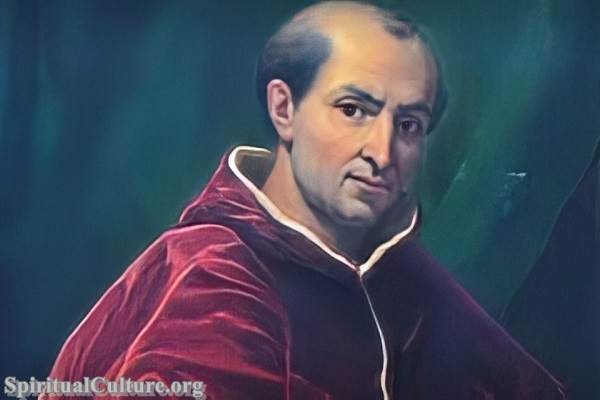
Born on March 13, 1615, and passing away on September 27, 1700, Pope Innocent XII, originally named Antonio Pignatelli del Rastrello, remains one of the most notable reformers in the history of the Roman Catholic Church. Emerging from a noble family in Spinazzola, within the Kingdom of Naples, his life and legacy transcend mere biography. Pope Innocent XII’s papacy, which lasted from 1691 until his death in 1700, unfolded during a time of great ecclesiastical and political complexity. His resolute efforts to cleanse the Church of corruption and restore integrity and justice echo deeply, even today.
We will reflect on his accomplishments, examine his leadership through the lens of Scripture, and discover why his papacy still offers valuable lessons for our lives today.
Key Takeaway — Who Was Pope Innocent XII?
Pope Innocent XII, born Antonio Pignatelli del Rastrello in 1615, was a man of noble birth yet significant humility, whose life came to reflect integrity and reform in the Roman Catholic Church. His early years were marked by academic excellence, studying law and theology in Rome, and showing an early aptitude for leadership and diplomacy. His noble family background could have led him to a life of comfort and privilege, but Pignatelli’s path was guided by a deep sense of duty to God and the Church.
Before his papacy, Pignatelli served the Church faithfully in various diplomatic and pastoral roles. As papal nuncio to Poland, he demonstrated both political acumen and a heart for justice, mediating disputes and protecting the rights of the Church. Later, as archbishop of Naples, he became known for his personal piety, concern for the poor, and efforts to reform local ecclesiastical practices. His reputation for fairness and devotion earned him respect across Europe.
The circumstances surrounding Pope Innocent XII’s election in 1691 were complex and politically charged. After the death of Pope Alexander VIII, the papal conclave was fiercely contested, with powerful factions vying for influence. Catholic monarchs, particularly Louis XIV of France and the Habsburg emperor Leopold I, sought to sway the outcome. Despite the tensions, Antonio Pignatelli emerged as a compromise candidate acceptable to various factions. Yet, no one anticipated that this “compromise” would transform into a papacy defined by moral courage and reform.
Once elected, Pope Innocent XII chose the name “Innocent,” symbolizing purity and integrity—qualities he would embody throughout his pontificate. From the outset, he rejected the excesses and corruption that had tainted the papacy in previous generations. Determined to restore the Church’s credibility, Innocent XII refused to grant favors to powerful families, breaking with entrenched traditions of nepotism. His firm stance was not a political maneuver but a reflection of his deep belief that spiritual authority should be rooted in righteousness and service.
One of his first acts as pope was to issue the groundbreaking decree Romanum decet Pontificem in 1692. This decree explicitly prohibited the appointment of relatives to positions of power within the Church, effectively dismantling a system of nepotism that had undermined the papacy’s credibility for centuries. In doing so, Pope Innocent XII reaffirmed that the Church was not a tool for personal advancement but a sacred trust given by God.
His personal character further underscored his commitment to reform. Despite his high office, Pope Innocent XII lived modestly, using papal resources to aid the poor and fund charitable works in Rome. He was deeply engaged in pastoral care, often visiting hospitals and orphanages, and ensuring that the Church’s wealth served those in need. His life reflected the very principles he advocated: integrity, humility, and compassion.
Innocent XII’s legacy was not limited to ecclesiastical reform. His diplomatic efforts, particularly in maintaining a delicate balance between France and the Holy Roman Empire, revealed his skill in preserving the Church’s independence amid competing political pressures. He sought peace and unity, often acting as a mediator to prevent conflicts that threatened both spiritual and temporal stability.
Pope Innocent XII’s papacy was a turning point for the Roman Catholic Church. His clear vision, unwavering integrity, and deep spiritual commitment restored faith in the papacy at a time when it was marred by scandal and excess. His story is one of a man who, despite immense pressures, chose to lead with justice, humility, and an unshakable devotion to God’s will.
The Truth in God’s Word: Biblical Foundations for Leadership and Integrity
Throughout Scripture, God reveals a clear and enduring pattern for those who are called to lead His people. Leadership in the kingdom of God is not about power, privilege, or personal advancement; it is a calling to serve with integrity, humility, and justice. Pope Innocent XII’s life and papacy reflect these biblical values in a way that continues to challenge and inspire today.
The prophet Micah delivers one of the clearest declarations of what God requires of His people in Micah 6:8:
“He has shown you, O man, what is good. And what does the Lord require of you? To act justly and to love mercy and to walk humbly with your God.”
This verse encapsulates the very spirit of Pope Innocent XII’s reforms. When he issued the Romanum decet Pontificem decree, eliminating the long-standing corrupt practice of nepotism in the Church, Innocent XII was not only enacting policy—he was aligning the Church’s leadership with the justice and humility God desires.
In the New Testament, Matthew 20:25-28 provides an even more pointed lesson from Jesus Himself:
“You know that the rulers of the Gentiles lord it over them, and their high officials exercise authority over them. Not so with you. Instead, whoever wants to become great among you must be your servant, and whoever wants to be first must be your slave—just as the Son of Man did not come to be served, but to serve, and to give his life as a ransom for many.”
Pope Innocent XII embodied this servant-leadership. His rejection of nepotism and his dedication to the poor were a powerful witness that Christian leadership is about sacrificial service, not self-promotion. By reforming the papal court and using Church resources to support hospitals, orphanages, and charitable works, he lived out Jesus’ call to servanthood in concrete ways.
Titus 1:7-9 outlines the qualifications for spiritual leaders:
“Since an overseer manages God’s household, he must be blameless—not overbearing, not quick-tempered, not given to drunkenness, not violent, not pursuing dishonest gain. Rather, he must be hospitable, one who loves what is good, who is self-controlled, upright, holy and disciplined. He must hold firmly to the trustworthy message as it has been taught, so that he can encourage others by sound doctrine and refute those who oppose it.”
Innocent XII’s life reflected this biblical blueprint. His personal discipline, his rejection of corruption, and his unwavering focus on the spiritual health of the Church positioned him as a model of biblical leadership in a time of moral decay. His willingness to confront entrenched corruption, even at personal cost, demonstrated his commitment to holiness and righteousness.
Moreover, Proverbs 29:2 makes the point:
“When the righteous thrive, the people rejoice; when the wicked rule, the people groan.”
During Pope Innocent XII’s papacy, his reforms brought a renewed sense of hope and integrity to a Church that had suffered under previous abuses of power. The people, weary of corruption and disillusioned by the misuse of spiritual authority, found in Innocent XII a leader who restored dignity and justice to the Church’s highest office.
James 1:27 offers yet another layer of insight:
“Religion that God our Father accepts as pure and faultless is this: to look after orphans and widows in their distress and to keep oneself from being polluted by the world.”
This verse speaks strongly to Pope Innocent XII’s dedication to caring for the vulnerable. His personal initiatives to support orphans, fund hospitals, and simplify the lives of the poor were not acts of charity alone—they were expressions of genuine, biblically grounded faith. His papacy was a vivid illustration of what it means to live out the Gospel through concrete actions of compassion and justice.
The biblical portrait of righteous leadership is not a theoretical ideal; it is a lived reality in the story of Pope Innocent XII. His commitment to integrity, his rejection of worldly power and privilege, and his love for justice and mercy embody the biblical standard for spiritual leaders. His life encourages readers to consider our own response to God’s call:
- Are we willing to lead with integrity, even when it costs us?
- Do we value humility over personal ambition?
- Are we aligning our actions with God’s justice and mercy?
Pope Innocent XII’s papacy shows that leadership, when grounded in God’s Word, brings transformation not only to institutions but to countless lives. His example challenges us today to embrace a faith that is not confined to words but is lived out in actions of righteousness, compassion, and humility.
Key Events and Achievements of Pope Innocent XII
The papacy of Pope Innocent XII (1691–1700) was not defined by mere ceremonial leadership or empty declarations; it was a period marked by bold reforms, spiritual integrity, and impactful actions that reshaped the Roman Catholic Church for generations to come. His achievements reflect his unwavering commitment to justice, humility, and faithful service.
4. Compassionate Use of Church Resources
While past Popes were often criticized for their lavish lifestyles and opulent spending, Pope Innocent XII embraced a radically different approach. He redirected papal revenues toward charitable initiatives, funding hospitals, orphanages, and aid for the poor in Rome and beyond. His personal life reflected simplicity, humility, and generosity.
By prioritizing the needs of the vulnerable over personal luxury, Innocent XII modeled Christ’s call to care for “the least of these” (Matthew 25:40). His compassion not only alleviated suffering but also served as a public witness to the true mission of the Church.
5. Patronage of Education, Arts, and Culture
Although focused on reform and justice, Pope Innocent XII did not neglect the cultural and intellectual life of the Church. He supported universities, theological institutions, and artistic endeavors that glorified God and strengthened the faith. His papacy contributed to the flourishing of Catholic education and sacred art, ensuring that the Church remained a center of learning and beauty.
Innocent XII’s patronage reflected his conviction that truth and beauty are gifts from God, to be nurtured and shared for the spiritual edification of the faithful.
7. Legacy of a Humble Shepherd
Beyond his official acts, the character of Pope Innocent XII left a lasting impression. He was known to visit the sick personally, to listen to the grievances of common people, and to administer justice without favoritism. His humility and sincerity in serving both God and man drew respect and admiration from across Christendom.
By the time of his death in 1700, Innocent XII had left the papacy and the wider Church on a firmer foundation of integrity and justice, ready to face the challenges of a new century with renewed hope and spiritual strength.
Testimony, Metaphor, or Story: The Shepherd Who Reformed the Flock
- Where have we allowed complacency or fear to prevent us from standing for what is right?
- Are we willing to confront the “weeds” in our own communities, churches, or hearts?
- Will we, like Innocent XII, choose the path of integrity, even when it costs us?
The legacy of Innocent XII as the shepherd who reformed the flock is more than history—it is a call to each of us to live out the Gospel with courage, compassion, and conviction. His story challenges us to embrace a faith that is not only spoken but lived out in action, bringing hope and renewal to a world longing for light and truth.