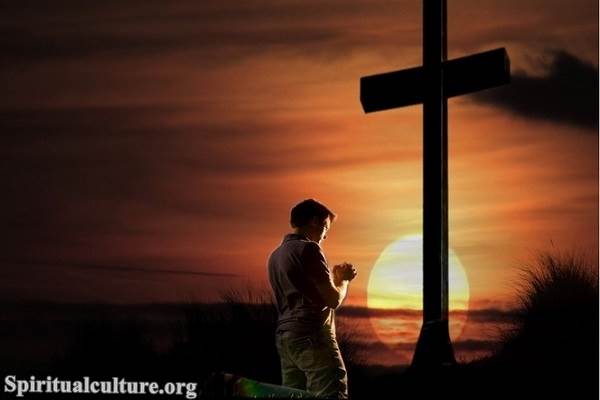
Roman Catholicism is the largest historical tradition within Western Christianity and one of the most influential religious and cultural forces in world history. Its communities are found on every inhabited continent, where Catholics worship in local languages, maintain diverse devotional customs, operate schools and charitable institutions, and participate in public life while remaining united through a shared faith, sacramental life, and communion with the Bishop of Rome.
At the center of Roman Catholic belief is Jesus Christ, whom Catholics confess as the Son of God, the Savior of humanity, and the head of the Church. Catholic life is shaped by the Bible, apostolic tradition, the celebration of the seven sacraments, prayer, moral teaching, service to others, and participation in the worshipping community. The Eucharist, commonly celebrated within the Mass, occupies a particularly important place in Catholic spirituality.
The expression “Roman Catholicism” is widely used in everyday speech, academic writing, and public discussion. However, it requires some explanation. In a strict sense, it often refers to the Latin or Western tradition of the Catholic Church, especially the Roman Rite. The universal Catholic Church also includes Eastern Catholic Churches with Byzantine, Alexandrian, Armenian, Syriac, Maronite, and Chaldean liturgical and spiritual traditions. These Churches are in full communion with the Bishop of Rome but are not simply branches of the Roman Rite.
This article therefore uses “Roman Catholicism” in its familiar broad sense while recognizing the internal diversity of Catholic Christianity. It examines Catholic origins, major beliefs, worship, sacraments, leadership, spirituality, cultural traditions, relations with other religions, historical controversies, and continuing significance in the modern world.
What Is Roman Catholicism?
Roman Catholicism is a form of Christianity organized around communion with the Bishop of Rome, who is known as the pope. Catholics understand the Church as a community founded by Jesus Christ, guided by the Holy Spirit, and entrusted with proclaiming the Gospel, celebrating the sacraments, preserving apostolic teaching, and serving humanity.
The word “Catholic” comes from a Greek term meaning “universal” or “according to the whole.” In Catholic theology, the term refers not only to geographical size but to the Church’s mission to proclaim the Christian message among all peoples and cultures. The Nicene Creed describes the Church as “one, holy, catholic, and apostolic.” Catholics understand these four characteristics as gifts from Christ and as responsibilities that the Church must continually seek to embody.
“Roman” points to the Church of Rome and to the special role attributed to its bishop. Catholic teaching holds that the Bishop of Rome succeeds Saint Peter in a distinctive pastoral office serving the unity of the universal Church. This understanding of papal authority is one of the principal features distinguishing Roman Catholicism from Eastern Orthodoxy and most Protestant traditions.
Roman Catholicism should not be understood as culturally uniform. Catholic communities in Italy, Poland, Mexico, Brazil, Nigeria, India, Vietnam, the Philippines, Lebanon, the United States, and other regions may share the same central doctrines while differing greatly in music, architecture, popular devotion, religious art, festival customs, styles of preaching, and relationships with local society.
The Second Vatican Council affirmed that the Catholic Church contains legitimate diversity in liturgical rites, spiritual traditions, ecclesiastical disciplines, and cultural expressions. The Latin Church is the largest part of Catholic Christianity, but the Eastern Catholic Churches preserve ancient Christian traditions that developed in the Middle East, North Africa, Eastern Europe, and South Asia.
The Origins of Roman Catholicism
Jesus, the Apostles, and the Early Church
Catholic sacred history begins with the life, ministry, death, and resurrection of Jesus Christ in the first century. Catholics believe that Jesus gathered disciples, appointed the Twelve Apostles, commissioned them to proclaim the Gospel, and promised the continuing presence of the Holy Spirit.
Within this apostolic group, Saint Peter holds particular importance in Catholic interpretation. Several New Testament passages describe Peter acting as a leading figure among the disciples. Catholic teaching interprets Christ’s words to Peter in Matthew 16:18–19, together with other passages concerning Peter’s pastoral role, as foundations for the ministry later associated with the bishops of Rome.
Historical scholarship distinguishes between the structures of the earliest Christian communities and the more developed institutions of later centuries. The first generations of Christians did not possess every administrative form later associated with medieval or modern Catholicism. Nevertheless, Catholics see continuity through apostolic preaching, baptism, the Eucharist, ordained ministry, episcopal leadership, and the transmission of faith from one generation to the next.
The Catholic doctrine of apostolic succession holds that bishops continue the pastoral ministry entrusted to the apostles. This does not mean that every historical decision made by a bishop or pope is regarded as divinely inspired. Rather, it expresses the belief that the Church’s teaching and sacramental ministry have been transmitted through an enduring community rather than recreated independently in each age.
Growth Across the Roman World
Early Christianity spread through Jewish communities and the wider Greco-Roman world. Christians established communities in cities including Jerusalem, Antioch, Alexandria, Ephesus, Corinth, Rome, and Carthage. They faced periods of social hostility and government persecution, although the intensity and geographical extent of persecution varied.
The legalization of Christianity under Emperor Constantine in the early fourth century changed the Church’s public position. Christian communities could construct churches, hold councils, own property, and participate more openly in imperial society. Christianity later received official imperial support, creating a complicated relationship between ecclesiastical and political authority.
Important councils clarified Christian teaching concerning the Trinity and the identity of Jesus Christ. The Council of Nicaea in 325 rejected the view that the Son was merely a created being and affirmed his full divinity. Later councils developed the language used to describe Christ as fully divine and fully human.
Catholics, Eastern Orthodox Christians, and many Protestants continue to confess major elements of this early conciliar faith. Roman Catholicism therefore did not emerge as a completely separate religion after the apostolic age. It developed within the broader history of ancient Christianity, alongside traditions that would later become distinct Eastern Orthodox, Oriental Orthodox, and other Christian communities.
The Development of the Western Catholic Tradition
Rome and the Growth of Papal Authority
The Church of Rome gained importance for several reasons. Rome was the capital of the empire, its Christian community was associated with the martyrdoms of Peter and Paul, and its bishops were frequently consulted in disputes affecting other churches.
Papal authority developed gradually rather than appearing in its later form all at once. Bishops of Rome increasingly presented themselves as guardians of apostolic unity and as successors to Peter. Their influence varied according to political conditions, personalities, geography, and the strength of imperial or regional churches.
After the decline of imperial government in Western Europe, bishops and monasteries sometimes provided social organization, education, diplomacy, care for the poor, and the preservation of manuscripts. The papacy also became a political institution, at times possessing land and exercising temporal power. This combination of spiritual and political authority produced both significant achievements and serious conflicts.
Monasticism and Religious Life
Monasticism became one of the major sources of Catholic spirituality and cultural influence. Early Christian ascetics withdrew from ordinary society to pursue prayer, fasting, study, and disciplined communal life.
In Western Christianity, the Rule of Saint Benedict became especially influential. Benedictine communities organized daily life around prayer, work, Scripture, hospitality, and stability. Monasteries preserved books, cultivated land, educated clergy, cared for travelers, and helped transmit learning.
Later religious communities developed different forms of service. Franciscans emphasized poverty, preaching, and care for the marginalized. Dominicans became associated with preaching, theology, and education. Carmelites cultivated contemplative prayer, while Jesuits became influential in education, missions, scholarship, and spiritual formation.
Catholic religious life includes monks, nuns, friars, sisters, hermits, and members of apostolic congregations. Their forms of clothing, community structure, ministry, and prayer differ widely. Not every Catholic is called to religious life; Catholics understand it as one vocation among several within the Church.
The Division Between Eastern and Western Christianity
Relations between Greek-speaking Eastern churches and Latin-speaking Western Christianity became increasingly strained over centuries. The causes included language, culture, imperial politics, questions of jurisdiction, liturgical customs, and theological disagreement.
The year 1054 is often used as a symbolic date for the East–West Schism, when representatives of Rome and Constantinople exchanged excommunications. In reality, separation developed over a longer period and was intensified by later conflicts, especially the violence surrounding the Fourth Crusade and the capture of Constantinople in 1204.
Roman Catholics and Eastern Orthodox Christians share much of the early Christian heritage, including belief in the Trinity, apostolic succession, episcopal ministry, sacramental worship, and veneration of saints. They differ particularly over the scope of papal authority and certain theological formulations.
Modern Catholic teaching encourages dialogue, prayer, historical honesty, and cooperation in pursuit of Christian unity. It does not treat the divisions among Christians as desirable. The Second Vatican Council identified renewal, conversion of heart, theological dialogue, common prayer where appropriate, and practical collaboration as important dimensions of ecumenism.
The Protestant Reformation and Catholic Reform
During the late medieval period, many Christians criticized corruption, poor clerical education, political interference in Church offices, financial abuses, and weaknesses in pastoral life. Reform movements existed within Catholicism before the sixteenth century, but the Protestant Reformation created lasting institutional divisions in Western Christianity.
Martin Luther’s challenge to indulgence preaching in 1517 expanded into disagreements over authority, justification, Scripture, the sacraments, and the nature of the Church. Other reformers, including Huldrych Zwingli and John Calvin, established different theological and ecclesiastical traditions. Political rulers, economic conditions, printing technology, nationalism, and popular religious concerns all contributed to the Reformation’s spread.
The Catholic response included both opposition to Protestant theology and substantial internal reform. The Council of Trent, held in several sessions between 1545 and 1563, clarified Catholic doctrine, addressed clerical discipline, encouraged better priestly education, and strengthened standards governing worship and pastoral care.
The period is sometimes called the Counter-Reformation, although many historians also use the term Catholic Reformation to emphasize developments that were not simply reactions to Protestantism. New religious orders, missionary movements, seminaries, schools, spiritual writings, and artistic forms reshaped Catholic life.
The conflicts of the Reformation era were not limited to theological debate. Religious divisions became entangled with warfare, state formation, persecution, forced conformity, and political rivalry. Catholics and Protestants both experienced and inflicted forms of repression in different settings. Responsible historical treatment therefore avoids presenting the age as a simple struggle between an entirely virtuous side and an entirely corrupt one.
Core Beliefs of Roman Catholicism
Belief in the Trinity
Roman Catholics believe in one God in three divine persons: the Father, the Son, and the Holy Spirit. This doctrine does not describe three gods. It expresses the Christian belief that the one divine being exists eternally as three distinct persons who share one divine nature.
The Trinity is central to Catholic worship. Baptism is celebrated in the name of the Father, Son, and Holy Spirit. Catholic prayers frequently begin and end with the Sign of the Cross, which invokes the three persons of the Trinity.
Catholics believe that the Trinity is a mystery revealed by God rather than a theory that can be fully explained through human reasoning. Theology seeks to clarify the doctrine and avoid contradiction, but Catholic teaching maintains that the divine reality exceeds complete human comprehension.
Jesus Christ
Catholics confess Jesus Christ as truly divine and truly human. They believe that he was conceived by the Holy Spirit, born of the Virgin Mary, lived among humanity, proclaimed the kingdom of God, healed the sick, gathered disciples, suffered crucifixion, died, was buried, and rose from the dead.
Catholic teaching regards the death and resurrection of Christ as the decisive saving events of human history. Through Christ, humanity is reconciled with God and offered forgiveness, grace, resurrection, and eternal life.
The Church distinguishes between historical investigation and theological confession. Historians can examine ancient texts, political circumstances, Roman crucifixion, and the formation of early Christian communities. Claims about Christ’s divinity, resurrection, and saving mission belong to Christian faith and cannot be presented as conclusions established by historical science alone.
Creation, Humanity, and Sin
Catholicism teaches that God created all that exists and that creation is fundamentally good. Human beings possess a distinctive dignity because they are created in the image of God.
Catholic interpretation does not require every biblical passage about creation to function as a modern scientific account. The Church has generally accepted scientific investigation into the age of the universe, biological development, and the natural processes through which life emerged, provided that theological claims about God, creation, human dignity, and moral responsibility are not reduced to purely material explanations.
Sin is understood as a rejection of God’s love and moral order. Catholic teaching distinguishes original sin, describing humanity’s wounded condition, from personal sins committed through individual choices.
The doctrine of original sin is not intended to mean that every person is personally guilty of an action committed by the first humans. Rather, it expresses the belief that humanity inherits a damaged condition marked by alienation, disordered desire, suffering, and death.
Grace, Faith, and Salvation
Catholicism teaches that salvation is a gift of divine grace rather than something earned through human effort alone. Grace enables people to respond to God in faith, hope, love, repentance, and obedience.
Catholic teaching does not understand good works as a way of purchasing salvation independently from Christ. Instead, works of love are viewed as the fruit of grace and as a genuine human cooperation with God’s action.
This understanding differs in language and emphasis from some Protestant interpretations of justification by faith alone. Modern Catholic–Protestant dialogue has shown that older disputes were sometimes intensified by differing definitions, polemical language, and contrasting theological frameworks. Significant disagreements remain, but the traditions also share substantial convictions concerning Christ, grace, faith, repentance, and the necessity of transformed life.
Catholics believe that salvation includes forgiveness of sin, reconciliation with God, incorporation into the Church, growth in holiness, resurrection of the body, and eternal communion with God. The Church does not claim to know with certainty the eternal destiny of particular individuals except where it formally recognizes saints as being with God.
Scripture, Tradition, and the Magisterium
Catholic teaching understands divine revelation as transmitted through Sacred Scripture and Sacred Tradition. These are not treated as two unrelated collections of information. Catholicism views them as closely connected ways through which the apostolic faith is preserved and communicated.
Sacred Scripture consists of the books of the Bible recognized by the Catholic Church. The Catholic biblical canon includes books of the Old Testament that many Protestants classify as the Apocrypha. Catholics commonly call these books deuterocanonical.
Sacred Tradition does not mean every Catholic custom or popular belief. In its theological sense, it refers to the living transmission of apostolic faith in the Church’s preaching, worship, doctrine, and communal life.
The Magisterium is the Church’s teaching office, exercised by the pope and bishops in communion with him. Its purpose is to interpret and guard the deposit of faith rather than to create a new revelation.
Catholic teaching distinguishes among different levels of authority. Not every statement by a priest, bishop, theologian, or pope has the same doctrinal weight. Papal infallibility applies only under limited conditions when the pope formally defines a doctrine of faith or morals for the whole Church. It does not mean that popes are sinless, omniscient, politically correct in every judgment, or incapable of administrative mistakes.
The Second Vatican Council’s constitution Dei Verbum emphasizes the close relationship among Scripture, Tradition, and the Church’s teaching ministry. It also encourages serious engagement with the literary forms, historical settings, and intentions of biblical authors.
The Seven Sacraments
Sacraments are sacred rites that Catholics believe communicate divine grace through visible signs. Catholicism recognizes seven sacraments: Baptism, Confirmation, the Eucharist, Penance or Reconciliation, Anointing of the Sick, Holy Orders, and Matrimony.
The sacraments accompany major dimensions of Christian life. They are traditionally grouped as sacraments of initiation, healing, and service to communion.
Baptism
Baptism is the sacrament of entry into Christian life. It is celebrated through water and the Trinitarian formula. Catholics believe that baptism forgives sin, gives new life in Christ, and incorporates the baptized person into the Church.
The Latin Church commonly baptizes infants, although adults also receive baptism after a period of preparation. Infant baptism reflects the belief that grace is God’s gift rather than a reward for intellectual understanding. Parents and godparents are expected to support the child’s formation in faith.
The Catholic Church recognizes many baptisms performed by other Christian communities when water and the Trinitarian formula are used with the proper intention.
Confirmation
Confirmation strengthens the grace of baptism and is associated with the gift of the Holy Spirit. In the Latin Church, it is normally administered by a bishop, although priests may celebrate it in certain circumstances.
Eastern Catholic Churches commonly administer Baptism, Chrismation, and the Eucharist together, including for infants. This difference illustrates the diversity of Catholic sacramental discipline.
The Eucharist
The Eucharist is central to Catholic worship. Catholics believe that during the Eucharistic prayer, bread and wine become the body and blood of Christ while retaining their outward appearances. Western Catholic theology commonly uses the term “transubstantiation” to explain this change.
The Eucharist is understood as a memorial of Christ’s death and resurrection, a sacramental participation in his sacrifice, a sacred meal, and a sign of ecclesial unity. Catholics do not believe that Christ is sacrificed repeatedly as though his death on the cross were incomplete. Rather, the one sacrifice of Christ is sacramentally made present.
Because reception of Communion expresses unity in faith, sacramental life, and Church governance, Catholic discipline generally restricts Eucharistic Communion to Catholics who are properly disposed, with limited exceptions governed by Church law.
Penance and Reconciliation
In the sacrament of Reconciliation, a person confesses sins, expresses repentance, receives guidance and absolution from a priest, and undertakes an act of penance.
Catholics believe that forgiveness ultimately comes from God. The priest acts sacramentally in the ministry of Christ and the Church. Confidentiality is protected by the sacramental seal, which Catholic law treats as inviolable.
Private confession developed historically over time. Earlier Christian communities sometimes practiced forms of public penance, especially for grave offenses. The present sacramental form allows confession to be repeated and integrates forgiveness, spiritual direction, and reconciliation with the community.
Anointing of the Sick
Anointing of the Sick is offered to those experiencing serious illness, the frailty of age, or significant medical danger. A priest anoints the person with blessed oil and prays for strength, peace, courage, forgiveness, and, where appropriate, physical recovery.
Catholicism does not teach that sacramental anointing guarantees a medical cure. It is a religious ministry of grace and pastoral care, not a substitute for professional healthcare.
Holy Orders
Holy Orders establishes ordained ministry in three degrees: bishops, priests, and deacons. Bishops possess the fullness of ordained ministry and are understood as successors of the apostles. Priests assist bishops through preaching, pastoral leadership, and sacramental ministry. Deacons serve through liturgy, proclamation, charity, and other ministries.
In the Latin Church, priests are normally unmarried and committed to celibacy. Some exceptions exist, including certain married ministers who enter Catholic communion and are later ordained.
Many Eastern Catholic Churches ordain married men to the priesthood while normally selecting bishops from among celibate clergy or monks. Neither the Latin discipline of celibacy nor the Eastern practice of married clergy should be mistaken for a universal doctrine that has always taken exactly the same form.
Matrimony
Catholic marriage is a covenant in which a baptized man and woman establish a lifelong partnership ordered toward mutual good and the raising of children. When both spouses are baptized, the marriage is understood as a sacrament.
Catholic teaching holds that a valid sacramental marriage cannot be dissolved by human authority. Civil divorce may sometimes be tolerated when necessary for legal protection or personal safety, but it does not by itself end a valid sacramental bond.
An annulment is not a “Catholic divorce.” It is a judgment that a valid marriage was not established from the beginning because an essential condition was absent. This does not imply that the relationship was insincere or that children are illegitimate.
The Mass and Catholic Worship
The Mass is the principal Eucharistic worship service of the Latin Church. Its basic structure contains two major parts: the Liturgy of the Word and the Liturgy of the Eucharist.
During the Liturgy of the Word, biblical readings are proclaimed, a homily is usually preached, the Creed may be recited, and prayers are offered for the Church and the world.
During the Liturgy of the Eucharist, bread and wine are prepared, the Eucharistic prayer is offered, the words associated with Christ’s Last Supper are proclaimed, and the faithful are invited to receive Communion when properly disposed.
Catholic worship involves both clergy and laity. The Second Vatican Council strongly emphasized the full, conscious, and active participation of the faithful. This participation is not limited to speaking, singing, or performing a public role. It also includes attentive listening, prayer, silence, offering one’s life to God, and receiving the sacrament faithfully.
The Roman Rite is the most widespread Catholic liturgical tradition, but it is not the only one. The Latin Church also preserves other Western rites, such as the Ambrosian Rite. Eastern Catholic worship may follow Byzantine, Alexandrian, Armenian, Syriac, Maronite, or Chaldean traditions.
Catholic liturgy varies according to language and culture, but it is regulated by authorized liturgical books. Local creativity is therefore balanced with continuity, communal order, and connection to the wider Church.
Mary and the Saints
The Virgin Mary
Mary occupies a distinctive place in Catholic spirituality because she is the mother of Jesus Christ. Catholics call her the Mother of God, a title formally associated with early Christian teaching about the unity of Christ’s divine and human identity.
Catholics do not believe that Mary is a goddess or an equal member of the Trinity. Worship in the strict sense belongs to God alone. Catholic theology distinguishes worship of God from the honor given to saints and from the special veneration accorded to Mary.
Major Marian doctrines include her perpetual virginity, Immaculate Conception, divine motherhood, and Assumption. The Immaculate Conception refers to the Catholic belief that Mary was preserved from original sin from the first moment of her existence. It does not refer to the virginal conception of Jesus.
Marian devotion differs across countries. The Rosary, Marian hymns, pilgrimages, feast days, icons, statues, and local titles may be important to Catholic communities. Reports of apparitions or miracles are evaluated separately and are not placed on the same level as Scripture or central Church doctrine.
The Saints
Saints are people whom the Church recognizes as having lived in faithful communion with God. Catholics ask saints to pray for them, much as Christians may ask other living believers to pray on their behalf.
Catholic teaching does not present the saints as independent spiritual powers. Their significance comes from their relationship with God. Veneration of saints is intended to direct attention toward divine grace expressed in human lives.
Canonization is the formal process through which the Church recognizes a person as a saint. Historical investigation, examination of writings, testimony about the person’s life, and evaluation of reported miracles may form part of the process.
Hagiographies and popular legends about saints require careful interpretation. Some accounts preserve historically reliable information, while others contain devotional symbolism, later additions, oral traditions, or legendary motifs. They should not automatically be treated as literal historical records.
Prayer and Catholic Spirituality
Catholic prayer includes public liturgy, private devotion, silent contemplation, biblical meditation, communal prayer, sacred music, pilgrimage, fasting, and works of mercy.
The Lord’s Prayer holds a central place. Other widely practiced prayers include the Hail Mary, the Rosary, the Angelus, the Stations of the Cross, novenas, litanies, and prayers associated with particular saints or spiritual traditions.
The Rosary combines repeated prayers with meditation on events in the lives of Christ and Mary. Its repetition is intended to create a rhythm of contemplation rather than to function as a magical formula.
Catholic spirituality contains many schools and methods. Benedictine spirituality emphasizes prayer, stability, hospitality, and ordered community life. Franciscan spirituality often stresses simplicity, peace, care for the poor, and reverence for creation. Dominican spirituality gives particular attention to truth, preaching, study, and contemplation. Ignatian spirituality encourages discernment, disciplined reflection, and the search for God’s presence in daily life.
Mystical experiences have also appeared in Catholic history. The Church treats claims of visions, extraordinary revelations, healings, or supernatural encounters cautiously. Private revelations are not considered additions to the Gospel, and Catholics are not required to accept every reported apparition or mystical claim.
The Structure of the Catholic Church
The Pope
The pope is the Bishop of Rome and the visible center of communion in the Catholic Church. Catholic teaching gives the pope a universal pastoral and teaching role, exercised in communion with the bishops.
The papacy should not be understood simply as the religious equivalent of an absolute political monarchy. The pope possesses extensive authority, but Catholic governance also includes bishops, councils, synods, canon law, diocesan institutions, religious orders, and the responsibilities of local churches.
Bishops and Dioceses
The Catholic world is divided into particular churches, most commonly dioceses or eparchies. Each is entrusted to a bishop.
A diocesan bishop has responsibility for teaching, worship, pastoral care, administration, clergy, charitable work, and Church discipline within his jurisdiction. Bishops also cooperate through regional or national episcopal conferences, although such conferences do not replace the authority of individual bishops or the universal Church.
Catholic teaching describes bishops as successors of the apostles. Canon law presents them as teachers of doctrine, ministers of sacred worship, and pastors responsible for governance.
Priests and Deacons
Priests usually serve in parishes, educational institutions, hospitals, missions, chaplaincies, religious communities, and other ministries. They preach, celebrate the Eucharist, hear confessions, anoint the sick, officiate at weddings, conduct funerals, and provide pastoral care.
Deacons may be transitional, meaning they are preparing for priesthood, or permanent. Permanent deacons may be married if they were married before ordination, according to the discipline of the Latin Church.
The Laity
Lay Catholics constitute the overwhelming majority of the Church. They are not simply passive recipients of clerical ministry.
Catholic teaching understands the laity as sharing in the mission of Christ through baptism. Their vocation is lived in family life, work, education, culture, economics, politics, science, healthcare, service, and ordinary relationships.
Lay people serve as teachers, theologians, catechists, pastoral workers, musicians, administrators, charitable volunteers, and leaders of Catholic organizations. The appropriate relationship between clergy and laity remains an important subject of discussion, especially concerning accountability, leadership, consultation, and the roles of women.
Catholic Moral and Social Teaching
Catholic moral teaching is shaped by Scripture, tradition, natural law reasoning, Church teaching, conscience, virtue, and reflection on human experience.
It emphasizes love of God and neighbor, the dignity of the human person, the value of family and community, justice, forgiveness, care for the vulnerable, and responsibility for the common good.
Catholic social teaching addresses labor, poverty, economic inequality, migration, racism, warfare, peace, political responsibility, environmental care, and international solidarity. Important principles include human dignity, the common good, solidarity, subsidiarity, the dignity of work, and a preferential concern for the poor.
Catholic teaching does not identify the Church permanently with one economic system, political party, nation, or form of government. Catholics frequently disagree about how moral principles should be applied to public policy.
The Church teaches that conscience must be respected, but it does not define conscience as personal preference. Conscience is expected to be formed through prayer, reason, moral instruction, careful attention to facts, and sincere concern for what is right.
The Second Vatican Council connected Christian faith with human dignity and warned against social and economic conditions that undermine justice, equality, and peace.
Catholicism and Other Christian Traditions
Roman Catholicism shares foundational beliefs with other Christians, including belief in the Trinity, Jesus Christ, the Bible, baptism, prayer, resurrection, and eternal life.
Relations differ according to the tradition involved. Eastern Orthodox Churches share apostolic succession and sacramental structures with Catholicism but remain divided from Rome over papal authority and other issues.
Many Protestant traditions emphasize the supreme authority of Scripture, justification by faith, and forms of Church governance that differ from Catholic episcopal structure. Protestants also vary greatly among Lutherans, Reformed Christians, Anglicans, Methodists, Baptists, Pentecostals, Evangelicals, and independent churches.
Catholicism differs from most Protestant traditions in its understanding of Scripture and Tradition, the papacy, the number and nature of the sacraments, the Eucharist, ordained priesthood, prayer for the dead, Marian doctrine, and the veneration of saints.
These differences should not be described through stereotypes. Not all Protestants hold identical beliefs, and not every Catholic expresses doctrine with theological precision. Ecumenical dialogue seeks to identify both real agreement and unresolved disagreement without pretending that the divisions are insignificant.
Catholicism and Non-Christian Religions
The Catholic Church teaches that it must proclaim its own faith while treating followers of other religions with dignity and respect.
The Second Vatican Council’s declaration Nostra Aetate marked an important development in modern Catholic relations with Judaism, Islam, Hinduism, Buddhism, and other religious traditions. It encouraged dialogue and cooperation and rejected discrimination or harassment based on race, social condition, or religion.
Catholic teaching recognizes elements of truth and holiness in other religious traditions while continuing to affirm Christian claims about Christ. Dialogue is therefore not understood officially as abandoning Catholic identity or treating all religious teachings as interchangeable.
Relations with Judaism have received particular attention because of Christianity’s Jewish origins and the long history of Christian anti-Judaism. Modern Catholic documents reject antisemitism and seek to overcome contempt, prejudice, and distorted interpretations that blame Jewish people collectively for the death of Jesus.
Relations with Muslims include theological disagreement as well as recognition of shared belief in one God, prayer, moral responsibility, and reverence for figures connected with biblical history. Catholic–Muslim dialogue often addresses peace, religious freedom, migration, education, and service to society.
The Church’s official teaching rejects coercion in matters of faith. Authentic religious belief requires freedom, even though Catholic institutions and governments in earlier periods did not always uphold this principle consistently.
Roman Catholic Festivals and Sacred Time
The Catholic liturgical year organizes worship around the life of Christ and the memory of the saints.
Advent is a season of preparation for Christmas. Christmas celebrates the birth of Jesus. Lent is a period of repentance, prayer, fasting, and charity leading toward Easter.
Holy Week commemorates the final days of Jesus’ earthly life. The Easter Triduum includes the evening Mass of the Lord’s Supper on Holy Thursday, the commemoration of Christ’s Passion on Good Friday, and the Easter Vigil.
Easter celebrates the resurrection of Christ and is the central feast of the Christian year. The Easter season continues through the Ascension and Pentecost.
The Church also observes Marian feasts, commemorations of apostles, memorials of saints, and local patronal festivals. The exact ranking and manner of celebration vary among liturgical traditions and regions.
Popular festivals often combine official worship with processions, music, food, pilgrimage, family gatherings, traditional clothing, dramatic performances, and local arts. These customs may express living heritage, but not every popular activity is required by Catholic doctrine.
Sacred Art, Architecture, and Material Culture
Roman Catholicism has produced an immense artistic heritage. Churches, cathedrals, monasteries, shrines, paintings, sculptures, mosaics, manuscripts, stained glass, vestments, music, and devotional objects communicate theological themes and community memory.
Catholic sacred spaces are often designed to support liturgical action. The altar is associated with the Eucharist, the ambo with the proclamation of Scripture, and the baptismal font with entry into Christian life.
The tabernacle is used to reserve the consecrated Eucharist. Statues and images may depict Christ, Mary, angels, saints, and biblical events. Catholics do not officially understand these objects as gods. Sacred images function as reminders, teaching aids, works of devotion, and expressions of the belief that the invisible God entered visible human history through Christ.
Architecture varies widely. Romanesque churches, Gothic cathedrals, Baroque sanctuaries, modern concrete chapels, African parish churches, Asian pilgrimage shrines, and Latin American mission buildings represent different historical and cultural settings.
Catholic art has also been connected with political power, colonial expansion, wealth, and contested cultural change. Some sacred sites preserve extraordinary artistic achievements while also raising questions about forced labor, dispossession, missionary encounters, or the removal of local cultural objects. Preservation should therefore include historical honesty and respect for affected communities.
Historical Controversies and Failures
A responsible overview of Roman Catholicism must distinguish theological ideals from the conduct of Catholic institutions and individuals.
Throughout history, Church leaders have sometimes accumulated political power, wealth, and privilege. Catholic institutions participated in or benefited from systems involving religious coercion, colonial rule, social hierarchy, and suppression of dissent.
The Crusades included diverse military campaigns conducted under religious authorization. Their causes involved faith, pilgrimage, political rivalry, territorial ambition, trade, and warfare. They resulted in violence against Muslims, Jews, Eastern Christians, and other populations.
Inquisitorial institutions investigated religious dissent in certain Catholic societies. Their procedures and severity varied by period and location, but they remain associated with coercion, punishment, and restrictions on religious freedom.
Catholic missionaries sometimes defended Indigenous peoples against exploitation, documented local languages, and provided education or healthcare. In other circumstances, missions were connected with colonial governments, cultural destruction, forced assimilation, or contempt for local traditions. These realities cannot be reduced to a single narrative of either pure benevolence or pure oppression.
In recent decades, revelations concerning the sexual abuse of children and vulnerable adults by clergy and other Church personnel have created a profound global crisis. Institutional concealment, failures of leadership, inadequate responses to victims, and the reassignment of accused clergy caused further harm.
Catholic authorities in many regions have introduced safeguarding procedures, reporting systems, background checks, and accountability measures. Their effectiveness and transparency vary, and survivors and advocates continue to demand justice, independent oversight, access to records, and institutional reform.
Acknowledging such failures does not require dismissing the faith of ordinary Catholics. It does require refusing to use religious language to excuse abuse, silence victims, or avoid responsibility.
Roman Catholicism in the Modern World
The Second Vatican Council, held from 1962 to 1965, was one of the most influential events in modern Catholic history. It addressed liturgical renewal, the role of bishops and laity, Scripture, religious freedom, ecumenism, interreligious relations, and the Church’s engagement with the contemporary world.
The Council did not create a new religion or formally abandon traditional Catholic doctrine. It sought renewal by returning to biblical and early Christian sources while addressing modern cultural and pastoral conditions.
After the Council, the use of local languages in the liturgy expanded greatly, although Latin remained part of Catholic heritage. Lay participation increased, biblical study developed, and relations with other Christians and religions entered a new stage.
Modern Catholicism faces major questions concerning secularization, migration, poverty, political polarization, war, environmental crisis, declining participation in some regions, rapid growth in others, clergy shortages, women’s leadership, sexuality, family life, technology, and institutional credibility.
Catholic responses are not uniform. The Church contains traditionalists, reformers, contemplatives, activists, scholars, charismatic communities, social justice movements, cultural Catholics, and people whose participation ranges from daily devotion to occasional identification.
This diversity sometimes creates tension, particularly when cultural or political identities become confused with doctrine. Catholic unity does not require identical opinions on every social, economic, scientific, or political question.
The Cultural Influence of Roman Catholicism
Roman Catholicism has shaped literature, philosophy, education, law, music, visual art, architecture, social welfare, political thought, and local customs.
Medieval cathedral schools and universities developed within a Christian intellectual environment. Catholic thinkers engaged Greek philosophy, Roman law, biblical interpretation, medicine, astronomy, and moral theology.
Catholic communities established hospitals, orphanages, schools, universities, shelters, and charitable organizations. Their contributions have often been significant, although individual institutions must also be assessed in light of their historical conduct and present standards.
Catholic traditions influenced the works of composers, painters, sculptors, architects, poets, philosophers, and novelists. Gregorian chant, Renaissance polyphony, requiem settings, Marian hymns, religious drama, and local devotional music form part of a broad sacred heritage.
In many societies, Catholic identity is woven into family customs, naming traditions, calendars, funerals, marriage practices, neighborhood festivals, foodways, pilgrimage routes, and national memory. Some people continue to identify culturally as Catholic even when they rarely attend worship or do not accept every Church teaching.
Migration has carried Catholic customs into new regions, where communities adapt them to different social environments. A feast originally associated with one village or nation may become a marker of identity for a diaspora community.
Commercialization and tourism can help support sacred sites and festivals but may also weaken religious meaning, increase crowd pressure, or turn living traditions into performances for outsiders. Community participation is therefore essential to responsible preservation.
Common Misunderstandings About Roman Catholicism
One misunderstanding is that Catholics worship Mary and the saints as gods. Official Catholic teaching reserves worship for God and distinguishes it from the honor given to saints.
Another is that the pope is believed to be perfect or incapable of error in every statement. Papal infallibility applies only under narrowly defined doctrinal conditions.
Catholicism is also sometimes portrayed as teaching that salvation can be bought through good works. Catholic doctrine instead teaches that salvation begins with divine grace and that faithful action is a response to grace.
Some assume that all Catholics use the same liturgy. In fact, the Catholic Church includes several ancient liturgical families and significant regional diversity.
Another misunderstanding is that every belief held by an individual Catholic is official doctrine. Folk customs, political opinions, private revelations, family traditions, and local legends must be distinguished from the Church’s formal teaching.
It is equally inaccurate to imagine Catholic history as either entirely heroic or entirely oppressive. Catholic communities have produced saints, scholars, reformers, artists, caregivers, and advocates for justice. Catholic institutions have also participated in violence, coercion, exclusion, and abuse. Historical understanding requires attention to both realities.
Conclusion
Roman Catholicism is a complex Christian tradition shaped by nearly two millennia of worship, theology, institutional development, cultural exchange, reform, conflict, and community life. Its central beliefs concern the Triune God, Jesus Christ, divine grace, the Church, resurrection, and the hope of eternal communion with God.
Catholic identity is expressed through Scripture, Tradition, the sacraments, the Mass, prayer, moral responsibility, service, devotion to Mary and the saints, and communion with the Bishop of Rome and the worldwide body of bishops.
At the same time, Roman Catholicism is not culturally uniform. Its global presence includes many languages, artistic traditions, spiritual schools, devotional customs, and social experiences. The wider Catholic Church also includes Eastern Catholic communities whose ancient rites and spiritual heritage must not be reduced to the Roman tradition.
The history of Catholicism contains both enduring religious and cultural achievements and grave institutional failures. Understanding it responsibly requires distinguishing official doctrine from popular custom, sacred belief from historical evidence, and spiritual ideals from the actual conduct of individuals and institutions.
As a living tradition, Roman Catholicism continues to shape personal faith, family life, sacred art, public ethics, education, charitable service, and cultural memory. Its future will depend not only on preserving buildings, rituals, and inherited teachings but also on the capacity of Catholic communities to practice accountability, protect the vulnerable, respect human dignity, transmit their heritage, and respond thoughtfully to changing societies.