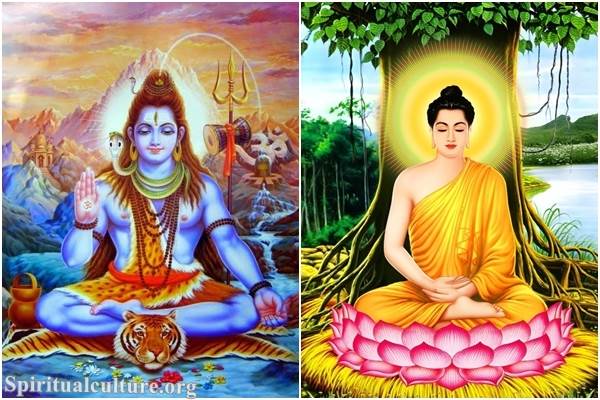
Bodhisattva and arhat are two important Buddhist terms that developed different emphases across traditions. An arhat is one who has attained liberation from the defilements and rebirth. A bodhisattva is oriented toward Buddhahood, especially in Mahāyāna traditions.
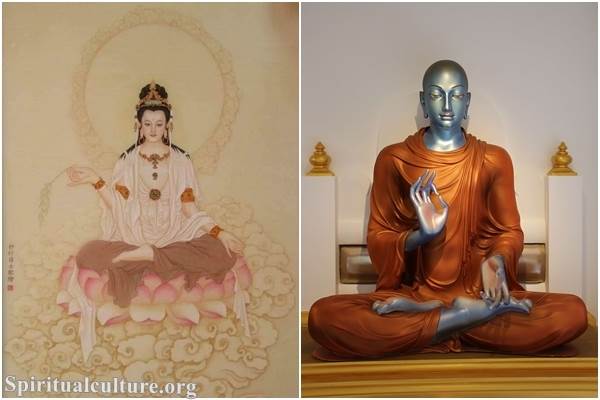
The arhat ideal
In early Buddhist texts and Theravāda Buddhism, the arhat is a fully liberated disciple who has realized Nirvāṇa and ended the causes of rebirth.
Arhatship is not presented in Theravāda as selfishness or spiritual failure. Arhats are honored as accomplished practitioners of the Buddha’s path.
The bodhisattva ideal
The bodhisattva path is associated with the aspiration to become a Buddha. Mahāyāna texts emphasize bodhicitta, compassion, wisdom, and long-term practice for the benefit of all beings.
Famous celestial bodhisattvas also play major devotional roles in Mahāyāna and Vajrayāna Buddhism.
Why Mahāyāna texts sometimes contrast them
Some Mahāyāna scriptures use strong rhetoric contrasting the bodhisattva path with goals associated with disciples or arhats. This reflects the doctrinal aims of those texts.
It should not be turned into a simplistic claim that all Mahāyāna Buddhists look down on Theravāda or that arhats lack compassion.
Different maps of the path
Theravāda, Mahāyāna, and Vajrayāna use different taxonomies for awakening and spiritual goals. The same English word “enlightenment” can hide those distinctions.
Comparisons are clearest when each tradition is described on its own terms.
The Buddha is not simply “a higher arhat”
Early Buddhist traditions can describe a Buddha and an arhat as sharing liberation from greed, hatred, ignorance, and rebirth, while still distinguishing the Buddha’s role as the one who discovers and proclaims the path in an age when it has been lost. An arhat reaches liberation through that awakened teaching. The distinction therefore concerns religious role and path as well as the fact of liberation.
Mahāyāna systems develop additional models of Buddhahood, bodhisattva stages, wisdom, compassion, and cosmic activity. These frameworks should not be projected backward as though every Buddhist text uses the terms in exactly the same way.
Theravada also recognizes the bodhisatta path
Theravada does not lack the concept of a bodhisattva. Pali tradition uses bodhisatta especially for the Buddha in his previous lives and recognizes the long path by which a future Buddha perfects necessary qualities. What differs is that ordinary disciples are generally encouraged toward arhatship rather than being told that every practitioner must take the bodhisattva path to complete Buddhahood.
This makes “bodhisattva versus arhat” a comparison of ideals within different doctrinal maps, not a simple contrast between compassion and selfishness.
Short distinction
Arhat emphasizes liberation as an awakened disciple; bodhisattva emphasizes the path toward Buddhahood, especially for the benefit of all beings.