The question “Who is God?” lies at the heart of many religious traditions, philosophical systems, and personal spiritual journeys. It may arise during worship, study, suffering, wonder, doubt, or reflection on the existence of the universe. For some people, God is the personal Creator who knows and loves every human being. For others, divine reality is beyond personality, form, language, and complete human understanding. Still others do not believe that a creator God exists or regard the question as impossible to answer with certainty.
There is therefore no single definition that represents every religion. Judaism, Christianity, Islam, Sikhism, the Bahá’í Faith, Hindu traditions, Buddhism, Indigenous religions, and philosophical schools do not all use the word “God” in the same way. Even within one religion, theologians, denominations, schools, mystics, and ordinary believers may emphasize different aspects of the divine.
In the monotheistic traditions, God is generally understood as the eternal, uncreated source of all existence—the one who creates, sustains, knows, and governs the universe. In several Hindu traditions, the divine may be understood as a personal Lord, the ultimate reality called Brahman, or both. Sikh teachings affirm one universal Creator who is beyond birth and hatred yet present throughout creation. Buddhism usually does not place belief in an eternal creator God at the center of its path, focusing instead on suffering, causation, awakening, and liberation.
Understanding who God is therefore requires both a clear answer and respect for religious differences.
Who Is God? A Direct Answer
In classical monotheism, God is the eternal, uncreated, and self-existent reality upon whom everything else depends. God is not considered one being among many beings, even the greatest one. Rather, God is understood as the ultimate source of existence itself.
Judaism, Christianity, and Islam teach that there is one God who created the universe and is not identical with it. God has no beginning, does not depend on anything else, and cannot be reduced to a physical object or natural force. These traditions describe God as knowing, powerful, just, merciful, and worthy of worship, although they differ significantly in their teachings about revelation, covenant, Jesus Christ, the Trinity, prophecy, and salvation.
However, this answer does not cover every religious understanding. Some traditions speak of an ultimate reality that is not easily described as a personal creator. Others recognize many divine beings, sacred powers, ancestors, or spirits. Buddhism includes devotional practices and beliefs about celestial beings in many communities, yet it generally does not teach that liberation depends upon an all-powerful creator God.
The word “who” may also be limiting. It assumes that God is a person in a way comparable to a human being. Most theistic traditions teach that God can know, will, love, communicate, or act, but they also maintain that the divine nature exceeds ordinary human personality. Religious language about God is therefore often understood as true but incomplete.
What Does the Word “God” Mean?
The English word “God” can refer to several different ideas.
In a monotheistic context, it usually means the one supreme Creator and ruler of all reality. In a polytheistic context, the word “god” may refer to one of several divine beings associated with particular powers, places, natural forces, professions, communities, or aspects of life. In philosophical writing, “God” may mean the necessary foundation of existence, the highest good, an eternal mind, the first cause, or ultimate reality.
These meanings should not be confused.
A deity within a traditional pantheon is not necessarily understood in the same way as the God of Jewish, Christian, or Islamic monotheism. Likewise, Brahman in Hindu philosophy cannot automatically be translated as “God” without explanation. Brahman may refer to the ultimate reality underlying or encompassing existence, while Īśvara refers more specifically in some schools to the divine Lord. Hindu philosophical traditions include monistic, qualified nondual, devotional, dualistic, and other interpretations of the relationship between divine reality, individual selves, and the cosmos.
The idea of God may therefore include one or more of the following:
- The Creator of the universe
- The source and ground of existence
- A personal being who knows and loves
- The highest moral authority
- The object of worship and prayer
- A reality beyond all forms and concepts
- A divine presence within creation
- The final purpose toward which life is directed
Not every religion accepts all these descriptions, and some accept none of them.
God in Judaism
Judaism teaches the oneness of God as one of its central convictions. The Shema, drawn from Deuteronomy, declares that the Lord is one. Jewish teaching does not only present God as the strongest member of a group of gods. God is understood as uniquely and indivisibly one, the Creator of the world and the God of the covenant.
Traditional Jewish thought describes God as eternal, without physical form, and unlike any created thing. Scriptural language sometimes speaks of God’s hand, face, throne, anger, or compassion, but Jewish philosophers and teachers have commonly interpreted such language non-literally. It communicates how God acts or relates to human beings rather than describing a physical body.
The Hebrew Bible presents God through sacred narratives of creation, covenant, liberation, law, judgment, mercy, and faithfulness. God calls Abraham, delivers the Israelites from slavery in Egypt, gives the Torah through Moses, and calls the people to justice, holiness, and covenantal responsibility. These are religious teachings and sacred narratives central to Jewish identity; historical and theological interpretations of individual events vary.
Judaism also emphasizes that God cannot be adequately represented by an image. The prohibition against idolatry protects the distinction between the Creator and created objects. No statue, natural force, political ruler, or human invention can contain or replace God.
Jewish traditions include a wide range of approaches to divine action. Biblical theology, rabbinic interpretation, medieval philosophy, Kabbalah, Hasidic thought, and modern Jewish theology do not always use identical language. Some emphasize God’s transcendence, others divine presence, covenant, ethical commandments, mystery, or the sanctification of daily life. Yet the confession of one God remains foundational across traditional forms of Judaism.
God in Christianity
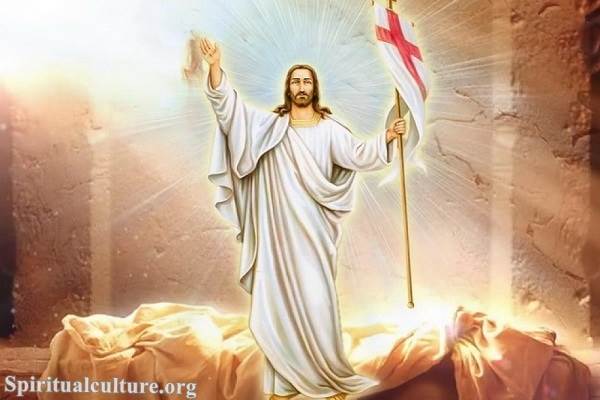
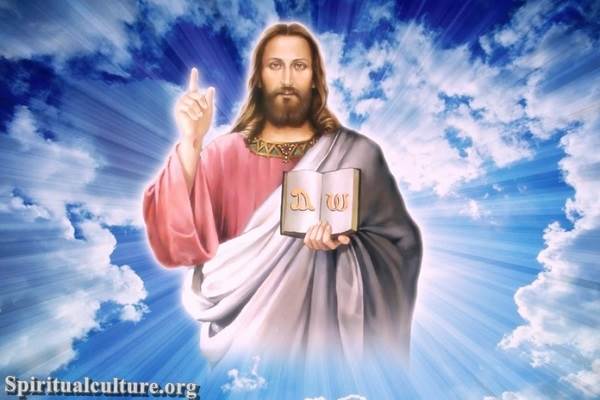
Christianity teaches that there is one God, the Creator of all that exists. Historic Nicene Christianity also teaches that the one God is eternally Father, Son, and Holy Spirit. This doctrine is called the Trinity.
The Trinity does not mean that Christians worship three gods. Christian doctrine maintains that there is one divine being or essence, while the Father, Son, and Holy Spirit are distinct persons. Different Christian traditions use somewhat different theological language to explain this mystery, but Catholic, Eastern Orthodox, Anglican, and most Protestant churches affirm the Nicene understanding of one God in three persons.
Christianity further teaches that Jesus Christ is the Son of God who became human. According to Christian belief, Jesus is not simply a prophet, moral teacher, or created heavenly messenger. He is understood as truly divine and truly human. Through his life, teaching, death, and resurrection, Christians believe that God has acted for the reconciliation and salvation of humanity.
The Catholic Catechism, reflecting the broader Christian creedal tradition on creation, professes God as the maker of all things visible and invisible. It also presents creation as the beginning of a larger history of salvation that Christians believe reaches its fullness in Christ.
Christian scripture describes God with many titles and images: Father, Lord, King, Judge, Shepherd, Rock, Light, and Love. These expressions communicate aspects of the Christian understanding of God but do not imply that God is physically male, limited to one social role, or literally identical with a material object.
Calling God “Father” has a central place in Christian prayer because Jesus addressed God as Father and taught his disciples to do so. Within Christian theology, however, God is not a biological male. God is the Creator of both men and women and is not confined by the bodily distinction between human sexes.
Christians commonly describe God as:
- Holy and morally perfect
- Loving and merciful
- Just and faithful
- All-knowing
- All-powerful
- Present everywhere
- Eternal and uncreated
- Personal and relational
Christian denominations disagree about many questions, including predestination, free will, sacraments, church authority, biblical interpretation, and how divine grace operates. They nevertheless share the belief that God is revealed decisively through Jesus Christ, although they formulate the implications of that belief in different ways.
God in Islam
Islam teaches uncompromising monotheism, known as tawḥīd: God is one, without partner, equal, division, or rival. The Arabic word for God is Allah. In Islamic belief, Allah is the Creator, Sustainer, Judge, and merciful Lord of all worlds.
Surah al-Ikhlāṣ, one of the shortest chapters of the Quran, expresses this teaching by declaring that Allah is one and indivisible, that all depend upon him, that he was not born and does not produce offspring, and that nothing is comparable to him.
Muslims reject the worship of created beings, images, heavenly bodies, prophets, saints, or natural powers as gods. Worship belongs to Allah alone. Associating partners with God is called shirk and is regarded as a fundamental contradiction of tawḥīd.
Islam teaches that God created the heavens and the earth, governs creation, reveals guidance, hears prayer, forgives, judges human conduct, and shows mercy. The Quran repeatedly describes Allah through beautiful names and attributes, including the Compassionate, the Merciful, the Knowing, the Wise, the Just, the Forgiving, and the Creator.
At the same time, Islamic theology emphasizes that God is not comparable to creation. Human beings may know God through revelation, divine names, signs in nature, moral awareness, and acts of worship, but they cannot comprehend the fullness of the divine essence.
Islam honors many figures also known from Jewish and Christian traditions, including Abraham, Moses, and Jesus. Muslims regard them as prophets and messengers of God. However, Islam does not accept the Christian doctrine of the Trinity or the belief that Jesus is God incarnate. Jesus is honored as the Messiah and a prophet, but not worshiped as divine.
This difference is not a minor variation. It reflects fundamentally different understandings of God’s unity, revelation, and the identity of Jesus.
God and Divine Reality in Hindu Traditions
Hinduism contains many religious communities, scriptures, philosophical schools, devotional movements, and regional traditions. It cannot accurately be reduced to either “belief in many gods” or “belief in one God.”
Some Hindus worship a particular deity, such as Viṣṇu, Śiva, Devī, Kṛṣṇa, or Rāma, as the Supreme Lord. Others understand several deities as forms, manifestations, names, or approaches to one divine reality. Some philosophical schools focus on Brahman, the ultimate reality, while others emphasize a personal divine Lord called Īśvara.
The relationship between Brahman, the world, and the individual self is interpreted differently among Vedānta schools. Advaita Vedānta teaches a nondual understanding in which the deepest reality of the self is not ultimately separate from Brahman. Viśiṣṭādvaita presents a qualified nondualism in which Brahman is personal and the universe and souls depend upon the Supreme. Dvaita Vedānta maintains a real distinction between God and individual souls. These differences show why no single sentence can represent every Hindu understanding of God.
Devotional Hindu traditions, often described through the concept of bhakti, may involve prayer, chanting, pilgrimage, temple worship, offerings, sacred images, storytelling, music, and loving devotion to a chosen form of the divine.
A sacred image, or mūrti, is not necessarily understood by worshipers as an ordinary object that has become a separate god. Depending on the tradition, it may function as a consecrated focus through which devotees encounter or honor the divine presence. Interpretations vary, and it is misleading to describe all Hindu image worship as simple worship of statues.
Hindu traditions also preserve different sacred narratives of creation. Some describe creation through divine beings or cosmic processes; others present the universe as undergoing repeated cycles of manifestation, preservation, dissolution, and renewal. These accounts belong to theological, philosophical, and sacred narrative frameworks rather than modern scientific models.
The question “Who is God?” may therefore receive several Hindu answers: the Supreme Person, the beloved deity, Brahman beyond attributes, Brahman with attributes, the divine presence within all beings, or the ultimate reality approached through many names and forms.
God in Sikhism
Sikhism teaches the reality of one universal Creator. The opening expression of the Guru Granth Sahib, Ik Oankar, affirms divine oneness and has a foundational place in Sikh belief.
The Mūl Mantar describes the one divine reality as true, creative, without fear, without hatred, timeless, beyond birth, and self-existent. Sikh teaching holds that the Creator is both beyond the universe and present throughout it. God is not limited to one nation, caste, ethnicity, gender, or religious community.
The Sikh worldview connects belief in divine oneness with human equality. Because the same divine light is present throughout humanity, discrimination based on caste, gender, ethnicity, or social status lacks spiritual justification. Remembering the divine name, honest work, sharing with others, service, and resistance to injustice are therefore not separate from spirituality. They are ways of living in awareness of the one Creator.
Sikhism does not teach that God is born as a human incarnation. The Sikh Gurus are revered as teachers through whom divine wisdom was communicated, not as separate gods. After the ten human Gurus, the Guru Granth Sahib is honored as the enduring Guru and spiritual authority of the Sikh community.
The divine is often remembered through names such as Waheguru, expressing awe before the wondrous enlightener. Yet Sikh teaching emphasizes that no human name can fully contain the limitless Creator.
God in the Bahá’í Faith
The Bahá’í Faith teaches that there is one God, the Creator of the universe, whose essence is beyond full human comprehension. God is described as all-knowing, loving, merciful, and the source of revelation.
According to Bahá’í teaching, human beings cannot directly comprehend God’s essence because the finite mind cannot encompass the infinite. Knowledge of God becomes possible through creation, spiritual qualities, and a succession of divine educators known as Manifestations of God.
These Manifestations include figures such as Abraham, Moses, Zoroaster, the Buddha, Jesus, Muhammad, the Báb, and Bahá’u’lláh within the Bahá’í understanding of progressive revelation. The Manifestations are not considered fragments or incarnations of God’s unknowable essence. Rather, they perfectly reflect divine attributes and communicate guidance suited to humanity’s changing historical circumstances.
The Bahá’í understanding of God is therefore connected to the unity of religion and humanity. Religious traditions are seen as related stages in a continuing divine educational process, although this interpretation is specifically Bahá’í and is not necessarily accepted by the other religions it discusses.
Does Buddhism Believe in God?
Buddhism generally does not center its teaching on an eternal, all-powerful creator God. The Buddha’s teaching focuses on the reality of suffering or unsatisfactoriness, its causes, its cessation, and the path leading toward liberation.
Many Buddhist traditions recognize devas, celestial beings, bodhisattvas, protective figures, heavenly realms, and powerful spiritual beings. Devotees may pray, chant, make offerings, or seek the aid of Buddhas and bodhisattvas. However, these practices should not automatically be interpreted through the model of monotheistic worship.
In classical Buddhist cosmology, celestial beings are generally not eternal creators. They remain within conditioned existence and are subject to change. Buddhist teachings explain existence through dependent origination, causes and conditions, karma, impermanence, and the absence of a permanent independent self rather than through the will of one supreme Creator. Early Buddhist texts also preserve critiques of claims made by beings who imagine themselves to be creators.
It is therefore more accurate to describe Buddhism as generally non-theistic rather than simply atheistic. Buddhism does not necessarily require practitioners to spend their lives denying every possible divine being. Instead, it teaches that liberation depends upon awakening, ethical conduct, wisdom, and freedom from ignorance and craving.
Buddhist schools differ significantly. Theravāda, Mahāyāna, Vajrayāna, Pure Land, Zen, and regional Buddhist cultures do not express devotion or cosmology in identical ways. Still, the God of classical monotheism is not the central foundation of Buddhist doctrine.
God in Indigenous and Traditional Religions
Indigenous and traditional religions are highly diverse. They should not be treated as if they form a single worldwide belief system.
Some communities recognize a supreme creator alongside ancestors, spirits, sacred beings, or powers associated with particular landscapes. Others focus more strongly on relationships among humans, animals, ancestors, land, water, weather, and the unseen world. Sacred knowledge may be transmitted through oral traditions, ceremonies, kinship systems, songs, ritual specialists, seasonal practices, and responsibilities toward ancestral territories.
Terms such as “Great Spirit,” “Creator,” or “Supreme Being” may sometimes be appropriate, but they should not be imposed on every community. Colonial interpreters and missionaries have often translated local sacred concepts into the language of European monotheism, sometimes obscuring their original meanings.
A respectful approach identifies the specific community, language, history, and tradition being discussed. It also allows living practitioners to explain their own sacred vocabulary instead of forcing their beliefs into categories developed elsewhere.
Is God a Person?
Many believers describe God as personal because they believe God knows, wills, loves, speaks, commands, forgives, and responds. Prayer makes sense within such a relationship because the believer is not only addressing an impersonal force.
Yet most classical theologians do not mean that God is a person exactly like a human individual. Human persons have bodies, limited knowledge, changing emotions, dependence on others, and a place within time and space. God, in classical Jewish, Christian, and Islamic thought, is not limited in these ways.
Calling God personal therefore means that divine reality includes—rather than lacks—the capacities associated with knowledge, purpose, goodness, and relationship. At the same time, God exceeds human personality.
Some philosophical and mystical traditions prefer terms such as transpersonal, suprapersonal, absolute, or ultimate reality. These terms attempt to avoid imagining God as a magnified human being while still recognizing that the divine cannot be reduced to an unconscious physical force.
Other traditions understand the ultimate as impersonal. This does not necessarily mean cold, meaningless, or lifeless. It may mean that ultimate reality lies beyond the distinction between human categories such as person and object.
Is God Male or Female?
Religious scriptures frequently use masculine pronouns and titles for God. God may be called Father, King, or Lord. In other texts and traditions, divine compassion may be described through maternal imagery, and female forms of the divine may be worshiped.
In classical Jewish, Christian, and Islamic theology, God is not a biological organism and therefore does not possess a human sex. Masculine pronouns belong to scriptural language, grammar, inherited worship, and theological symbolism. They should not be interpreted as meaning that God has a male body.
Christian teaching traditionally calls God “Father,” but it also maintains that both women and men are created in the image of God. Jewish scripture uses maternal as well as paternal metaphors. Islamic theology emphasizes that nothing is comparable to Allah, ruling out the idea that God belongs to a biological category.
Hindu traditions include male, female, combined, and non-gendered expressions of the divine. Devī traditions worship the Goddess as supreme reality, while other traditions worship Viṣṇu, Śiva, Kṛṣṇa, Rāma, or divine couples. Some schools ultimately regard the highest reality as beyond gender altogether.
Language about God therefore expresses theology, relationship, symbolism, and tradition. It is not a simple description of divine anatomy.
Can God Be Seen or Fully Understood?
Most major theistic traditions teach that God cannot be fully contained by the human mind. Human beings may know something true about God, but they do not possess exhaustive knowledge of the divine essence.
Judaism emphasizes that God has no physical form and cannot be represented adequately by an image. Christianity teaches that God is revealed through creation, scripture, the history of Israel, and supremely in Jesus Christ, while still remaining an infinite mystery. Islam teaches that God is known through revelation, divine names, creation, and signs, but that nothing resembles Allah. The Bahá’í Faith likewise describes God’s essence as unknowable.
Mystical traditions often distinguish between knowing information about God and experiencing divine presence. Contemplative prayer, remembrance, meditation, chanting, silence, pilgrimage, ritual, or service may be understood as ways of becoming receptive to the sacred.
Such experiences are religious and personal claims. They should not be presented as scientific proof. Similar experiences may also be interpreted differently according to a person’s religion, psychology, culture, expectations, and community.
Why Do People Believe in God?
People believe in God for many reasons, and no single explanation applies to every believer.
Some trust a sacred revelation transmitted through scripture and religious community. Some believe they have encountered God through prayer, worship, beauty, conscience, suffering, forgiveness, or an experience of presence. Others are influenced by family, culture, historical tradition, philosophical reasoning, or the example of people whose lives they admire.
Philosophers have also developed arguments for God’s existence.
The cosmological argument begins with the existence or contingency of the universe and asks whether reality ultimately requires a necessary foundation or sustaining cause. The teleological argument reasons from order, intelligibility, complexity, or apparent purpose toward an intelligent source. Moral arguments ask whether objective moral duties, human dignity, or moral knowledge point toward a transcendent foundation. Ontological arguments attempt to reason toward God’s existence from the concept of a maximally perfect or necessary being.
None of these arguments has produced universal agreement. Critics question their premises, challenge the movement from a first cause to the God of a specific religion, or argue that natural processes provide sufficient explanations. Some philosophers regard the arguments as cumulative rather than individually conclusive. Others reject them entirely.
Religious belief is therefore rarely based on one logical argument alone. It often involves a combination of reason, trust, experience, inherited tradition, moral commitment, and participation in a community.
Why Do Some People Not Believe in God?
Atheism refers broadly to the absence or rejection of belief in gods. Agnosticism holds that God’s existence is unknown, unknowable, or not sufficiently established. People may also identify as secular, humanist, nonreligious, spiritually unaffiliated, or religiously indifferent.
Reasons for nonbelief vary. Some people find naturalistic explanations sufficient. Some believe that available evidence does not justify belief in a supernatural being. Others struggle with contradictions among religious claims, harmful behavior by religious institutions, unanswered prayer, or the existence of severe suffering.
Some nonbelievers object not to every possible ultimate reality but to particular descriptions of God. A person might reject the image of a punitive supernatural ruler while remaining open to a philosophical ground of being, sacred dimension, or mystery.
Nonbelief should not be equated with immorality, hopelessness, or hostility toward religion. Atheists and agnostics may ground ethical life in empathy, reason, human dignity, social responsibility, or concern for living beings. Believers, likewise, should not automatically be portrayed as irrational or unscientific.
Respectful discussion begins by allowing people to describe their actual convictions rather than assigning stereotypes to them.
If God Is Good, Why Is There Suffering?
The problem of suffering is one of the most difficult questions in the philosophy of religion. If God is all-powerful, all-knowing, and perfectly good, why do cruelty, disease, disaster, injustice, and apparently undeserved suffering exist?
Religious traditions offer several responses. Some emphasize human freedom and argue that moral evil results from the misuse of freedom. Some understand suffering as part of a world governed by stable natural processes. Others focus on spiritual growth, compassion, judgment, karma, the brokenness of creation, or hope for final justice.
These responses are not interchangeable, and none should be used carelessly when speaking to a person in pain. Telling someone that tragedy occurred because of hidden guilt, weak faith, karma, or a divine plan may deepen suffering and may misrepresent the tradition being invoked.
Philosophers distinguish between a defense, which argues that God and suffering may be logically compatible, and a theodicy, which proposes reasons why God might permit suffering. The adequacy of these responses remains widely debated, especially in relation to extreme suffering and the suffering of children and animals.
Religious texts themselves often preserve protest rather than simple explanations. Biblical lament, the Book of Job, prayers of anguish, and traditions of mourning show that questioning God can exist within faith. In many communities, the response to suffering is not a complete theory but compassionate presence, practical help, prayer, remembrance, and resistance to injustice.
Are God and Science in Conflict?
Science investigates the natural world through observation, evidence, measurement, testing, and theoretical explanation. Theology and philosophy ask different but sometimes overlapping questions about meaning, value, purpose, existence, and ultimate reality.
Science does not normally test every possible concept of God. A nonphysical and transcendent creator is not an object that can simply be placed in a laboratory. At the same time, religious claims about physical events may come into tension with scientific evidence when they are presented as scientific explanations.
Believers respond to this relationship in different ways. Some interpret creation stories as literal chronological accounts. Others read them as theological narratives about dependence, order, goodness, purpose, or humanity’s relationship with the sacred. Many religious scientists accept evolutionary biology, modern cosmology, and other scientific theories while believing that God is the ultimate source of existence.
Science can investigate how physical processes operate. Whether those processes have an ultimate purpose, why anything exists at all, or whether the universe depends upon divine reality are philosophical and theological questions. This distinction does not automatically prove religious belief, but it shows why science and theology cannot always be treated as competing answers to exactly the same question.
What Does It Mean to Have a Relationship With God?
For many believers, God is not only a theory about the origin of the universe. Faith involves a lived relationship expressed through prayer, worship, obedience, repentance, gratitude, trust, study, service, and moral transformation.
In Judaism, relationship with God is closely connected to covenant, Torah, prayer, communal worship, ethical action, and the sanctification of ordinary life. In Christianity, it is often described through grace, faith, prayer, discipleship, participation in the church, and life in Christ. In Islam, relationship with Allah includes worship, remembrance, submission, repentance, Quranic guidance, and righteous conduct.
Sikh spirituality emphasizes remembrance of the divine name, honest labor, sharing, humility, and service. Hindu devotional traditions may cultivate loving relationship with a chosen form of the divine through pūjā, chanting, pilgrimage, scripture, and devotion. Bahá’í practice includes prayer, meditation, service, and obedience to divine guidance.
A relationship with God should not be presented as a guarantee of wealth, physical healing, protection from loss, marriage, fertility, or worldly success. Religious people experience illness, grief, injustice, and uncertainty like everyone else. Faith may provide meaning, courage, community, and hope, but it does not make a person immune to human vulnerability.
Common Misunderstandings About God
One common misunderstanding is that every religion worships the same God in exactly the same way. Religions may share language about one Creator, mercy, justice, prayer, or revelation, but they also make genuinely different claims. Christianity’s doctrine of the Trinity, Islam’s doctrine of tawḥīd, Jewish covenantal monotheism, Sikh divine oneness, and Hindu understandings of Brahman and Īśvara cannot simply be merged without losing their distinct meanings.
The opposite misunderstanding is that religious similarities are meaningless. Traditions can disagree deeply while still sharing ethical concerns, spiritual practices, sacred narratives, or language about divine transcendence and compassion.
Another misunderstanding is that God is merely an invisible human being living somewhere above the clouds. Classical theology generally rejects this idea. God is not thought to occupy a distant location as a physical creature does.
It is also misleading to assume that every sacred story is intended as modern history or science. Religious texts may contain theology, poetry, law, parable, liturgy, sacred narrative, wisdom, genealogy, prophecy, and symbolic imagery. Interpretation depends on genre, community, and tradition.
Finally, belief in God does not automatically make every religious claim true. Religious teachings still require careful interpretation, historical study, ethical evaluation, and distinction between official doctrine, local custom, personal opinion, legend, and unsupported superstition.
How Should Someone Explore the Question of God?
The question of God deserves patience rather than pressure.
A serious inquiry may involve reading sacred texts in context, studying reliable explanations from different traditions, speaking with knowledgeable practitioners, examining philosophical arguments, and reflecting honestly on personal experience.
It is helpful to ask precise questions:
- What does this tradition mean by “God”?
- Is God personal, impersonal, or beyond that distinction?
- Is God separate from the universe, present within it, or both?
- How does the tradition claim that God is known?
- Which teachings are central, and which are later interpretations?
- How does belief in God shape ethics and communal life?
- How does the tradition respond to doubt and suffering?
A person does not need to pretend certainty. Faith can coexist with questions, and doubt can arise within religious life rather than only outside it. Likewise, uncertainty does not require disrespect toward believers.
The most responsible approach avoids both blind acceptance and automatic dismissal.
Conclusion
“Who is God?” has no single answer that accurately represents every religion. In Judaism, Christianity, and Islam, God is the one eternal Creator, although these traditions differ profoundly in their understandings of revelation, divine unity, covenant, and Jesus Christ. Sikhism affirms one universal Creator who is beyond birth and present throughout creation. The Bahá’í Faith teaches one unknowable God revealed through successive divine educators.
Hindu traditions offer several understandings of the divine, including Brahman as ultimate reality and personal forms of the Supreme approached through devotion. Buddhism generally does not teach an all-powerful creator God, directing attention instead toward dependent origination, ethical conduct, wisdom, and liberation.
For believers, God may be the source of existence, the object of worship, the foundation of morality, and the presence toward whom prayer is directed. For philosophers, God may be considered as a necessary being, first cause, ultimate mind, highest good, or ground of reality. For atheists and agnostics, belief in God may appear unsupported, unnecessary, or uncertain.
The question remains important because it concerns more than the existence of a supernatural being. It touches the origin of reality, the meaning of human life, the nature of good and evil, the experience of suffering, and the possibility that the visible world depends upon a reality greater than itself.
Approached with honesty and respect, the question of God can deepen understanding not only of religion but also of the diverse ways human beings seek meaning, truth, responsibility, and hope.