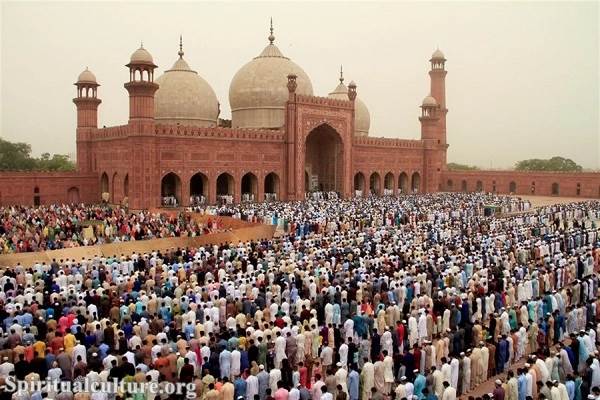
Shia Muslims perform the same five obligatory daily prayers recognized across Islam: Fajr, Dhuhr, Asr, Maghrib, and Isha. The basic pattern includes purification, facing the qibla toward Mecca, standing, Qur’anic recitation, bowing, prostration, and concluding formulas. Differences between Shia and Sunni practice concern details of jurisprudence and ritual rather than the existence of the five daily prayers themselves.
Five prayers, sometimes observed in three time periods
In Twelver Shia jurisprudence, Dhuhr and Asr may be performed successively within their shared period, and Maghrib and Isha may also be performed successively. Fajr remains separate. This means a Shia Muslim may complete the five prayers during three broader prayer periods, although the prayers remain five distinct acts and may also be performed separately.
Purification and direction of prayer
As in other Islamic traditions, ritual purity is required before salat. Worshippers normally perform wudu when needed and face the Kaaba in Mecca. The details of ablution differ in some respects among legal schools; for example, Twelver Shia jurisprudence has its own rules concerning wiping the feet during wudu.
Why a turbah may be used
Many Twelver Shia Muslims place a small piece of natural clay, often called a turbah, where the forehead touches during prostration. Shia legal teaching emphasizes prostrating on earth or suitable natural material rather than treating the object as something worshipped. Clay from Karbala has particular devotional significance for many Shia Muslims because of its association with Husayn, but prostration is directed to God, not to the clay.
Other visible differences
In many Shia settings the hands remain at the sides while standing in prayer rather than being folded. The wording of the call to prayer and some devotional formulas can also differ. Practices vary among Twelver, Ismaili, and Zaydi communities, so “Shia prayer” should not be reduced to a single worldwide custom.
Shared purpose
Despite legal differences, Shia and Sunni prayer share the core purpose of worshipping Allah, reciting revelation, remembering God, and structuring daily life around regular acts of devotion.
Variation within Shia communities
Most descriptions of Shia prayer online refer to Twelver Shia practice because Twelvers form the largest Shia community. Ismaili and Zaydi traditions have their own legal and devotional histories, and practice can also differ by country, mosque, family, and religious authority. A visitor to a Shia mosque may therefore notice familiar Islamic prayer forms alongside local customs that are not universal to every Shia community.