The phrase “Muslim country” is common but imprecise. It may refer to a country where Muslims form a majority of the population, a state whose constitution gives Islam an official role, or a member of the Organisation of Islamic Cooperation (OIC). These categories overlap, but they are not identical.
How many OIC member states are there?
The Organisation of Islamic Cooperation has 57 member states. Membership is a political and diplomatic category, not a statistical list of every Muslim-majority country and not proof that every member has the same legal or religious system. The OIC includes states across Africa, Asia, the Middle East, and parts of Europe and the Americas.
Muslim-majority does not mean culturally uniform
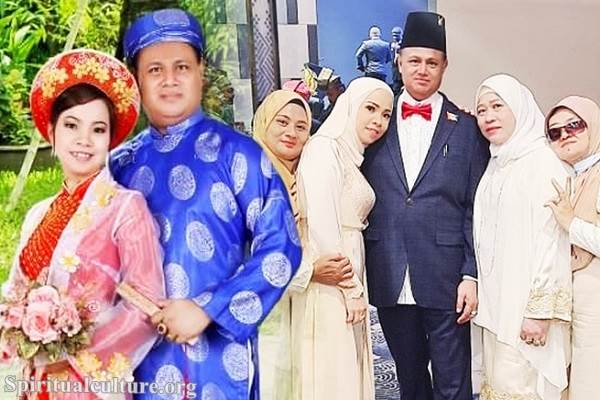
Countries with Muslim-majority populations differ greatly in language, ethnicity, law, political institutions, religious schools, and local custom. Indonesia, Pakistan, Bangladesh, Turkey, Iran, Egypt, Nigeria, Saudi Arabia, Morocco, Kazakhstan, and Senegal illustrate very different historical and cultural settings.
Where do most Muslims live?
Islam is often associated with the Middle East, but the greatest number of Muslims lives in the Asia-Pacific region. Pew Research Center’s global analysis estimated about 2.0 billion Muslims in 2020, roughly one quarter of the world’s population. Indonesia had the world’s largest Muslim population in that dataset, while India had one of the largest Muslim populations despite being a Hindu-majority country.
Countries with Muslim minorities
Large Muslim communities also live in countries where Muslims are a minority, including India, China, Russia, France, Germany, the United Kingdom, the United States, and many others. Migration, trade, empire, scholarship, and conversion have produced Muslim communities far beyond states commonly described as “Islamic.”
Why terminology matters
Using “Muslim-majority country” is usually more precise when discussing population. “OIC member state” is better when discussing the organization. Terms such as “Islamic republic” or “Islamic state” should be reserved for countries that use those descriptions constitutionally or officially, because Muslim-majority societies organize religion and state in very different ways.
Why there is no single official list of “Muslim countries”
Different lists use different criteria. A demographic list may count states where more than half the population is Muslim. A diplomatic list may use OIC membership. A constitutional list may include only states that formally describe Islam as the state religion or use an Islamic constitutional identity. Because these categories do not match perfectly, articles should state the criterion rather than presenting one number as universally authoritative.