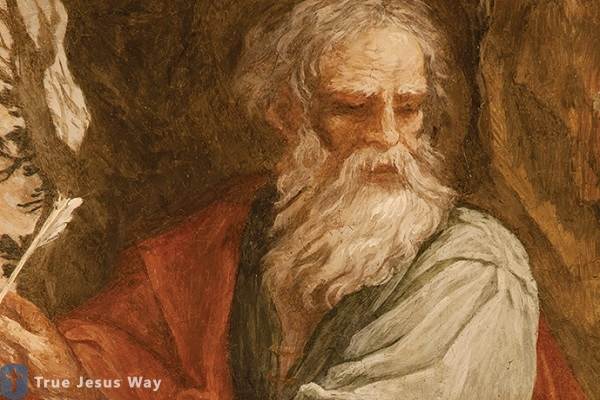
John the Apostle was one of the Twelve and is identified in the New Testament as a son of Zebedee and the brother of James. The Gospels place the brothers among Jesus’ earliest disciples and sometimes call them “sons of thunder.” John appears with Peter and James in several scenes in the Synoptic Gospels.
John in the New Testament
John is named in the lists of the Twelve and appears at events such as the Transfiguration and Jesus’ prayer in Gethsemane. In Acts, John is associated with Peter in the early Jerusalem church. Paul also refers to a John who, together with Peter and James, was regarded as a “pillar” of the community; Christian tradition has commonly identified him with John the Apostle.
Was John the “beloved disciple”?
The Gospel of John refers several times to an unnamed “disciple whom Jesus loved.” Later Christian tradition identified this figure with John the Apostle, but the Gospel itself does not explicitly name him. Modern scholars continue to debate the identity of the beloved disciple and the relationship between that figure, the apostle John, and the Gospel’s author or authors.
Did John write the Gospel, letters, and Revelation?
Church tradition has long connected John with the Fourth Gospel, the three letters of John, and the Book of Revelation. Modern biblical scholarship treats the authorship of these works as separate historical questions. The texts share important themes, but differences in style and setting have led many scholars to distinguish among their authors or communities.
Later Christian tradition
Early Christian tradition strongly associates John with Ephesus in Asia Minor and remembers him as a teacher who lived to an advanced age. Later stories about his ministry and death go beyond what the New Testament records, so they should be presented as tradition rather than certain biography.
John remains important across Catholic, Orthodox, Anglican, and many Protestant traditions. His memory is connected especially with apostolic witness, the Fourth Gospel, and Christian reflection on Jesus as the Word made flesh.
John, James, and the inner circle
In the Synoptic Gospels, John is repeatedly grouped with his brother James and with Peter. These three accompany Jesus at the raising of Jairus’s daughter, the Transfiguration, and Gethsemane. Mark also records a dispute in which James and John seek places of honor, followed by Jesus’ teaching that leadership among his followers should take the form of service.
John in Acts and later memory
Acts presents John alongside Peter during preaching and healing in Jerusalem and during a visit to Samaria. After those early chapters, the New Testament gives little direct biographical information about him. Traditions that place John in Ephesus and describe his later life come from early Christian memory outside the New Testament.
For historical study, it is useful to distinguish the apostle named in the Synoptic Gospels and Acts from later claims about the authorship of Johannine writings. Christian communities may connect these traditions theologically, while scholars examine each text and tradition separately.