Dhu al-Hijjah is the twelfth month of the Islamic lunar calendar and contains Hajj, the Day of Arafah, Eid al-Adha, and days of intensified worship. Because the Islamic calendar is lunar, its dates move through the solar year. Spiritual Culture explains the month through its ritual sequence rather than treating it only as a calendar entry.
A sacred month
Dhu al-Hijjah is one of the sacred months in Islamic tradition. Its name is connected with the annual Hajj pilgrimage.
The first ten days
Muslim devotional literature gives special importance to the first ten days. Common practices include prayer, remembrance of God, charity, Qur’an recitation, repentance, and voluntary fasting.
Hajj
Hajj is one of Islam’s Five Pillars and is required once in a lifetime for Muslims who are physically, financially, and practically able to undertake it.
Entering the Hajj rites
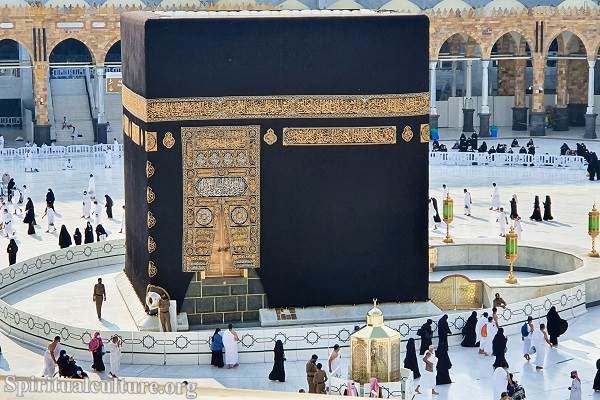
Pilgrims enter a state of ihram and perform a sequence of rites connected with Makkah, Mina, Arafat, Muzdalifah, and the Kaaba. Details differ according to the recognized form of Hajj.
The Day of Arafah
The ninth of Dhu al-Hijjah is associated with the pilgrims’ standing at Arafat, one of the central rites of Hajj. Muslims who are not performing Hajj often observe voluntary fasting on this day.
Eid al-Adha
The tenth day begins Eid al-Adha, the Festival of Sacrifice. It connects worship with the Abrahamic narrative of obedience and sacrifice.
Udhiyah or qurbani
Muslims who meet relevant conditions may offer an animal sacrifice during Eid al-Adha according to their legal school and local practice. Meat is commonly shared among household, relatives, neighbors, and people in need.
The Days of Tashriq
The days following Eid are connected with continued Hajj rites, remembrance of God, and celebration. Pilgrims remain engaged in the ritual sequence around Mina.
Hajj is not required every year
The obligation is generally once in a lifetime for a Muslim who meets the conditions of ability. Voluntary repeat pilgrimages are a separate matter.
A global month of worship
Only a portion of the world’s Muslims perform Hajj in any given year, but Dhu al-Hijjah is observed globally through prayer, fasting, sacrifice, sermons, charity, and Eid gatherings.
Editorial context
Dhu al-Hijjah joins pilgrimage with a worldwide devotional calendar. Hajj-specific rites should be distinguished from practices observed by Muslims who remain at home.