Islam does not have a universally recognized list called “the 10 rules of Islam” in the way that Judaism and Christianity are commonly associated with the Ten Commandments. Muslims follow a much broader religious framework based on the Qur’an, the teachings and example of the Prophet Muhammad, and developed traditions of Islamic law, worship, and ethics.
The clearest starting point is the Five Pillars of Islam: the testimony of faith, prayer, obligatory charity, fasting in Ramadan, and pilgrimage to Mecca for those who are able. These are foundational acts of worship, especially in Sunni descriptions of Islam. Muslim life, however, also includes beliefs, moral duties, family responsibilities, dietary rules, financial ethics, and many other teachings.
For readers searching for “10 rules of Islam,” the most accurate approach is therefore not to invent an official list of ten. Instead, this article explains ten major principles that provide a practical introduction while clearly distinguishing them from any formal Islamic “Ten Commandments.”
Are There Exactly 10 Rules in Islam?
No single authoritative Islamic tradition teaches a standard list formally known as “the ten rules of Islam.” The phrase is usually a search shortcut used by people who want a simple overview of what Muslims are expected to believe and do.
Islamic obligations are traditionally discussed through several overlapping frameworks. Among the best known are the Five Pillars, the articles of faith, the categories of Islamic law, and moral teachings drawn from the Qur’an and Sunnah. Sunni and Shia traditions share many fundamentals but may organize some doctrines and religious duties differently.
1. Affirm Faith in One God and Muhammad as God’s Messenger
The first of the Five Pillars is the shahada, the testimony of faith. In its familiar Sunni form, it affirms that there is no deity but God and that Muhammad is God’s messenger. This statement expresses tawhid, the oneness of God, and recognizes Muhammad’s prophetic mission. Conversion practices, wording, and theological explanation can vary by context, but the shahada is a central summary of Muslim faith.
2. Perform the Daily Prayers
The second pillar is salah, ritual prayer. Muslims perform prescribed prayers at five periods of the day: dawn, noon, afternoon, sunset, and night. The prayers include standing, bowing, prostration, Qur’anic recitation, and supplication.
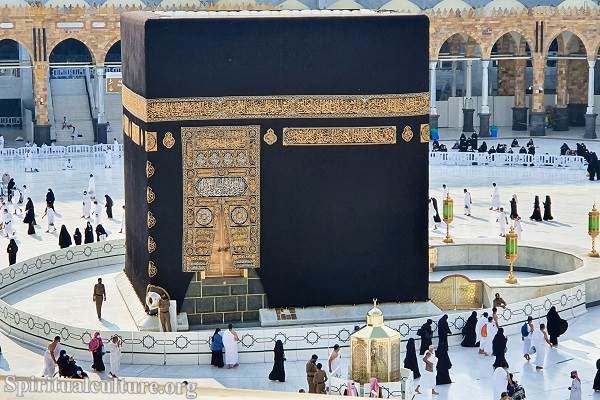
Prayer structures the day around remembrance of God. Before prayer, Muslims normally perform ritual purification when required and face the direction of the Kaaba in Mecca.
3. Give Zakat to Those Entitled to Receive It
The third pillar is zakat, obligatory almsgiving or charitable due. It is not simply voluntary generosity. For Muslims who meet the relevant conditions, zakat is a religious obligation calculated according to established rules and categories of wealth.
The Qur’an identifies categories of eligible recipients, and Islamic legal schools discuss the details of calculation, thresholds, timing, and distribution. Because financial circumstances differ, Muslims often consult reliable scholars or institutions when determining zakat obligations.
4. Fast During Ramadan
The fourth pillar is sawm, fasting during the month of Ramadan. Adult Muslims who are able to fast abstain from food, drink, and sexual relations from dawn until sunset. The fast is linked with worship, self-discipline, generosity, repentance, and awareness of God. Islamic law also recognizes exemptions and alternative duties for people who cannot fast because of circumstances such as illness, travel, pregnancy, or other valid reasons.
5. Perform the Hajj if Able
The fifth pillar is the hajj, the pilgrimage to Mecca. Muslims who are physically and financially able are expected to perform it once in their lifetime. The pilgrimage takes place during Dhu al-Hijjah and includes a sequence of rites associated with the Kaaba, Arafat, Mina, and other sacred locations. Hajj emphasizes worship of one God, shared ritual, remembrance, and the equality of pilgrims before God.
6. Follow the Core Beliefs of Islam
Islam is not defined by ritual practice alone. Religious belief is also central. Sunni teaching commonly summarizes foundational beliefs as faith in God, the angels, revealed scriptures, prophets, the Last Day, and divine decree. Different theological schools have discussed these doctrines in considerable depth.
Shia traditions share core beliefs in God, revelation, prophecy, resurrection, and accountability while also place particular theological emphasis on the Imamate. Because Islamic theology is diverse, a general introduction should avoid treating one later school’s technical formulation as if it were the only language used by all Muslims.
7. Seek What Is Halal and Avoid What Is Haram
Islamic teaching distinguishes between what is permitted and what is prohibited. The Arabic terms halal and haram are often associated with food, but they apply much more broadly to conduct, finance, marriage, commerce, and other areas of life.
Well-known dietary prohibitions include pork and intoxicants, while permissible food is governed by additional rules and interpretive traditions. Islamic finance also includes restrictions concerning unjust enrichment and riba, a term commonly translated as usury or interest but discussed in detail by jurists and economists.
8. Practice Honesty, Justice, Mercy, and Good Character
Islamic ethics gives strong importance to truthfulness, justice, trustworthiness, mercy, patience, modesty, fulfillment of promises, and care for other people. Moral character is not treated as separate from religion.
The Qur’an repeatedly connects worship with social conduct. Prayer and fasting do not excuse fraud, cruelty, exploitation, slander, or dishonesty. Prophetic teachings likewise place major emphasis on character and responsibility toward others.
9. Respect Family, Parents, Neighbors, and Social Responsibilities
Islamic teaching places substantial emphasis on family obligations and social relationships. Kindness toward parents is repeatedly emphasized in the Qur’an, while marriage, children, inheritance, financial support, and care for relatives are addressed in Islamic law and ethics.
Neighbors, travelers, the poor, orphans, and people in vulnerable situations also appear frequently in Islamic moral teaching. These responsibilities show that Islam is not only a set of private devotional practices. Religious life extends into social and economic behavior.
10. Repent, Seek Forgiveness, and Remain Accountable to God
A final principle that helps explain Muslim religious life is repentance, or tawbah. Islam teaches that human beings make mistakes and that sincere repentance involves turning back to God, regretting wrongdoing, abandoning the wrong, and, where other people have been harmed, seeking to restore their rights as far as possible.
This emphasis is connected with belief in the Last Day and final accountability. Muslim ethics is therefore shaped not only by social consequences but also by the belief that actions ultimately matter before God.
How the Five Pillars Differ from the “10 Rules” Above
The Five Pillars are an established and widely recognized framework of Islamic worship. They are an educational organization designed to answer a common search question accurately.
The first five items correspond directly to the Five Pillars:
- Shahadah — testimony of faith
- Salah — prayer
- Zakat — obligatory charity
- Sawm — fasting in Ramadan
- Hajj — pilgrimage
Do Muslims Follow the Ten Commandments?
Islam honors Moses as a prophet and contains many moral teachings that overlap with commands familiar from Jewish and Christian scripture, such as worshiping God, honoring parents, avoiding murder, theft, adultery, and falsehood. However, Muslims do not normally organize Islamic religious law around the biblical Ten Commandments as a standalone governing list.
The Qur’an contains several passages with clusters of moral commands, and Muslim scholars interpret ethical obligations through the Qur’an, Sunnah, and the wider methods of Islamic jurisprudence.
Are the Rules the Same for Sunni and Shia Muslims?
Sunni and Shia Muslims share belief in one God, the prophethood of Muhammad, the Qur’an, prayer, fasting, charity, pilgrimage, and many fundamental moral teachings. They also differ in important questions of authority, leadership, theology, law, and ritual detail.
Shia traditions may organize foundational practices through categories such as the roots of religion and branches of religion rather than relying only on the familiar Sunni presentation of Five Pillars and six articles of faith. Therefore, educational material about Islam should identify when a particular formulation is especially Sunni or Shia instead of presenting every classification as universal.
Does Every Muslim Follow Every Rule in the Same Way?
No religious community is completely uniform in practice. Muslims differ by legal school, theology, region, culture, family tradition, and personal observance. Even where an obligation is widely recognized, its detailed application may vary.
For example, jurists have developed different opinions about particular prayer details, financial transactions, dress, dietary questions, and family matters. Some differences are minor; others are more substantial. A responsible explanation should distinguish between widely shared principles and contested interpretations.
How Islamic Rules Are Classified
Classical Islamic jurisprudence often evaluates actions through categories such as obligatory, recommended, permissible, disliked, and forbidden. English summaries vary in terminology, and different schools can disagree about the classification of specific acts.
This framework shows why the phrase “rules of Islam” can be misleading if it suggests that every teaching has exactly the same legal weight. Some actions are required, some encouraged, some neutral, and some prohibited. Moral and spiritual teachings can also operate beyond the narrow question of legal enforceability.
Why Context Matters When Learning About Islam
Short lists are useful for orientation but can create misconceptions. Islam has developed across more than fourteen centuries and is practiced in societies ranging from Indonesia and South Asia to the Middle East, Africa, Europe, and the Americas. Muslim communities have different languages, cultures, legal traditions, and historical experiences.
A careful introduction therefore separates several layers:
- Scriptural teaching: what the Qur’an says.
- Prophetic tradition: teachings and practices attributed to Muhammad in hadith and sira traditions.
- Jurisprudence: how scholars interpreted and applied sources through legal schools.
- Theology: how Muslim schools explained belief and doctrine.
- Local custom: practices shaped by particular societies and cultures.
- Individual observance: how a particular Muslim chooses or is able to practice.
What Does Sharia Mean in This Context?
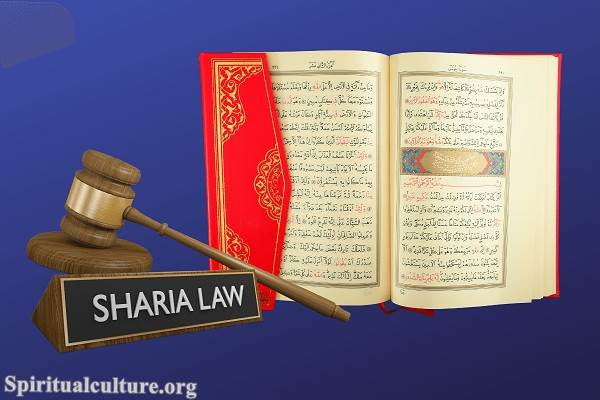
The word sharia is often translated as Islamic law, but in Muslim usage it can refer more broadly to the divinely guided path for religious and moral life. Human efforts to interpret and apply that guidance are commonly discussed through fiqh, or jurisprudence. This distinction matters because not every legal opinion has the same status as the Qur’an itself.
Islamic jurisprudence developed through multiple schools and methods. Sunni traditions include the Hanafi, Maliki, Shafi’i, and Hanbali schools, while Shia communities developed their own legal traditions, including Ja’fari jurisprudence. These schools agree on many fundamentals while differing on particular rules and methods of interpretation.
Common Misunderstandings About Islamic Rules
One common misunderstanding is that every Muslim practice comes from a single universal legal code. In reality, Muslim societies have always included interpretation, debate, local custom, and differences among scholars. Another mistake is to assume that the strictest opinion found anywhere in the Muslim world represents the normal view of all Muslims.
The opposite mistake is also possible: treating religious obligations as merely cultural because observance varies. For example, the Five Pillars remain foundational teachings even though individual Muslims differ in how consistently they practice them.
Rules, Ethics, and Spiritual Intention
Islamic religious life includes legal duties, but it is not limited to legal compliance. The Qur’an and later Muslim traditions also give sustained attention to sincerity, humility, gratitude, patience, compassion, remembrance of God, and purification of character.
This is why many Muslim scholars distinguish between the outward validity of an act and its inward spiritual quality. A prayer can have a prescribed form, yet believers are also encouraged to cultivate concentration and sincerity. Charity can satisfy a legal obligation, while generosity and compassion remain broader moral virtues. Fasting involves abstention, but Muslim teaching also emphasizes control of speech and behavior.
Why an Exact Number Can Be Misleading
Religions are often introduced through memorable numbers: five pillars, six articles of faith, ten commandments, or other compact formulas. These can help learners remember basic ideas, but they should not be confused with the full scope of a tradition. Islam contains many commands, recommendations, prohibitions, spiritual disciplines, and ethical teachings that cannot be compressed into ten items without losing context.
For that reason, the question “What are the 10 rules of Islam?” is best answered by correcting the premise first and then offering a structured introduction. This preserves the user’s search intent while avoiding the false claim that Muslims universally recognize an official ten-rule list.